Philip D. Curtin
1922–2009
Philip Dearmond Curtin was a professor at Johns Hopkins University and historian of Africa and the Atlantic slave trade. His most famous work, The Atlantic Slave Trade: A Census (1969) was one of the first estimates of the number of slaves transported across the Atlantic Ocean between the 16th century and 1870, yielding an estimate of 9,566,000 African slaves imported to the Americas. He also wrote about how many Africans were taken and from what location, how many died during the Middle Passage, how many actually arrived in the Americas, and to what colonies/countries they were imported.
From Wikipedia · CC BY-SA 4.0
13 books in our catalogue.
1963
55 pages
History
The main aim of the book is to explain how the societies on the African continent came to be as they are today; but the authors also use African history to explore more general questions of how human societies change through time. Their approach and …
1974
66 pages
History
This is a simple introduction to the major themes, trends, & problems in African history. The rise & penetration of Islam, European maritime contact, slavery & competitive annexations are presented as outside interventions to which Africans have creatively responded.
1964
526 pages
HistoryPolitics & Society
1990
222 pages
HistoryPolitics & Society
1967
363 pages
History
“The Atlantic slave trade was one of the greatest intercontinental migrations of world history; today about one-third of all people of African descent live outside of Africa. Yet the historical record of the slave trade remains curiously uneven. Ten personal narratives collected in this volume …
1989
251 pages
History
This book is a quantitative study of relocation costs among European soldiers in the tropics between about 1815 and 1914. This study, however, has broader implications. For Europe itself, this was the crucial century of the 'mortality revolution, ' with its profound influence on European …
1998
256 pages
History
Before the nineteenth century, European soldiers serving in the tropics died from disease at a rate several times higher than that of soldiers serving at home. Then, from about 1815 to 1914, the death rates of European soldiers, both those serving at home and abroad, …
2005
193 pages
Biography & Memoir
2000
301 pages
HistoryPolitics & Society
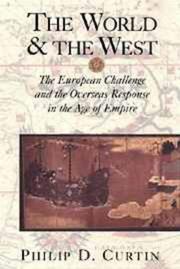
"The World and the West reaches from such diverse cases as the Maya and Yaqui of Mexico, the Ghost Dance of North America, cargo cults of Melanesia, to Meiji Japan and the Ottoman Empire. In discussing a variety of questions about the relations between the …