Arthur Schopenhauer
1788–1860
Arthur Schopenhauer, also known as the "Philosopher of Pessimism", was a German philosopher and writer. He is known for his 1818 work The World as Will and Representation, which characterizes the phenomenal world as the manifestation of a blind and irrational noumenal will. Building on the transcendental idealism of Immanuel Kant, Schopenhauer developed an atheistic, metaphysical and ethical system that rejected the contemporaneous ideas of German idealism.
From Wikipedia · CC BY-SA 4.0
147 books in our catalogue.
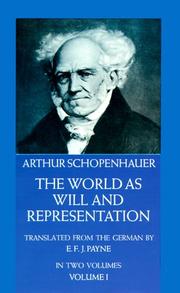
1819
514 pages
Philosophy & Religion
The German philosopher explains his thoughts about intellectual perception and abstract representation and critically analyzes Kant's ideas and teachings. Bibliogs.
1851
199 pages
Art & PhotographyPhilosophy & ReligionPsychology & Self-Help
Parerga and Paralipomena is a collection of philosophical reflections by Arthur Schopenhauer published in 1851. The selection was compiled not as a summation of or introduction to Schopenhauer's philosophy, but as augmentary readings for those who had already embraced it, although the author maintained it …
1891
116 pages
Language & ReferencePhilosophy & Religion
1888
190 pages
HistoryPhilosophy & ReligionPsychology & Self-Help
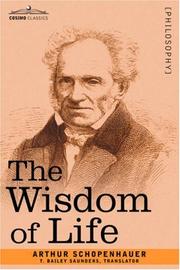
Nineteenth-century German philosopher Arthur Schopenhauer (1788-1860) championed individual strength of will and independent, reasoned deliberation above the irrational impulses that animated most of society. In The Wisdom of Life, taken from his last work, Parerga und Paralipomena (1851), he discusses how to order our lives …
1889
129 pages
Philosophy & Religion
1890
142 pages
Philosophy & Religion
The Essays here presented form a further selection from Schopenhauer's Parerga, brought together under a title which is not to be found in the original, and does not claim to apply to every chapter in the volume. The first essay is, in the main, a …
1897
132 pages
Philosophy & ReligionPolitics & Society
1896
108 pages
Philosophy & Religion
1902
132 pages
Philosophy & ReligionPolitics & Society
Standalone books
2017
68 pages
The Art of Being Right: 38 Ways to Win an Argument is an acidulous, sarcastic treatise written by the German philosopher Arthur Schopenhauer. In it, Schopenhauer examines a total of thirty-eight methods of defeating one's opponent in a debate. He introduces his essay with the …
2015
102 pages
Philosophy & Religion
2015
117 pages
Philosophy & Religion
1970
237 pages
Literary & Classics
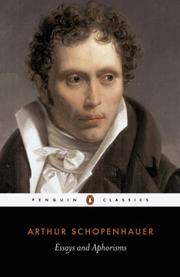
One of the greatest philosophers of the nineteenth century, Schopenhauer (1788-1860) believed that human action is determined not by reason but by 'will' - the blind and irrational desire for physical existence. This selection of his writings on religion, ethics, politics, women, suicide, books and …
2005
Philosophy & Religion
1962
365 pages
Philosophy & Religion
2020
64 pages
Philosophy & Religion
1892
116 pages
Philosophy & Religion
2019
92 pages
HistoryPhilosophy & ReligionPsychology & Self-Help
2012
116 pages
Psychology & Self-Help
1928
376 pages
Philosophy & Religion
1962
199 pages
Philosophy & Religion
"What is the meaning of life? How should I live? Is there any purpose to the universe? Generations have turned to the great German philosopher Arthur Schopenhauer for answers to such essential questions of existence. His influence has extended not only to later philosophers--Nietzsche, Freud, …
2000
277 pages
Philosophy & Religion
2015
Philosophy & Religion
1897
208 pages
Philosophy & Religion
1991
Philosophy & Religion
2011
190 pages
Philosophy & Religion
2019
115 pages
Philosophy & Religion
1901
332 pages
HistoryPhilosophy & ReligionPsychology & Self-Help
The Wisdom of Life' is a short philosophical essay by the Nineteenth-century German philosopher Arthur Schopenhauer (1788-1860). In this last published work, Arthur breaks down happiness into three parts and explores the nature of human happiness, and tries to understand how one should order life …
1995
120 pages
Psychology & Self-Help
1903
256 pages
Philosophy & Religion
2002
116 pages
Philosophy & Religion
1891
380 pages
Science & Nature
2004
144 pages
Philosophy & Religion
1998
204 pages
Schopenhauer escreveu seus aforismos em 1851, dentro da obra intitulada 'Parerga e paralipomena', e mais de trinta anos depois da sua obra máxima, 'O mundo como vontade e representação', no qual descreve sua metafísica. Neste livro, ele usa o aforismo (ou máxima, sentença curta e …
2015
56 pages
Philosophy & Religion
2005
168 pages
Philosophy & Religion
1988
760 pages
Philosophy & Religion
1931
40 pages
Politics & Society
2019
56 pages
Philosophy & Religion
2005
Philosophy & Religion
2009
Philosophy & Religion
2008
343 pages
Philosophy & Religion
2022
Philosophy & Religion
1966
1434 pages
Philosophy & Religion
1964
798 pages
Philosophy & Religion
1928
447 pages
Philosophy & Religion
1891
359 pages
Philosophy & Religion
2022
64 pages
Philosophy & Religion
“Assim como o andarilho que só obtém uma visão geral e reconhece o caminho percorrido, com todas as suas sinuosidades e desníveis, ao chegar a um ponto mais elevado, nós também só reconhecemos a verdadeira interligação de nossos atos, realizações e obras, a sua exata …
2016
96 pages
Philosophy & Religion
Schopenhauer não escondera de amigos e seguidores a existência de um manual zelosamente guardado que costumava chamar de Eis heuatón - como as célebres memórias de Marco Aurélio. Depois de sua morte, o executor testamentário, Willen von Gwinner as utilizara para escrever uma biografia do …
1863
430 pages
Philosophy & Religion
1987
Philosophy & Religion
1948
Philosophy & Religion
2015
701 pages
Philosophy & Religion
1956
447 pages
Philosophy & Religion
1901
324 pages
HistoryPhilosophy & ReligionPsychology & Self-Help
1932
305 pages
Philosophy & Religion
2007
189 pages
Philosophy & Religion
2006
189 pages
Philosophy & Religion
1994
300 pages
Philosophy & Religion
1941
364 pages
Philosophy & Religion
"This volume of new translations unites three shorter works by Arthur Schopenhauer that expand on themes from his book The World as Will and Representation. In On the Fourfold Root he takes the principle of sufficient reason, which states that nothing is without a reason …
2016
522 pages
Philosophy & Religion
1881
178 pages
Philosophy & Religion
1903
285 pages
Philosophy & Religion
1915
288 pages
Philosophy & Religion
2013
201 pages
Philosophy & Religion
1986
142 pages
Politics & Society