HistoryPhilosophy & ReligionPsychology & Self-Help
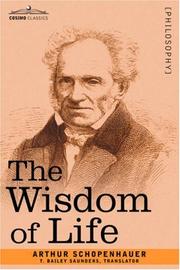
The wisdom of life
- Pages
- 332
- 8 editions
- First published
- 1901
- 1 language
Join or log in to shelve and rate Free, no password.
Overview
The Wisdom of Life' is a short philosophical essay by the Nineteenth-century German philosopher Arthur Schopenhauer (1788-1860). In this last published work, Arthur breaks down happiness into three parts and explores the nature of human happiness, and tries to understand how one should order life so as to obtain the greatest possible amount of pleasure and success. Arthur championed individual strength of will and independent, reasoned deliberation above the irrational impulses that animated most of society. This essay offers guidelines for living life to its fullest and conveys a message that a life well lived should always reach beyond itself to a higher plane. "For the more a man has in himself, the less he will want from other people,—the less, indeed, other people can be to him. This is why a high degree of intellect tends to make a man unsocial. True," —Arthur Schopenhauer, The Wisdom of Life
Ratings & reviews
Log in to rate or review this book.
No written reviews yet.
Discussions
Talk about this book with other readers.
Log in to start a discussion.
No discussions yet.
Editions


Details & links
- First published
- 1901
- Pages
- 332
- Languages
- Available in 1 language
Where to buy this book: see “Buy this book”
More about this book
Read a sample, borrow it or see other editions → openlibrary.org