Philosophical Papers


Standalone books

A Secular Age
"What does it mean to say that we live in a secular age? Almost everyone would agree that we - in the West, at least - largely do. And clearly the place of religion in our societies has changed profoundly in the last few centuries. …
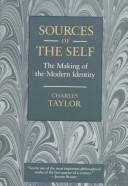
Sources of the self
Sources of the Self: The Making of the Modern Identity is a work of philosophy by Charles Taylor, published in 1989 by Harvard University Press. It is an attempt to articulate and to write a history of the "modern identity".
The malaise of modernity
El ensayo que se traduce en este volumen, La ética de la autenticidad, según el título de la edición norteamericana, o El malestar de la modernidad, según reza la primera versión canadiense, es el último libro publicado por el filósofo canadiense Charles Taylor (1931-) y …

The Kingfisher science encyclopedia
An illustrated science encyclopedia arranged in such categories as "Planet Earth," "Living Things," "Chemistry and the Elements," "Materials and Technology," "Space and Time," and "Conservation and the Environment."
Modern Social Imaginaries
Uno de los filósofos más influyentes del mundo de habla inglesa, Charles Taylor, ha obtenido reconocimiento internacional por sus contribuciones a la teoría política y moral, en particular a los debates sobre formación de la identidad, multiculturalismo, secularismo y modernidad. En Imaginarios sociales modernos, Taylor …

Multiculturalism and "The politics of recognition"
"Can a democratic society treat all its members as equals and also recognize their specific cultural identities? Should it try to ensure the survival of specific cultural groups? Is political recognition of ethnicity or gender essential to a person's dignity? These are some of the …
Hegel
"This is a major and comprehensive study of the philosophy of Hegel, his place in the history of ideas, and his continuing relevance and importance. Professor Taylor relates Hegel to the earlier history of philosophy and, more particularly, to the central intellectual and spiritual issues …


The language animal
"In this book, Charles Taylor explains linguistic holism to people who believe language needs to be thought of as bits of information. According to one influential view of language, one that originated with Hobbes, Locke, and Condillac, language serves to encode information and to communicate …


The power of religion in the public sphere
Contains essays and dialogues in which philosophers Judith Butler, Jürgen Habermas, Charles Taylor, and Cornel West discuss the role of religion in public life.


Charles Taylor et l'interprétation de l'identité moderne


Hegel and modern society
Introduction to Hegel's thought for the student and general reader, emphasizing in particular his social and political thought and his continuing relevance to contemporary problems.

Human agency and language
"Charles Taylor has been one of the most original and influential figures in contemporary philosophy: his 'philosophical anthropology' spans an unusually wide range of theoretical interests and draws creatively on both Anglo-American and Continental traditions in philosophy. A selection of his published papers is presented …


The Kingfisher sicence encyclopedia
An illustrated science encyclopedia arranged in such categories as "Planet Earth," "Living Things," "Chemistry and the Elements," "Materials and Technology," "Space and time," and " Conservation and the Environment."

The Oxford children's book of science
A colorfully illustrated children's encyclopedia of science, ranging from human intelligence to the study of time and space.

Varieties of Religion Today
"A hundred years after William James delivered the celebrated lectures that became The Varieties of Religious Experience, one of the foremost thinkers in the English-speaking world returns to the questions posed in James's masterpiece to clarify the circumstances and conditions of religion in our day. …