Multiculturalism and "The politics of recognition"
- Pages
- 112
- 3 editions
- First published
- 1992
- 1 language
Join or log in to shelve and rate Free, no password.
Overview
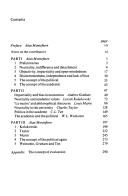
"Can a democratic society treat all its members as equals and also recognize their specific cultural identities? Should it try to ensure the survival of specific cultural groups? Is political recognition of ethnicity or gender essential to a person's dignity? These are some of the questions at the heart of the political controversy over multiculturalism and recognition - a debate that has raged across academic departments, university campuses, ethnic and feminist associations, and governments throughout the world. In this book Charles Taylor offers a historically informed, philosophical perspective on what is at stake in the demand made by many people for recognition of their particular group identities by public institutions. His thoughts serve as a point of departure for commentaries by other leading thinkers, who further relate the demand for recognition to issues of multicultural education, feminism, and cultural separatism."
"In his essay Taylor compares two competing forms of liberal government: one that protects no particular culture but ensures the rights and welfare of all its citizens, and one that nurtures a particular culture yet also protects the basic rights and welfare of nonconforming citizens. Questioning the desirability and possibility of the first conception, Taylor defends a version of the second. In response Steven Rockefeller warns against the ascendancy of particularist cultural identities over the universal identity of democratic citizens. Michael Walzer defends a liberalism that authorizes democratic citizens to adapt their politics to varying situations, and suggests that a culturally neutral politics best suits the United States. Proposing an alternative perspective to Taylor's presumption of value in foreign cultures, Susan Wolf identifies the demand for multicultural education with an accurate understanding of who "we" Americans are. Amy Gutmann focuses on the debate over multiculturalism and free speech on university campuses, arguing that the demands of liberal democratic education are far greater than either essentialists or deconstructionists commonly recognize." "Multiculturalism and "The Politics of Recognition" will stimulate constructive discussion and enlighten public discourse on the difficult issues surrounding multiculturalism. The volume is based on the Inaugural Lecture for the University Center for Human Values at Princeton University, founded in 1990 through an endowment by Laurance S. Rockefeller."--Jacket.
Ratings & reviews
Log in to rate or review this book.
No written reviews yet.
Discussions
Talk about this book with other readers.
Log in to start a discussion.
No discussions yet.
Editions

Details & links
- First published
- 1992
- Pages
- 112
- Languages
- Available in 1 language
Where to buy this book: see “Buy this book”
More about this book
Read a sample, borrow it or see other editions → openlibrary.org