One more and one less
1974
47 pages
Children's
Birds and animals joining and leaving the group introduce basic principles of adding and subtracting.
Birds and animals joining and leaving the group introduce basic principles of adding and subtracting.
Harriet the elephant is determined to be the first in line for the circus.
Harriet the elephant enjoys many activities at her nursery school. On heavy board pages.
Harriet the elephant likes to play with her many toys.
Describes the life cycle of an apple from its initial appearance as a spring bud to that point in time when it becomes a fully ripe fruit.
Discusses both hypothetical and historical voyages of discovery to America by the Phoenicians, Saint Brendan of Ireland, the Vikings, and such later European navigators as Columbus, Cabot, and Magellan.
Explains how leaves change their colors in autumn and then separate from the tree as the tree prepares for winter.
Describes how the Constitution was drafted and ratified.
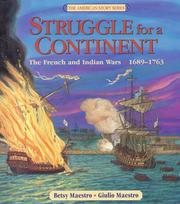
Discusses the relations between the European colonists and the Native Americans, the disputes between settlers from France, England, and Spain, and the role these conflicts played in the history of North America.
Describes how the lives of America's native inhabitants are changed forever by European explorers who claim the land and its resources for their countries.
Traces the competition among the American Indians, French, English, Spanish, and Dutch for land, furs, timber, and other resources of North America.
Discusses the year 2000 as a milestone marking two thousand years of human achievement, as a threshold leading into a new millennium, and as an important anniversary of the birth of Jesus Christ.
Describes the creation of the huge statue given by France to the United States and its erection in New York Harbor as a symbol of liberty.
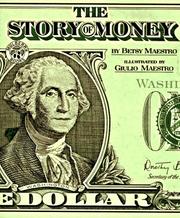
A history of money, beginning with the barter system in ancient times, to the first use of coins and paper money, to the development of modern monetary systems.
Text and illustrations introduce words with opposite meanings such as over and under, big and little, and front and back.
Rhyming riddles answer questions about a variety of animals at school.
Describes the varieties, habitats, behavior, and physical characteristics of snakes.
Describes the varieties, habitats, behavior, and physical characteristics of sharks.
The reader is introduced to such typical city words as "theater,""museum," "office building," and "train station" as a taxi travels through a hectic workday in and around the city.
Introduces a number of compound words, such as suitcase, railroad, and tablecloth, through the story of a family taking a train trip.
Discusses various religions found throughout the world and covers religious personalities, histories, sacred texts, and basic beliefs.
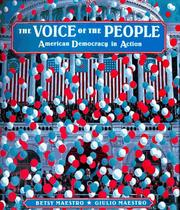
A basic guide to voting and the election process in the United States.
A collection of original riddles making use of homographs, words that are spelled the same but have different meanings.
By using her wits, Monkey manages literally to get herself out of a hole.
Describes the varieties, habitats, behavior, and physical characteristics of bats.
Text and illustrations describe the unceasing activity at a busy seaport, including the coming and going of various ships and the moving of cargo by big machines.
Easy games help the reader learn the basic structure and principles of the multiplication tables.
The reader is introduced to typical town and country words such as "roadside stand," "village,""dairy farm," and "marina" as a delivery van and its woman driver travel through a busy workday.
Answers such questions as "What do trees drink at a party?" and "What games do eggs play?"
A family takes a bicycle trip and experiences the sights, sounds, and smells of town, country, and seashore.
Activities surrounding a day at the circus illustrate such action words as pulling, marching, waving, laughing, and washing.
Labeled illustrations present such activities of camping as packing, fishing, chopping, singing, rowing, hiking, and dreaming.
A collection of haiku depicting a variety of scenes from nature.
A family crosses a river on a ferryboat and observes how the ferry operates.
A collection of humorous riddles on a Halloween theme including "Why did the ghost's car stop dead? It ran out of gasps."
A collection of riddles about witches, vampires, skeletons, and other scary Halloween creatures.
Introduces adjectives through a picture tale depicting the adventures of two friends vacationing at the beach.
Words for and pictures of the clothing worn by a well-dressed man, woman, and elephant for daytime and nighttime activities.
A collection of riddles involving city and state names, important rivers and parks, and other famous places in the United States.
A collection of sixty-one riddles based on different kinds of word plays such as puns, homonyms, and homographs.