10 books in our catalogue.
2016
285 pages
Psychology & Self-Help
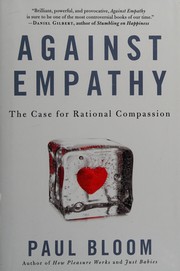
"We often think of our capacity to experience the suffering of others as the ultimate source of goodness. Many of our wisest policy-makers, activists, scientists, and philosophers agree that the only problem with empathy is that we don't have enough of it. Nothing could be …
2023
464 pages
Psychology & Self-Help
2013
273 pages
Philosophy & ReligionPsychology & Self-Help
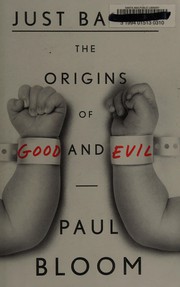
"From Sigmund Freud to Jean Piaget, psychologists have long believed that we begin life as amoral animals. After all, isn't it the role of society--and especially parents--to transform babies from little psychopaths into civilized beings who can experience empathy and shame, and override selfish impulses? …
2010
304 pages
Humans have an incredible spectrum of emotions and feelings that can be felt on any given day. The book, How Pleasure Works: The New Science of Why We Like What We Like by Paul Bloom, shows us just that. He introduces the reader to a …
2021
304 pages
Psychology & Self-Help
Why do we so often seek out physical pain and emotional turmoil? We go to movies that make us cry, or scream, or gag. We poke at sores, eat spicy foods, immerse ourselves in hot baths, run marathons. Some of us even seek out pain …
2004
280 pages
Psychology & Self-HelpScience & Nature
"Why is forgery worth so much less than an original work of art? What's so funny about someone slipping on a banana peel? When do children start to believe in the afterlife? Why, as Freud once asked, is a man willing to kiss a woman …
1993
628 pages
A collection of articles by language scientists. Language Acquisition offers, in one convenient reader, work by the most outstanding researchers in each field and is intended as a snapshot of the sort of theory and research taking place in language acquisition in the 1990s. All …
2000
300 pages
Language & ReferencePsychology & Self-Help
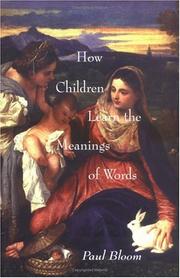
"According to Paul Bloom, children learn words through sophisticated cognitive abilities that exist for other purposes. These include the ability to infer others' intentions, the ability to acquire concepts, and appreciation of syntactic structure, and certain general learning and memory abilities. The acquisition of even …
2010
280 pages
In this fascinating and witty account, Yale psychologist Paul Bloom draws on insights from child development, philosophy, neuroscience, and behavioral economics to examine the science behind our curious desires, attractions, and tastes, covering everything from the animal instincts for sex and food to the uniquely …