66 books in our catalogue.
1996
245 pages
Children's
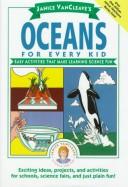
Includes information on techniques and technologies of oceanography, the topology of the ocean floor, movement of the sea, properties of sea water, and life in the sea.
1997
247 pages
Children'sScience & Nature
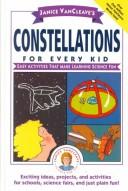
Describes twenty of the most prominent constellations, including the Big Dipper, Orion, and Cancer, explains how to locate them, and provides instructions for related activities.
1998
122 pages
Politics & SocietyScience & Nature
1998
122 pages
Children's
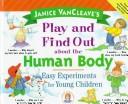
Presents simple experiments answering such questions about the human body as "Why does my skin pucker up when I take a long bath?" "Why are my bones hard?" and "How much breath do I have?"
1999
125 pages
Children'sScience & Nature
1999
232 pages
Children'sFood & Cooking
Uses problems, experiments, and activities to present information on a variety of topics related to foods and nutrition.
1991
241 pages
Children'sScience & Nature
Presents 101 experiments relating to physics using materials readily available around the house.
1994
117 pages
Children's
1994
221 pages
Children's
Discover how to solve simple geometry problems through easy activities.
2002
232 pages
Children'sFood & Cooking
2002
162 pages
Children's
Presents simple experiments answering such questions about the human body as "Why does my skin pucker up when I take a long bath?" "Why are my bones hard?" and "How much breath do I have?"
2004
213 pages
Children's
Teaches children about ecology and provides instructions to simple experiments.
2013
Children'sScience & Nature
2013
Children'sScience & Nature
2013
Children'sScience & Nature
1991
229 pages
Children'sScience & Nature
An elementary science experiment book that provides young scientists with safe, workable astronomy projects.
1991
215 pages
Children'sScience & Nature
Presents 101 simple math problems and experiments intended to introduce basic mathematical principles.
1996
219 pages
Children's
1994
224 pages
Children's
1994
230 pages
Children's
1993
88 pages
Children's
A collection of experiments and projects exploring various aspects of earthquakes.
1993
87 pages
Children'sScience & Nature
A collection of science projects and experiments using magnets.
Standalone books
1989
232 pages
Science & Nature
Instructions for experiments, each introducing a different chemistry concept and demonstrating that chemistry is a part of our everyday life.
2004
242 pages
Children's
2007
224 pages
Children'sScience & Nature
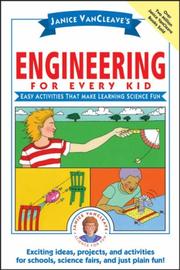
Now you can discover the answers to these and many other fascinating questions about engineering for yourself with this fun-filled resource. Janice VanCleave's Engineering for Every Kid presents entertaining, challenging experiments and activities to help you understand the different types of engineering there are--including structural, …
1988
232 pages
Science & Nature
Instructions for experiments, each introducing a different chemistry concept and demonstrating that chemistry is a part of our everyday life.
1993
211 pages
Children's
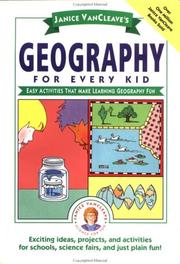
Introduces basic concepts of geography through simple problems and activities such as constructing a clay map, making a compass rose, and plotting the track of a hurricane.
2004
120 pages
Children'sScience & Nature
Presents interesting facts and fun experiments that relate to different geographical regions of the world--also known as biomes.
1990
234 pages
Science & Nature
2005
226 pages
Science & Nature
1994
123 pages
Children'sScience & Nature
2004
200 pages
Children's
1991
231 pages
Children's
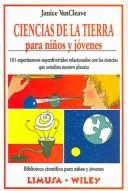
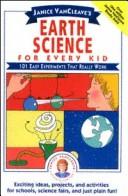
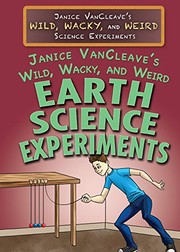
Instructions for experiments, each introducing a different earth science concept.
2003
506 pages
Science & NatureYoung Adult
2004
200 pages
Children's
1985
172 pages
Science & Nature
Grade level: 1, 2, 3, 4, 5, 6, 7, p, e, i, t.
2004
200 pages
Children's
2004
228 pages
Children's
Children's
Teaches children about ecology and provides instructions to simple experiments.
2007
213 pages
Science & Nature
RESUMEN: Este libro trata ampliamente el tema de las propuestas para la enseñanza de las matemáticas para la educación primaria y secundaria. Las investigaciones propuestas en este libro proporcionarán un importante apoyo didáctico encaminado a que los alumnos puedan desarrollar un conocimiento básico de las …
2003
254 pages
Children'sScience & Nature
1999
225 pages
Children's
1993
211 pages
Children's
2002
166 pages
Children'sScience & Nature
1993
116 pages
Children'sScience & Nature
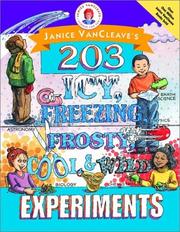
Provides instructions for 200 experiments in biology, chemistry, physics, earth science, and astronomy.
1996
124 pages
Children'sScience & Nature
Provides instructions for over 200 short experiments in astronomy, biology, chemistry, earth science, and physics.
1999
234 pages
Children's
Presents thirty sample science projects as well as ideas for small changes to the original experiments thereby encouraging creativity and increased learning.
2006
213 pages
Science & Nature
Activities that teachers can use to introduce science to young students.
2002
122 pages
Children's
A collection of projects from all the scientific disciplines with step-by-step instructions.
1999
121 pages
Children's
Presents simple experiments answering such questions about insects as "Are spiders insects?" "Where do butterflies come from?" and "Why do fireflies light up?"
1996
122 pages
Science & Nature
2000
122 pages
Children's
2003
122 pages
Biography & MemoirChildren'sScience & Nature
1995
223 pages
Children's
2016
64 pages
Children'sScience & Nature
2006
155 pages
Children'sScience & Nature
A collection of thirty-five science fair projects in astronomy, biology, chemistry, earth science, and physics, plus suggestions for designing original projects.