Alexander Pope was an English poet, translator, and satirist of the Enlightenment era who is considered one of the most prominent English poets of the early 18th century. An exponent of Augustan literature, he is best known for his satirical and discursive poetry, including An Essay on Criticism (1711), The Rape of the Lock (1712–1717), The Dunciad (1728–1743), and for his translations of Homer.
From Wikipedia · CC BY-SA 4.0
42 books in our catalogue.
1733
73 pages
Language & ReferencePhilosophy & ReligionPoetry & Drama
"Voltaire called it "the most sublime didactic poem ever written in any language." Rousseau rhapsodized about its intellectual consolations. Kant recited long passages of it from memory during his lectures. And Adam Smith and David Hume drew inspiration from it in their writings. This was …
1986
1717 pages
Language & Reference
1714
67 pages
★ 3.60 · 10
Poetry & DramaPolitics & Society
A satiric poem about Belinda and the evil Baron who wants to steal a lock of her hair, it is a commentary on the battle of the sexes and the contemporary social world of high society.
1740
152 pages
Art & PhotographyLanguage & Reference
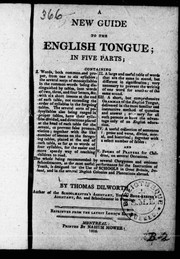
"Reprinted from the latest London edition"
1789
306 pages
Poetry & Drama
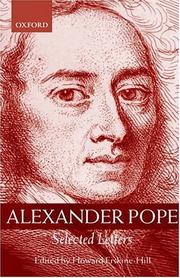
"Pope's letters are fascinating documents, apart from his importance as a poet. Highly revealing of his character - they also comprise a body of writing of interest for an understanding of his times: its personalities, its plots, its tragedies and exiles, its loves, its scandals, …
1711
56 pages
Poetry & Drama
With an elaborate introductory study.
1727
185 pages
Language & ReferencePoetry & Drama
Griffith 552;Head- and tail-pieces; initials; Anonymous. By Alexander Pope; M.E. Barry Rare Book Collection. Special Collections, Alumnae Library, Elms College; Description based on print version record.
1988
2167 pages
Literary & ClassicsPoetry & Drama
1760
Book digitized by Google from the library of Oxford University and uploaded to the Internet Archive by user tpb.
1741
408 pages
HumourLiterary & Classics
"In this merciless attack on eighteenth-century society, Alexander Pope expertly satirses the blind reliance on false learning that was then so prevalent. By taking one ambitious father and his determination to do everything in his power to produce a child of genius, Pope exposes the …
1773
484 pages
Biography & MemoirPoetry & Drama
1868
319 pages
Poetry & Drama
1991
1682 pages
Literary & ClassicsPoetry & Drama
1984
734 pages
Poetry & Drama
1717
80 pages
Poetry & Drama