Jared Mason Diamond is an American scientist, historian, and author. He has written hundreds of scientific and popular articles and books, most notably Guns, Germs, and Steel (1997), which received multiple awards, including the 1998 Pulitzer Prize for general nonfiction. In 2005, Diamond was ranked ninth on a poll by Prospect and Foreign Policy of the world's top 100 public intellectuals.
From Wikipedia · CC BY-SA 4.0
11 books in our catalogue.
1997
528 pages
★ 4.14 · 155
Business & EconomicsHistory
An epic detective story that offers a gripping expose on why the world is so unequal. Professor Jared Diamond traveled the globe for over 30 years trying to answer this question.
2004
648 pages
★ 3.69 · 36
HistoryPolitics & Society
"In his Pulitzer Prize-winning bestseller Guns, Germs, and Steel, Jared Diamond examined how and why Western civilizations developed the technologies and immunities that allowed them to dominate much of the world. Now, Diamond probes the other side of the equation: What caused some of the …
1991
432 pages
Politics & SocietyScience & Nature
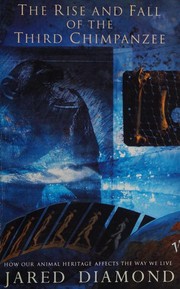
Explores the question of what in the less than two percent of genes has made humans different from apes.
2012
552 pages
HistoryPolitics & Society
Overview: Most of us take for granted the features of our modern society, from air travel and telecommunications to literacy and obesity. Yet for nearly all of its six million years of existence, human society had none of these things. While the gulf that divides …
2019
512 pages
Business & EconomicsHistoryPolitics & Society
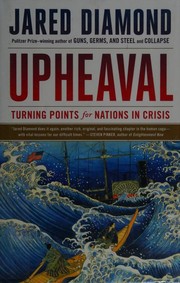
Upheaval: How Nations Cope with Crisis and Change is a 2019 nonfiction book by American scientist Jared Diamond. Diamond attempts to analyze devastating crises (political, economic, civil, ecological, etc.) that may destroy whole countries and the multiple reasons causing them. To support his analysis with …
1997
184 pages
To humans, the sex lives of many animals seem weird. In fact, by comparison with other animals, we are the ones with the weird sex lives. How did that come to be? We are the only social species to insist on carrying out sex privately. …
2007
387 pages
Science & Nature
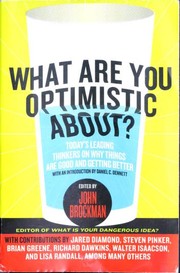
The nightly news and conventional wisdom tell us that things are bad and getting worse. Yet despite dire predictions, scientists see many good things on the horizon. John Brockman, publisher of Edge (www.edge.org), the influential online salon, recently asked more than 150 high-powered scientific thinkers …
1975
553 pages
Science & Nature
2004
29 pages
Politics & Society