
Standalone books


How to control your anger before it controls you
In their new approach to coping with anger, world famous psychologist Dr. Albert Ellis and Dr. Raymond Chip Tafrate present their thoroughly researched and proven technique designed to help understand the roots and nature of anger. Using simple instructions and exercises, readers can learn to …

How to stubbornly refuse to make yourself miserable about anything--yes, anything!




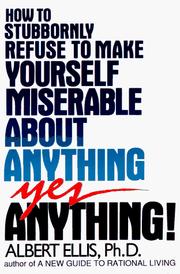
How to Stubbornly Refuse to Make Yourself Miserable About Anything

How to control your anxiety before it controls you
Our own irrational attitudes and beliefs often influence our feelings of anger, fear, and anxiety. Only when we examine and understand our false ideas and their harmful effects can we begin to loosen their grip on us. If we change our mindset, we can control …




All Out!
""One of the memorable and influential psychologists provides the ùncensored' story of his life and times, including the development of the revolutionary REBT approach to psychotherapy. All Out! is the master guide to full and rational living and a must read."--Jon Carlson, PSYD, EDD, distinguished …


Rational-emotive therapy with alcoholics and substance abusers








Better, Deeper And More Enduring Brief Therapy
In Better, Deeper, and More Enduring Brief Therapy, Albert Ellis, founder of Rational Emotive Behavior Therapy, describes how REBT can help clients to significantly improve in a short period of time (10 to 20 sessions) and effect a profound philosophical-emotional-behavioral change - more often than …


