Human Body (DK Eyewitness)
1993
64 pages
Children's
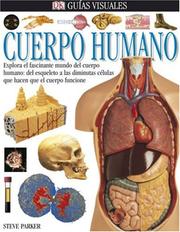
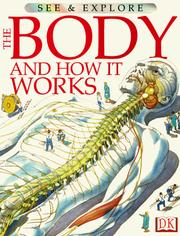
Text and illustrations present information on the parts of the body and how they work.
Text and illustrations present information on the parts of the body and how they work.
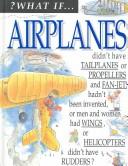
An imaginative look at airplanes through such questions as "What if airplanes didn't have air?" and "What if airplanes could go into space?"
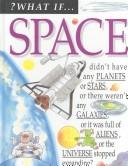
An imaginative look at space with such questions as "What if the sun went out?" and "What if there were Martians?"
Examines the world of fishes--from terrifying sharks to graceful seahorses--using a series of questions such as "What if a lungfish crawled out of the water?" and "What if a coral didn't build reefs?"
Eyewitness Guides are best-selling, high-quality visual information books. This title is a valuable resource to students whether you want to learn how many toes a horse has or what is the smallest bone in a human body.
Looks at how the human brain works, including memory and learning as well as brain and nerve diseases.
Presents an overview of the human life cycle, with information about reproduction, heredity, child development, and aging.
Discusses the life and discoveries of Galileo, the sixteenth- and seventeenth-century mathematician, physicist, and astronomer who challenged ideas more than a thousand years old and changed the course of science.
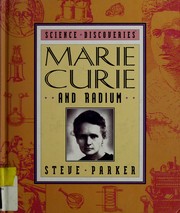
Details the life and work of Marie Curie from early childhood to the discovery of radium and her two Nobel Prizes.
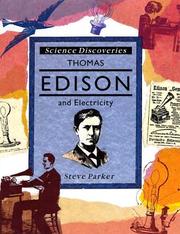
Details the life and work of Thomas Edison, who developed such inventions as the stock ticker, the lightbulb, and the phonograph.
Discusses the life of Isaac Newton, his discoveries and how those discoveries continue to be important today.
Discusses the life of Louis Pasteur, his discoveries and how those discoveries continue to be important today.
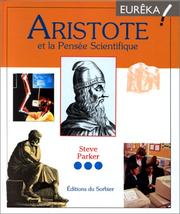
Presents an account of Aristotle's life, from birth to death, and explores his impact on science and history.
Describes the life and work of the Italian inventor Marconi, who was a pioneer in the development of the radio.
Describes the life and work of the twentieth-century physicist whose theory of relativity revolutionized scientific thinking.
Presents a biography of the speech teacher whose study of sound and the human voice led to the invention of the telephone.
Discusses the history and development of man-made satellites, from the launch of Sputnik 1 to the current use of satellites for communication, navigation, weather forecasting, and military purposes.
Explains how lasers work, describes ways in which they have revolutionized our lives, and predicts how they may be used in the future.
Examines dreaming as a neurological function and describes in simple terms the length of dreams, their significance, and the changes in the nervous system and the body during sleep.
Explains the functions of the brain and nervous system, and how sensory experiences and information are processed.
Examines the factors affecting the human voice, including pitch, volume, and rhythm, and provides exercises to demonstrate how different elements influence the sound that is heard.
Follows the life cycle of a foal from the stallion and mare mating to the foal's birth and growing into a mature horse that can be trained to carry a rider or to pull a cart.
Read about how a puppy/kitten is born; learn about how a puppy/kitten grows; discover the facts about animal life cycles.
Introduces the circulatory system and discusses how the respiratory system works with it to provide oxygen to all parts of the human body.
Takes the reader on a journey from the outermost surface of the body to its center, exploring skin, muscles, bones, the skeletal framework, and body movement.
Introduces the nervous system, explains its parts and how they function, and describes how it works with the five senses --
"Discusses the latest advancements in robotics and how they are used in scientific research and in medical applications"--Provided by publisher.
"Discusses how robots are used to explore planets and other bodies in space, advances in space robotics, and what we can learn from the data these robots gather"--Provided by publisher.
"An overview of chemistry for kids covering topics such as metals and nonmetals, states of matter, chemical changes, temperature and heat, acids and bases, and more"--Provided by publisher.
"An overview of physics for kids covering topics such as simple machines, force and movement, gravity, magnetism, light and sound, and more"--
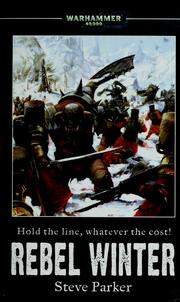
Across the war-torn galaxy, the Imperial Guard are a bastion against the enemies of mankind. From the punishing heat of Tallarn's deserts to the bonechilling tundras of Valhalla, these are soldiers who give their lives in the Emperor's name. Whether shoulder to shoulder or crushing …
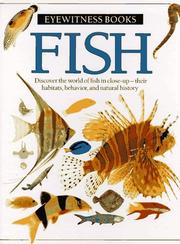
Photographs and text explore the characteristics, habitats, and variety of fishes and other undersea life.
Photographs and text examine the world of mammals, depicting their development, feeding habits, courtship rituals, protective behavior, and physical adaptation to their various ways of life.
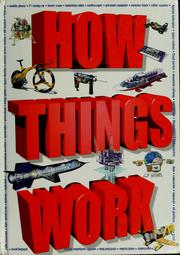
"Discover the inner workings of 150 machines, gadgets and vehicles, from a digital camera to a bucketwheel excavator. Detailed illustrations and labels reveal the technology behind key components, while photographs show machines in action"--Page 4 of cover.
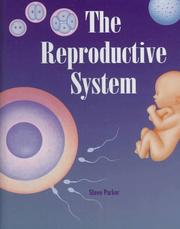
Explains the parts of the reproductive system and their functions and provides an overview of human development from birth through adolescence.
Brief text and photos introduce the animal inhabitants of the seashore, including fish, crustaceans, snails, and shorebirds.
A photo essay about the range of plants and animals found in fresh water throughout the year, examining the living conditions and survival mechanisms of creatures dwelling at the edge of the water, on its surface, or under the mud.
Examines the growing practice of altering genes for the purpose of curing disease and improving plants and animals, presenting both sides of this controversial issue.
"Dive in at the deep end and discover some new facts about some of the worlds oldest and most dangerous creatures"--Page 2 of cover.
Presents information on the nature and properties of electricity and magnetism, how they are used, and the need for conservation.
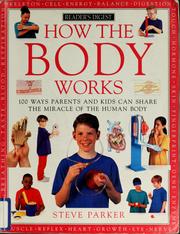
Looks at the different parts of the human body and how they work.
A general pictorial reference guide covers topics arranged into the categories "Our planet," "From past to present," "The way we live," "Animals and plants," "You and your body," "Science," "Machines and gadgets," and "Space."
Discusses the properties of electricity and describes how it is made and used.
In this book, full of facts, illustrations, cartoons and images, we meet some of the world's endangered animals and their plights.
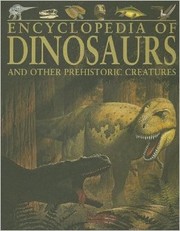
Text and cutaway illustrations depict the outer and inner anatomy of dinosaurs and other prehistoric animals.
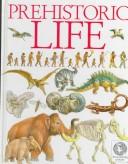
Text and illustrations explore the world of prehistoric animals and plants.
Professor Protein, Carol Calorie, and their friends tell how to get fit, stay healthy, keep clean, relax and rest, and enjoy life through the best foods, drinks, exercises, and sports.
Investigates the weather, mountain formation, ocean expansion, and other phenomena and forces of our planet.
Introduces different kinds of rocks and mineral crystals, discussing how they are formed, how to identify them, and how to build a collection.
A comprehensive first picture encylopedia.
An illustrated guide to geological and geophysical aspects of rocks and minerals in our world.
Provides experiments and projects involving the nature, properties, and behavior of water.
Discusses the male and female reproductive systems, explaining how they work together to form new life, and describing sexually transmitted diseases and other illnesses that affect the reproductive system.
Provides brief descriptions of birds that eat plants or seeds.
Describes the physical characteristics and habitats of different species of dinosaurs, looks into the theories of how dinosaurs became extinct, and shows how scientists study them today.
Ordinary appliances and gadgets around the house get a new look, with a view to understanding their origin, purpose, and function. Readers learn how to think up ideas for new and special tools and appliances.
Evolution: The Whole Story provides an in-depth account of evolution, one of the ultimate keystone theories in modern science. Ten experts survey how each of Earth's major groups of living things diversified and evolved through time. Using visual features that make the story comprehensible, the …
Why does your heart beat faster when you are afraid? How can steroid abuse affect your body's hormones? What causes diabetes, and can it be prevented? Investigate the miracles of the human body with Body Focus. Find out about the body parts and systems that …
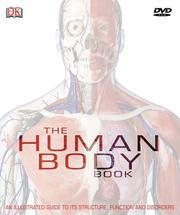
A guide to human anatomy for the 21st century. Includes unique computer-generated 3-D images. An essential interactive manual for healthcare professionals and students of human biology, as well as a comprehensive reference book for the family.
Looks at how the highest and lowest places on earth are formed, and discusses climate zones and weather factors for mountains and valleys.
Detail of the great apes, including: where they live, how they live and the challenges they face. Illustrations compare apes with human beings, including their anatomy, social life, physical and mental development, diet and communication.
An illustrated guide to geological and geophysical aspects of rocks and minerals in our world.
Space stations, including Skylab, Mir and the ISS are a vital outposts of scientific endeavour. Although only the ISS remains in orbit, the story of man's quest to live and conduct experiments in space is a tale of adventure, tragedy and genius. Six books that …
Examines the components, functions, and disorders of the nervous system.
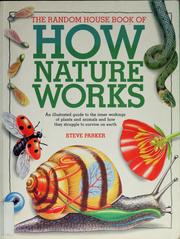
A guide to the way plants and animals function and struggle to survive on Earth.
A comprehensive, illustrated guide showing how more than 300 machines, mechanisms, and processes that affect our everyday lives work.
An illustrated overview of the CBS television series offers a behind-the-scenes look at the creation of the series, an in-depth look at the forensic work of the CSI team, character profiles, and hundreds of full-color photographs.
Describes some of the external and internal workings of such craft as an airship, a helicopter, a jumbo jet, and a microlight plane. Suggested level: intermediate, junior secondary.
Exactly 100 facts accompanied by photographs and artwork reveal fascinating facts and tips about cat and kitten care. Learn about the first pet cats, discover how mother cats care for their young, and find out how you can raise a contented cat. Throughout there are …
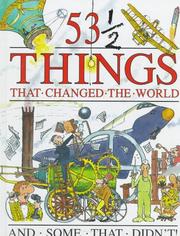
"Imagine life without music, buildings, clothes, books, engines or even speech! This is what the world would be like without these 53 1/2 things that changed the course of history. From primitive discoveries such as fire and the wheel, to modern creations such as the …
Une documentation structuree a caractere didactique, redigee dans un style clair et un vocabulaire technique. Schemas explicatifs, illustrations, ajoutent a la precision du texte.
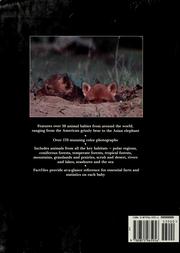
Photographs and text focus on over fifty of the world's most appealing wild animal babies, grouped by habitat, and follows the baby's progress from birth to independence.
La vie et l'oeuvre de ce philosophe de l'Antiquité grecque. A partir de 8 ans.
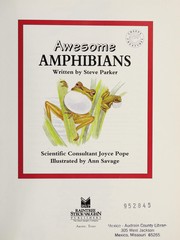
Examines the physical characteristics, habitat, and behavior of various frogs, toads, salamanders, and other denizens of the amphibian world.
Learn facts about automobiles such as how car technology has evolved from steam-powered to todays high-tech speed machines and how the various components work. Contains glossary.
Presents information on how and where to find fossils, the preparation and tools needed for collecting them, and how to identify the various kinds: plant, invertebrate, and vertebrate.
Explains how animals survive by adapting to various conditions and places where they live.
Cette collection propose de façon objective et neutre, une sensibilisation des enfants aux problèmes environnementaux actuels. Cet ouvrage porte un constat sur la consommation des énergies traditionnelles et montre que l'utilisation des énergies renouvelables (soleil, vent, plantes ...) contribue à préserver l'équilibre écologique de la …
The wonders of space exploration are portrayed in detail through one hundred facts, fantastic images, and fun cartoons. Learn about robot rovers that explore other planets, discover why some probes smash into comets, and find out how spacecraft hurtle through space--
Explores the most important aspects of animal life: skeletons, how animals find food, the cycles of life, camouflage, migration, evolution, and extinction.
An introduction to the digestive system, discussing each stage of digestion, the organs which aid in the digestive process, and the assimilation of nutrients into the body's structure.
Examines the natural and mechanical processes that produce everyday objects, from the dyeing of denim for jeans to the welding of steel for a skyscraper.
Collection d'albums étudiant en détail un groupe spécifique d'animaux (origine, morphologie, caractéristiques physiques, comportements spécifiques, espèces, accouplement, etc.). Les textes, richement documentés, sont accompagnés par des photographies et des encarts fournissant des informations anecdotiques. Une double page est consacrée aux dangers qui menacent certaines espèces …
Describes the physical characteristics, behavior, and metamorphosis of insects and examines kinds of garden insects, woodland insects, insects in the home, and others.
Take a detailed look at how nature works with this series. Highly detailed, realistic artwork is presented with cutaways and exploded views to help children understand each idea. Clear text accompanies each topic.
Uses the viewpoint of a frog to present life at a busy English pond, including the activities of other frogs, a toad, a newt, and a heron.
Text and illustrations introduce the geography, history, people, and culture of Japan.
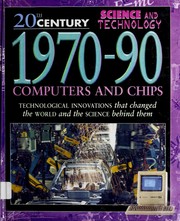
Des réponses sont données à toutes sortes de questions sur les nouvelles technologies.
Cette nouvelle et etonnante collection traite de sujets passionnants tel que : le corps humain, les animaux, les machines rapides et les mega machines, qui nous sont presentes en detail et precision. Chaque livre contient des superbes graphiques et photographies couleurs, traitees a lordinateur sour …
Describes different kinds of magnets and how they are used and presents a variety of experiments and other activities involving magnetism.
This title explores the mysteries of the night sky. One for the aspiring astronomer.
"Travel to a range of different animal kingdoms in this second series of Animal Diaries. From the hot savannah plains of Africa to the freezing cold South Pole, from soaring in the sky to living near a pond, each diary is an amazing insight into …
Rassemble 560 portraits d'animaux dans leur habitat naturel. Avec des tableaux synthétiques pour chaque famille d'animaux.
Discusses the four main habitats of our world: deserts, rainforests, polar regions and oceans and shows how they are homes to a huge variety of animals as well as peoples.
Explains how farming affects land and habitats, how to waste less food, and how buying food locally cuts down on transportation costs.
Describes different types of coastlines, including mudflats, high cliffs, and sandy beaches, and the animals and plants living there. Also suggests ways to keep the shores clean and natural so that their wildlife can flourish.
Illustrates basic principles of chemistry, using experiments and tricks and showing things that can be made. Suggested level: primary, intermediate, junior secondary.
Uses brief text, illustrations, quizzes, games, and experiments to explain all about sound, which sounds animals and humans can hear, how sound can smash matter, and how it can heal.
Space Kids is a a poetic introduction to Space that is aimed to inspire wonder in the littlest of scientists.
Examines the systems and parts of the human body and how they work, including the skin, blood, bones, lungs, and heart.
Examines the anatomy of the eye and explains how the eyes and the brain work together to record visual messages. Also discusses vision defects, how to protect the eyes, and color blindness.
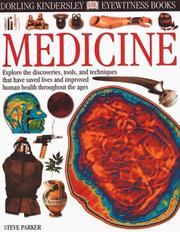
Surveys the art and science of medicine from ancient times to the present, focusing on the most important modern discoveries and innovations in preserving health, fighting illness, and curing diseases.
"An in-depth look at the M1 Abrams Main Battle Tank, with detailed cross-section diagrams, action photos, and fascinating facts"--Provided by publisher.
Looks at the muscles, bones and joints that make up the musculo-skeletal system - Shows how this system supports and protects the human body and allows it to move around - Examines the composition and workings of bones, muscles and tendons and considers the problems …
Examines the three senses of touch, taste, and smell, and the bodily processes contributing to them.
Discusses efforts to save the environment through recycling and waste management.
The water cycle - Hydroelectric dam - Water and steam - Wave power - Tidal power.
Exactly 100 facts about many different kinds of whale, dolphin and porpoise. Learn about their families, discover which are the most fearsome hunters and find out how they communicate with each other.
"Walk with the first land roamers. Fly with prehistoric creatures of the sky. Swim with the ocean's original sea monsters"--Page 2 of cover.