61 books in our catalogue.
1993
64 pages
Children'sScience & Nature
Illustrates with simple examples and experiments the principles behind natural forces and the motions they create as well as their effects and how they can be utilized. Suggested level: primary, intermediate.
1993
64 pages
Children'sScience & Nature
Introduces the solar system, its planets, moons, asteroids, and comets, and its exploration.
1994
64 pages
Children'sScience & Nature
1994
64 pages
Children's
Discusses such aspects of weather as wind, rainbows, and climate and presents a variety of experiments and other activities involving the weather.
1996
64 pages
Children'sScience & Nature
Describes what stars and constellations can be seen in the night sky and provides instructions for finding them.
1988
31 pages
Children's
A collection of science activities demonstrating the properties of light.
1988
32 pages
Children'sScience & Nature
Science activities and experiments demonstrate how plants make food and grow.
1991
32 pages
Children'sScience & Nature
Presents general information about the planets and other bodies in the solar system with suggestions for observation.
1991
32 pages
Children's
Explains the origins of weights and measures, how they have changed over the years, and how they can be used to measure different things. Includes projects and questions.
2000
40 pages
Children's
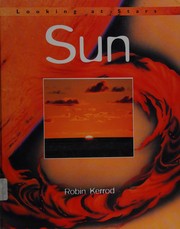
Describes the characteristics of the sun, including its origins, composition, and surface features, and its importance to life on Earth.
Standalone books
2002
160 pages
Children'sScience & Nature
1975
64 pages
Children'sScience & Nature
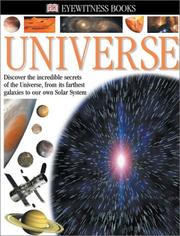
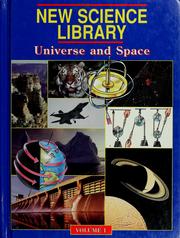
Discusses the planets and sun of our galaxy, other stars and galaxies, and man's exploration of the universe.
2003
192 pages
Science & Nature
1997
247 pages
Language & Reference
1980
96 pages
Children's
Surveys rockets, satellites, and space travel in question and answer format.
2000
256 pages
Language & Reference
1993
240 pages
Science & Nature
1985
192 pages
Language & Reference
1993
240 pages
Children's
2000
48 pages
Children's
Describes the two largest planets in our solar system, including their formation, location, appearance, and moons.
1988
96 pages
Children's
Introduces a number of mammals, including the bat, baboon, and gray whale.
2004
48 pages
Children's
Explores the history of space homes such as the Soviet's Salyut 1, Mir, the United States's Skylab, and the International Space Station, a truly international venture between several countries and scheduled for completion in 2008.
2003
96 pages
Science & Nature
1991
192 pages
Children'sScience & Nature
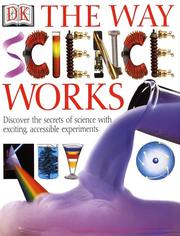
Surveys the world of science, examining such areas as chemistry, forces and energy, light, heat, electronics, and life science.
2002
319 pages
Science & Nature
2006
Children'sScience & Nature
Full of fun and fascinating questions and answers, this handy, compact volume is perfect for inquisitive readers eight and up. With its fresh, appealing design and lively, informative text, the book tackles seven core subjects--Stars and Planets, Planet Earth, Dinosaurs, Ancient Civilizations, Knights and Castles, …
1987
55 pages
Children'sScience & Nature
Text and illustrations examine the characteristics of the Earth, the weather and the seasons, and the stars and planets. Includes instructions for simple projects and experiments and a glossary of terms.
1992
29 pages
Children'sHistory
Text and photographs present flying machines throughout history, including hot-air balloons, helicopters, and the space shuttle.
1999
192 pages
Science & Nature
1985
104 pages
Children's
1974
61 pages
Children's
Traces the development of the automobile and explains how its various internal systems operate.
2004
48 pages
Children'sHistory
1992
80 pages
Children's
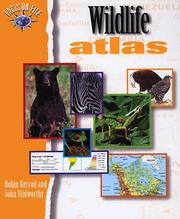
Describes the different types of wildlife in the world and explains how and why each region has its own unique mix of creatures; focuses on habitats, evolution, migratory patterns, and danger of extinction.
1984
118 pages
Children'sScience Fiction
Brief text and illustrations present the development of space travel from the launching of the first rockets and satellites to the space shuttle which could make living and working in space a common experience in the near future.
1996
144 pages
Science & Nature
1987
55 pages
Children'sScience & Nature
Examines such scientific topics as energy, sound, light, color, gravity, magnetism, and electricity. Includes simple activities and experiments.
1982
64 pages
Children's
Traces the development of mechanical devices used to assist humans in performing particular functions or to replace humans in carrying out certain tedious, time-consuming, or dangerous tasks.
1980
24 pages
Children's
An illustrated introduction to the history of space vehicles, including launching rockets, space shuttles, planetary probes, manned spacecraft, lunar explorers, space stations, and future craft.
1985
72 pages
Science Fiction
1987
192 pages
Children's
1979
125 pages
Science & Nature
An introduction to astronomy with emphasis on the characteristics and interrelationship of the stars and planets in our galaxy.
2001
144 pages
Children's
1991
77 pages
Children'sScience & Nature
1983
253 pages
Language & ReferenceScience & Nature
1991
96 pages
Language & ReferenceScience & Nature
2003
264 pages
Language & Reference
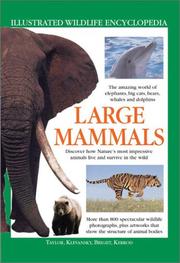
Examines the lifestyles, habitats, and behavior of elephants, big cats, bears and pandas, whales, and dolphins.
1980
93 pages
Presents projections, based on present-day technology, of life in the future, including how world problems may be overcome and how people may change and extend their environment.
1983
64 pages
Children's
An overview of trains of various types and in different countries.
1996
144 pages
Children'sScience FictionScience & Nature