Measuring
1971
71 pages
Children's
Explains the need for standard units of measure and suggests simple experiments that demonstrate the use of these units in measuring distance, volume, and weight.
Explains the need for standard units of measure and suggests simple experiments that demonstrate the use of these units in measuring distance, volume, and weight.
A simple approach to mathematics stressing set theory.
Describes how force and gravity set objects in motion and how they influence the velocity and direction of moving objects. Also discusses the perception and measurement of motion.
Simple experiments introduce the basic elements of heat and temperature.
Introduces through simple experiments the basic properties of solids, liquids, and gases.
A simple introduction to the chain of life and other aspects of ecology with suggestions for experiments.
A simple introduction to the sun, its characteristics, and its importance.
A simple introduction to the universe and Earth's relationship to it.
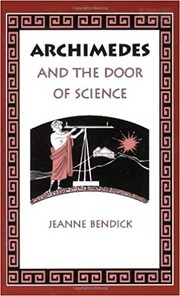
Against the backdrop of Archimedes' life and culture, the author discusses the man's work, his discoveries and the knowledge later based upon it.
This book describes how curious people discovered the elements that are today known collectively as the periodic table. Various chapters describe the methodical science, accidents, and coincidences that led people to acknowledge a variety of invisible, nearly undetectable substances that make up our universe. Appropriate …
Introduces many interesting facts, puzzles, and challenges with numbers, which stir the imagination and increase number literacy.
An introduction to some of the basic concepts in geometry and where they are met in everyday life, including sections on mathematics in art or music, and the use of letters and charts in mathematics.
Examines how archaeologists discover ancient burial tombs, and the secrets these tombs reveal about the cultures of such Indian civilizations as the Moche, Quipus, Mayas, Aztecs, and Anasazi.
Describes the plants and animals of an ocean tide pool and their dependent interrelationships.
Compares and explains weights and measures throughout the world as well as the history of many current standards.
Tells the stories of markets all over the world, from ancient times to the present day.
A basic introduction to natural phenomena we see when we simply look carefully at the world around us.
Discusses the design, purpose, and excavation of the pyramids of ancient Egypt, the Egyptians' beliefs about death, how mummies were made, and some legends about the pyramids.
Explains the formation of different kinds of clouds, what they are called, what they indicate about changing weather, and how they "make" rain, snow, sleet, hail, or fog.
Describes television transmitting equipment, including cameras, lights, the control room, relays, and antennas; television programming, videotape and special effects; and special uses of television in sports, news events, commercials, educational television, and closed circuit and pay TV.
An introduction to airplanes, covering briefly principles of flight, airplane engines, air history, airports, safety rules, airliners, freight planes, and other flight vehicles such as helicopters, rockets, and missiles.
Text and pictures present the formation, types, inhabitants of, and exploration of caves.
Describes the development of the airplane and some of the inventions that have made it a more common means of transportation.
Discusses how a television works and the history of its development.
An easy-to-read discussion of how living things inherit traits and the influence of environment upon heredity.
Explains what lightning is, what makes a thunderstorm, aspects of air, kinds of lightning, thunder, and how to act during a thunderstorm.
Defines space and discusses early concepts of it, reasons for exploring it, and methods of exploration.
A simple description of the diverse functions of various types of automobiles.
Examines the mystery of the Loch Ness monster by reviewing its history, the geography of the lake, maps, photographs, and sketches.
An introduction to airplanes, discussing principles of flight, airplane engines, air safety, airplane history, and various kinds of airplanes including the space shuttle.
Outlines steps to take in specific emergencies and gives information on emergency first aid and prevention of common accidents. Organized by the type of emergency; for example, fire emergencies, weather emergencies, water-sport emergencies, or outdoor emergencies.
Discusses how a telephone works and the history of its development.
Gives instructions on making films including choosing and operating a camera, writing a script, and organizing a film crew.
Discusses the many different kinds of jobs in television news reporting and the special aptitudes required for them.
A dictionary of mathematical terms from abacus to zone. Includes a section of tables, symbols, abbreviations, and formulas.
Discusses the principles, practicality, and possibilities of using solar energy to do some of our everyday work.
Describes the operation and history of supermarkets, including where the groceries come from; how they are purchased, delivered, and displayed; and innovations in supermarkets.
An introduction to time and its measurement, describing the solar year and the calendar year, spring and autumn equinoxes, calendars in history, chronometers, atomic clocks, the earth as a geologic clock, and plant and animal clocks.
Describes simply the process of evolution and how it resulted in the plants and animals of the world today.
Discusses the sources and uses of different types of energy.