Atoms
2003
32 pages
Children's
Describes the concept and importance of matter, elements, atoms, molecules, and compounds, and introduces the Periodic Table of Elements.
Describes the concept and importance of matter, elements, atoms, molecules, and compounds, and introduces the Periodic Table of Elements.
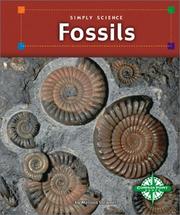
Explains what fossils are, how and where they can form, and where they can be found.
Introduces the concept of motion, including the three rules or laws that explain the motion of objects developed by scientist Sir Issac Newton.
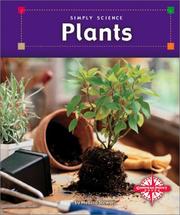
Describes plant structures, photosynthesis, and life cycles and discusses the importance of plants to animals and humans.
"Explains to young readers how to tell the difference between alligators and crocodiles"--Provided by publisher.
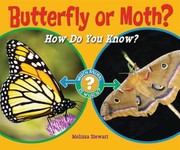
"Explains to young readers how to tell the difference between butterflies and moths"--Provided by publisher.
"Explains to young readers how to tell the difference between frogs and toads"--Provided by publisher.
"Explains to young readers how to tell the difference between insects and spiders"--Provided by publisher.
"Learn about everything from early arthropods to dinosaurs and early humans. Read jokes about all of these topics, and learn how to write your own"--Provided by publisher.
"Learn about electricity, static, magnetism, and more. Read jokes about all of these topics, and learn how to write your own"--
"Learn about sun, rain, tornadoes, snow, the reason for the seasons, and more. Read jokes about all of these topics, and learn how to write your own"--Provided by publisher.
"Provides comprehensive information on the role gas plays in the body science of humans and animals"--Provided by publisher.
"Provides comprehensive information on the role the immune system plays in the body science of humans and animals"--Provided by the publisher.
"Provides comprehensive information on the role hair and nails play in the body science of humans and animals"--Provided by the publisher.
"Provides comprehensive information on the role eyes and sight play in the body science of humans and animals"--Provided by the publisher.
"Provides comprehensive information on the role the nose plays in the body science of humans and animals"--Provided by publisher.
"Provides comprehensive information on the role spit plays in the body science of humans and animals"--Provided by publisher.
"Provides comprehensive information on the role ears and hearing play in the body science of humans and animals"--Provided by publisher.
"Provides comprehensive information on the role the heart plays in the body science of humans and animals"--Provided by publisher.
"Uses examples of animals in the wild to explain why some animals are blue"--Provided by publisher.
"Uses examples of animals in the wild to explain why some animals are purple"--Provided by publisher.
"Uses examples of animals in the wild to explain why some animals are red"--Provided by publisher.
"An examination of the phenomena and scientific principles behind plant growth"--Provided by publisher.
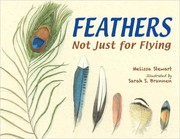
Young naturalists meet sixteen birds in this elegant introduction to the many uses of feathers. A concise main text highlights how feathers are not just for flying. More curious readers are invited to explore informative sidebars, which underscore specific ways each bird uses its feathers …
"An examination of the phenomena and scientific principles behind the changing of the seasons"--Provided by publisher.
Chronicles the life of Tim Berners-Lee from his birth in London to his development of the tools needed to view Web pages and provides information about how to become a comuter programmer.
Beautiful photography and lyrical text pair with comprehensive picture captions in award-winning author Melissa Stewart's story about the surprisingly diverse world of seeds. Learn all about the plant cycle, from how seeds grow, the fascinating ways they travel, and what it takes for a seed …
"An examination of the phenomena of scientific principles behind the ability of fish to extract oxygen from water"--Provided by publisher.
Explore 12 species that you hope you'll never come across, from sharks, snakes, jellyfish, bears, tigers and mosquitoes.
Explains how the behaviors and characteristics of different predatory animals, including wolves, polar bears, army ants, and orcas, are valuable in their pursuit of food.
Text in question-and-answer format helps readers understand how the human body works, including how DNA makes a person special, how cells work in the body, how a heart pumps blood, and more. "Why do I have a belly button? What happens to the food I …
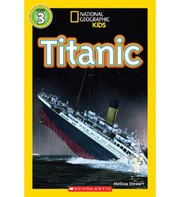
Discusses the Titanic, including its design, how the ship sank, the passengers onboard, and why the ship's legacy lives on.
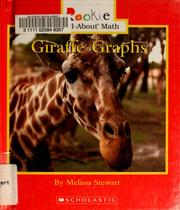
1 volume (unpaged) : color illustrations, color maps ; 25 x 27 cmAD920L Lexile
Teaches young readers about graphs by using a story about children who visit giraffes in a zoo.
"Provides comprehensive information on chameleons and explains how and why they change color"--Provided by publisher.
"What are the five senses? How do they help keep us safe? Why are two ears better than one? Why do some people need glasses? Why does food taste worse when we have a cold? And WHY can't we tickle ourselves? Find out in this …
"Describes the physical characteristics, habitat, behavior, life cycle, and conservation status of the rabbit"--Provided by publisher.
An overview of the scientific contributions of ancient India including Arabic numerals, ayurveda, basic chemistry and physics, and celestial observations.
"Explains why animals come in each color of the rainbow using examples of animals in the wild"--Provided by publisher.
Barks, grunts, squeals animals make all kinds of sounds to communicate and express themselves. With a growling salamander and a whining porcupine, bellowing giraffes and laughing gorillas, this boisterous book is chock-full of fun and interesting facts and is sure to be a favorite of …
"Provides comprehensive information on bees and the process of how they make honey"--Provided by publisher.
"Provides comprehensive information on spiders and the process of how they make webs"--Provided by publisher.
Learn about lightning, when and where it strikes, its formation, and the work lightning scientists do--
Explores some of the world's most unusual ecosystems found in caves, the deep sea, hydrothermal vents on the ocean floor, underground aquifers, and rock deep below earth's surface.
Provides information about the Earth's water, including rivers, lakes, oceans, the water cycle, climate, water pollution, and conservation.
Presents in question and answer format the world of dinosaurs and the various species of land, sea, and air creatures.
"Provides comprehensive information on the moon and the phases it goes through in a month"--Provided by publisher.
"Provides comprehensive information on how the human eye sees color"--Provided by publisher.
Introducing children to the amazing world of natural history while developing their reading skills, this book describes the world's fastest animals, including the cheetah, antelope, sailfish, peregrine falcon, and ostrich. This book introduces some of the world's fastest animals, from speedy cheetahs and swiftly swinging …
"Introduces pre-readers to simple concepts about yellow animals using short sentences and repetition of words"--Provided by publisher.