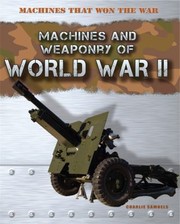
Machines and weaponry of World War II
2013
48 pages
Children'sHistory
A high-interest, highly visual introduction to key military machines.
A high-interest, highly visual introduction to key military machines.
Explores the weaponry and tactical maneuvers used during the Vietnam War.
This is a detailed account of the planning and execution of history's greatest amphibious invasion.
This book follows the war against Japan from the raid on Pearl Harbor in December 1941 to the dropping of the atomic bombs on Japan in August 1945. It shows how Japan made remarkable initial gains in Asia and the Pacific, and how the United …
Find out how the ancient Mesopotamians lived and worked.
The ingenuity of China has been evident in their technology for thousands of years. People in ancient China are responsible for many significant breakthroughs, including gunpowder, paper, and the compass. Readers will be introduced to the ancient beginnings of China s technological dominance through some …
"Describes the role spies and police played around the world during World War II, from controlling riots to gathering intelligence from the enemy"--Provided by publisher.
The ancient Egyptians built some of the world's most amazing monuments: the pyramids. They were also some of the earliest astronomers and devised a calendar to help them plan when to plant and harvest crops.
The ancient Greeks are known for being among the most famous thinkers of any age. They originated philosophy and modern politics, but they also led developments in mathematics and practical technology and built remarkable structures such as the Parthenon in Athens.
"Describes the documentation published by different groups during World War II that was used to persuade civilians, soldiers, and even the enemies to support that group's cause."--Provided by publisher.
Pompeii is one of the world's most famous sites where ancient history can still be explored today. The devastation of the cities of Pompeii and Herculaneum, when mount Vesuvius erupted, has puzzled and fascinated archaeologists and historians for hundreds of years.
From building techniques and making textiles to creating accurate calendars and understanding the human body. Six books that show how each civilisation gradually developed their kwledge and applied it, making advances that would dramatically and permanently change how people lived. Covering the period from around …