50 books in our catalogue.
2002
48 pages
Children's
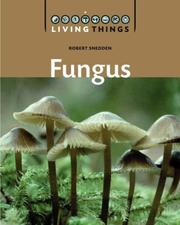
Examines how cells work together to form the range of plants and fungi we see around us, looks at the differences between plants and fungi, and how they work together to form lichens.
2002
48 pages
Children'sScience & Nature
Les cellules ont constitué toutes les formes vivantes qui nous entourent. Les biologistes classent tous les êtres vivants en espèces, genres, familles, ordres, classes, embranchements et finalement en l'un des grands règnes du vivant, qui sans cesse se diversifient.
2002
48 pages
Children's
Cells - Eukaryote cells - Protistans - Bacteria - Viruses - Building cells.
2008
46 pages
Children'sHistory
"Covers the inventions and technology used in ancient China and how their ideas influenced technology today"--Provided by publisher.
2008
46 pages
Children'sHistory
"Covers the inventions and technology used by ancient Greeks and how their ideas influenced technology today"--Provided by publisher.
2008
46 pages
Children'sHistoryScience & Nature
"Covers the inventions and technology of Europeans living in medieval times and how their ideas influenced technology today"--Provided by publisher.
2000
48 pages
Biography & MemoirChildren's
An overview of the work of scientists who have advanced the study of microorganisms including Robert Hooke, Edward Jenner, Louis Pasteur, Ferdinand Cohn, Joseph Lister, and Alexander Fleming.
2016
144 pages
History
Combining engaging text with captivating images and helpful diagrams, renowned science writer Tom Jackson guides readers through the history of engineering in the 7th installment of the groundbreaking Ponderables series.
1999
32 pages
Children's
Discusses various aspects of electricity and magnetism, including static electricity, electrons, lightning, batteries, cells, conductors, insulators, circuits, magnets, electromagnets, electric motors, and more.
2003
56 pages
Biography & MemoirChildren's
2015
48 pages
Biography & MemoirChildren'sScience & Nature
This biography profiles the life and achievements of Stephen Hawking, one of the world's greatest theoretical physicists, whose research on black holes has revolutionized the way scientists view the universe.
Standalone books
2010
Children's
Explaining: Autism will help you understand what autism is and how it affects people. Case studies illustrate what is like to live with autism and how people with the condition manage it to live full and happy lives.
1998
42 pages
Children's
Text, maps, and mazes follow the journeys of ten explorers, including Leif Erikson, Marco Polo, Vasco da Gama, David Livingstone, and Neil Armstrong and "Buzz" Aldrin.
2007
32 pages
Children's
Exploring the great variety of plants and animals, and showing what makes each class distinctive and different, the author explains how animals and plants have adapted to live in a huge variety of different habitats. The clear, informative text is accompanied by vivid photographs and …
1997
48 pages
Children'sHistory
Describes many of the innovative inventions that the Romans incorporated into their daily lives, including aqueducts, hot baths, and central heating.
2008
46 pages
Children's
"Describes new technologies in medicine such as advanced imaging techniques, artificial limbs, designer drugs, gene therapies, stem cells, and nanotech medicine that are helping people live longer and discusses future medical technology"--Provided by publisher.
1993
32 pages
Children's
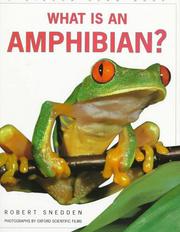
Defines amphibians and describes their lives, including their maturation, mating, sense perception, and feeding.
2011
46 pages
Children's
"Looking at some of the major inventions and discoveries shaping our world today, Breakthroughs in Science profiles the research leading up to the discovery (not just profiles of the one or two key "players"). Each book describes the "famous" moment and then examines the continued …
2012
48 pages
Children's
Explains what is meant by the fitness of an organism and shows how adaptations improve a plant or animal's chances of survival to have offspring. This title tackles common confusions about the science and shows how topics are relevant to the reader.
2013
32 pages
Children'sScience & Nature
1998
32 pages
Children's
Simple text, experiments, and activities introduce the scientific concept of color and how it can be found in everyday life.
1994
48 pages
A study of the history of electricity and magnetism and the effects of the forces linked to the principles of how they work. Suggested level: intermediate, junior secondary.
2011
48 pages
Children'sScience & Nature
2007
32 pages
Children's
Insects come in all shapes and sizes, from tiny wasps less than a millimetre long, to strange stick insects that can grow to more than half a metre in length. But what is an insect? What do insects have in common and how are they …
1999
64 pages
Children'sPhilosophy & Religion
Surveys the most significant medical advances of the twentieth century and the ethical questions they have posed, presenting both sides of such issues as reproductive rights, organ transplants, euthanasia, and genetic engineering.
2018
192 pages
Children's
1995
48 pages
Children'sHistory
1995
48 pages
Children'sHistory
1993
32 pages
Children's
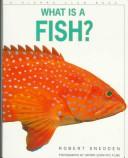
Describes different types of fish, their breathing, movement, senses, food, defences, and birth.
2005
32 pages
Children's
Read this book and find out how food chains in the rainforest really work.
1996
32 pages
Children'sLiterary & Classics