29 books in our catalogue.
2020
216 pages
There's a silent epidemic in western civilization, and it is right under our noses. Our jaws are getting smaller and our teeth crooked and crowded, creating not only aesthetic challenges but also difficulties with breathing. Modern orthodontics has persuaded us that braces and oral devices …
1982
431 pages
Science Fiction
1984
229 pages
Examines the catastrophic global, atmospheric, and biological impact of even limited nuclear confrontation.
1989
302 pages
Simply the most important book for the survival of the human species I have read in the past 25 years. Investigates, documents, and explains how humans, even very smart humans with Ph.Ds, make very poor short term vs long term decisions, specifically about things like …
1988
785 pages
On t.p.: A field guide to the natural history of North American birds : including all species that regularly breed north of Mexico.
2008
446 pages
HistoryScience & Nature
1973
344 pages
Politics & Society
1981
305 pages
Examines the problem of disappearing species and analyzes the causes of the accelerated rate of extinction and what can be done to halt the trend.
1973
746 pages
Science & Nature
Classification of living things - Classification of plants - Reproduction - Organisms - Water - Life cycles - Human evolution - Food chains_
1990
320 pages
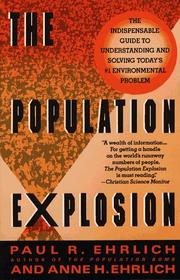
"From global warming to rain forest destruction, famine, and air and water pollution--why overpopulation is our #1 environmental problem"--Jacket subtitle.
1976
564 pages
Politics & SocietyScience & Nature
2003
656 pages
Science & Nature
2010
344 pages
'Conservation Biology for All' provides cutting-edge but basic conservation science to a global readership. A series of authoritative chapters have been written by the top names in conservation biology with the principal aim of disseminating cutting-edge conservation knowledge as widely as possible.
2010
184 pages
Politics & Society
1989
302 pages
Science & Nature
1968
564 pages
Science & Nature
1974
307 pages
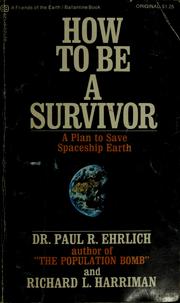
The Ehrlichs argue that the superconsumptive society will eventually collapse and that current leadership is not capable of reversing the process. Individuals can and should ensure their own sufficiency of food and energy while joining grassroots movements to alter society's behavior into a conserving mode.