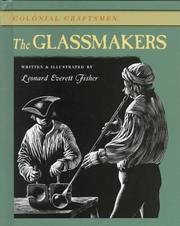
The glassmakers
1964
43 pages
Children'sHistory
Discusses the history, materials, and technique of glassmaking in the American Colonies.
Discusses the history, materials, and technique of glassmaking in the American Colonies.
Examines the art of the siversmith in colonial times.
Surveys the history of printing in colonial America, describing the work of early printers, the development of the free press, and the printer's craft and technique.
A history of woodworking craftsmen in colonial America, describing their tools, materials, and workmanship.
Presents background information on cloth making in the colonies and describes the various techniques involved.
Describes what education and the schools were like in colonial times.
Surveys the history and technique of shoemaking in colonial America.
Traces the early development of medicine in colonial America and discusses some of the methods and medications used at that time for treating illness.
Discusses the motivation, materials, and techniques of the first "artists" in colonial America--the sign painters--and how their works contribute to a better understanding of early American history and society.
Traces the early history of pottery in Colonial America with descriptions of the clay used, techniques of making and decorating pots, and a listing of some of the famous potters of the time.
Traces the history of architecture in the American colonies describing the influence of existing styles and the needs of environment.
Describes how four staples--candles, soap, brooms, and cider--were made in colonial times.
Introduces the history of blacksmithing and discusses the techniques, products, well-known blacksmiths, and commercial importance of this trade in colonial America.
Explores the introduction of factories into the United States at the close of the 18th century and discusses their contribution to America's becoming a major industrial power within 100 years.
Traces the growth of the railroads during the 19th century.
Traces the history of hospitals in the United States from the early pesthouses built to isolate the diseased from the rest of the population to the development of steadily improving institutions for the treatment of the sick during the 19th century.
Discusses the development of athletic competition in 19th-century America.
Traces the development of newspapers in the United States during the 19th century and discusses their role in bringing information to and shaping the views of a country with a rapidly growing population, rising literacy rate, and expanding frontiers.
Traces the growth and development of the labor movement during the nineteenth century.
A history of schools in nineteenth century United States, including a chapter on education in the colonial period.
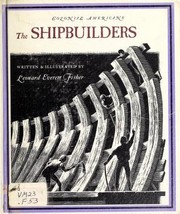
Traces the history of shipbuilding in the American colonies and describes each step in the building of an eighteenth-century ship.
A brief history of the Great Wall of China, begun about 2,200 years ago to keep out Mongol invaders.
Relates the history of the gods and goddesses worshipped by the ancient Egyptians and describes how they were depicted.
A biography of Mahatma Gandhi, the Indian leader who led his country to freedom from British rule through his policy of nonviolent resistance.
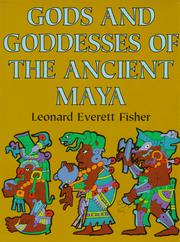
Gives the history of the principal gods and goddesses of the ancient Mayans, including Hunab Ku, Itzamna, Ix Tab, and Ah Puch.
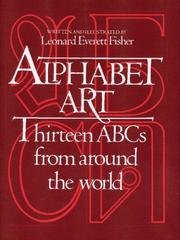
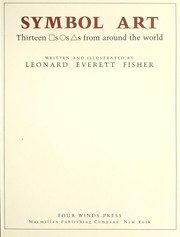
Reproduces thirteen alphabets used in various parts of the worlds, including Arabic, Greek, Eskimo, German, Gaelic, Chinese, and Hebrew, with a brief introduction to the history of each alphabet.
Characterizes the Tower and its people during the turbulent years of the forming of the British nation from 1078 through 1666.
Describes the planning, construction, and occupancy of Thomas Jefferson's dream home.
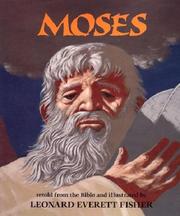
Portrays important incidents in the life of Moses.
Offers brief biographical sketches of the twelve gods and goddesses that reside on Mount Olympus including such information as their Roman names, their parents, and the symbols that represent them.
Discusses the history of the pyramids of Teotihuacan and of the Aztecs, how they evolved from the Toltecs, how they lived and worshipped, and how they were overcome by the Spaniards.
Brief text and illustrations retell the story of the Creation.
A history of the White House and its inhabitants from 1790, when a site for the new capital was chosen, to the present day.
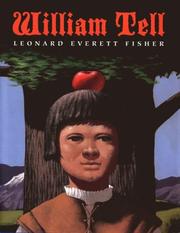
Recounts how the legendary Swiss folk hero was forced to shoot an apple from his son's head by the tyrannical Austrian governor Gessler.
Discusses what various civilizations have done to measure time. Includes Aztec, Babylonian, Roman, and more.
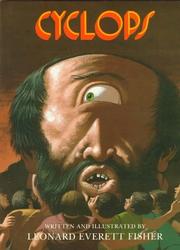
Describes the encounter between the cyclops Polyphemus and Odysseus and his men after the end of the Trojan War.
A collection of poems about whales, by such authors as Jane Yolen, Theodore Roethke, and John Ciardi.
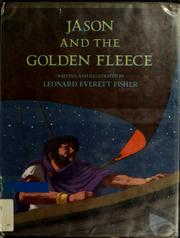
Jason and his crew of Argonauts set sail on his ship the Argo in search of the Golden Fleece.
When a baby and a kitten are found safe and dry after a disastrous flood in 1421, the people of a village in southern Holland decide to rebuild.
Introduces the myths, character traits, symbols, and constellations associated with each sign of the zodiac and explains the origins of astrology and how it differs from astronomy.
A boy keeps a diary of his experience on his first voyage aboard a sinister whaling ship.
Charts the journey of those who followed the Oregon Trail in the first half of the nineteenth century, describes the obstacles and dangers they encountered, and discusses the Trail's eventual decline with the introduction of the cross-country railroad.
Retells the Greek myth of the hero Theseus and his battle with the bull-headed monster called the Minotaur.
Recounts the history of one of the largest monuments in the world, including how it was executed in France, shipped to America, and erected in New York Harbor.
Examines the development of the railroad in the United States from its nineteenth-century beginnings to the end of that century.
Recounts the events of the evening of April 18, 1775, when Paul Revere made his historic ride to warn the colonists of the approaching British.
Depicts the anti-Semitic terror that finally drives Benjamin Shapiro, his wife, and 11 children out of Czarist Russia to America at the beginning of the 20th century.
The boxes in a young child's room are of different sizes and shapes and used for a variety of purposes.
Retells the Bible story in which a Hebrew shepherd boy kills the giant Philistine warrior Goliath with a slingshot.
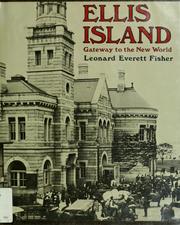
A history of immigration through the port of New York, with special focus on the processing at Ellis Island.
Examines the life and discoveries of the noted mathematician, physicist, and astronomer, whose work changed the course of science.
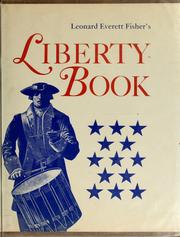
A collection of eighteenth-century quotes, maxims, songs, poems, documents, and speeches defining and celebrating liberty.
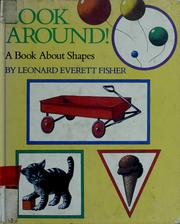
Presents basic geometrical shapes in familiar scenes for the reader to identify.
A knock on the head with a baseball catapults a young baseball player one hundred years into the future to the year 1996.
Traces the development of the various number systems that have been used in the world, including the Arabic, Chinese, Egyptian, Gothic, Greek, Roman, and Sanskrit systems.
Briefly recounts the heroic deeds of fifty men and women from the thirteen colonies and their foreign allies during the Revolutionary War.
Records the development of the fire engine in picture and word, from the early pumpers and boilers to the horse-drawn hook and ladder and its gasoline replacement.
Two boys are stranded when their boat is carried away by a high tide and then rescued when it returns.
With the Pledge of Allegiance as accompanying text, presents various American flags and gives brief historical information about each.
Levi watches a violent thunderstorm attack his favorite place on the jetty.
A vacationing family discover their rented Jamaican villa is haunted by the ghost of a pirate.
Introduces the letters of the alphabet in pictures of objects from Acrobat to Zinnia.
Discusses, with reference to specific paintings, the technique of oil painting and its development over four centuries.
Surveys the history of the Jewish people in Palestine and their activities around the First and Second Temples the site of which is now marked by the Western or Wailing Wall, with an emphasis on events before 70 A.D.
A lonely old recluse is accused by his fellow villagers of being the devil's disciple when they discover he has invented an imaginary family to keep himself company.
The history of the oldest Jewish house of worship in the United States, the Touro Synagogue, which was built in Newport, Rhode Island, between 1759 and 1763.