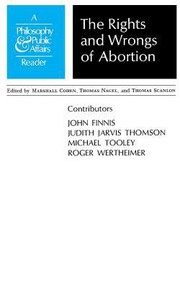
Standalone books
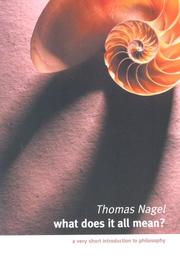
What does it all mean?
Most people think about philosophical problems without realizing it. Introducing the uninitiated to the world of philosophical inquiry, this book examines nine philosophical problems fundamental to everyday living. It contains short introduction to the methods of philosophy for those with a taste for abstract ideas …


Mind and cosmos
The modern materialist approach to life has conspicuously failed to explain such central mind-related features of our world as consciousness, intentionality, meaning, and value. This failure to account for something so integral to nature as mind, argues philosopher Thomas Nagel, is a major problem, threatening …
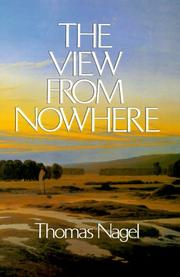
The View from Nowhere
The View from Nowhere is a book by philosopher Thomas Nagel. Published by Oxford University Press in 1986, it contrasts passive and active points of view in how humanity interacts with the world, relying either on a subjective perspective that reflects a point of view …

The Myth of Ownership
BLURB: In a capitalist economy, taxes are more than a method of payment for government and public services. They are the most significant instrument by which the political system puts into practice a conception of economic justice. Yet there has been little effort to bring …



Concealment and Exposure
"Thomas Nagel is widely recognized as one of the leading American philosophers working today. This collection of recent essays and reviews reflects the unusually broad range of his philosophical interests."--BOOK JACKET.



The last word
If there is such a thing as reason, it has to be universal. Reason must reflect objective principles whose validity is independent of our point of view - principles that anyone with enough intelligence ought to be able to recognize as correct. But this universality …