Ada Palmer is an American historian and writer. She is an associate professor at the University of Chicago and wrote the science fiction series Terra Ignota. The first novel in the series, Too Like the Lightning, was published in May 2016. The work has been well received by critics and was a finalist for the Hugo Award for Best Novel. She received the 2017 John W. Campbell Award for Best New Writer. Her scholarly work Inventing the Renaissance won the 2026 Hugo Award for Best Related Work.
From Wikipedia · CC BY-SA 4.0
5 books in our catalogue.
2016
441 pages
★ 3.47 · 17
Science Fiction
"The world into which Mycroft and Carlyle have been born is as strange to our 21st-century eyes as ours would be to a native of the 1500s. It is a hard-won utopia built on technologically-generated abundance, and also on complex and mandatory systems of labeling …
2017
400 pages
Science Fiction
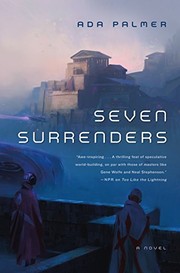
"It is a world in which near-instantaneous travel from continent to continent is free to all. In which automation now provides for everybody's basic needs. In which nobody living can remember an actual war. In which it is illegal for three or more people to …
2017
400 pages
Science Fiction
"The long years of near-utopia have come to an abrupt end. Peace and order are now figments of the past. Corruption, deception, and insurgency hum within the once steadfast leadership of the Hives, nations without fixed location. The heartbreaking truth is that for decades, even …
2021
517 pages
Science Fiction
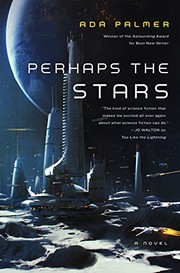
Perhaps the Stars is the fourth novel in a science fiction quartet called Terra Ignota, written by the American author Ada Palmer. It was published on November 21, 2021. It is preceded by Too Like the Lightning (2016), Seven Surrenders (2017), and The Will to …
Standalone books
2014
378 pages
"After its rediscovery in 1417, Lucretius's Epicurean didactic poem De Rerum Natura threatened to supply radicals and atheists with the one weapon unbelief had lacked in the Middle Ages: good answers. Scholars could now challenge Christian patterns of thought by employing the theory of atomistic …