Daniel C. Dennett
1942–2024
Daniel Clement Dennett III was an American philosopher and cognitive scientist. His research centered on philosophy of mind, philosophy of science, and philosophy of biology, particularly as those fields relate to evolutionary biology and cognitive science.
From Wikipedia · CC BY-SA 4.0
23 books in our catalogue.
1978
379 pages
Philosophy & ReligionPsychology & Self-Help
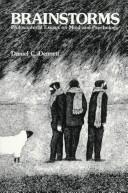
Brainstorms: Philosophical Essays on Mind and Psychology is a 1978 book by American philosopher Daniel Dennett. The book is a collection of seventeen essays in which Dennett reflects on the early achievements of artificial intelligence to develop his ideas on consciousness, theory of mind, and …
1987
394 pages
Philosophy & Religion
Standalone books
1991
512 pages
★ 3.73 · 15
Philosophy & ReligionPsychology & Self-Help
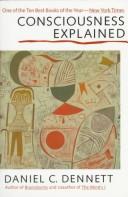
This book revises the traditional view of consciousness by claiming that Cartesianism and Descartes' dualism of mind and body should be replaced with theories from the realms of neuroscience, psychology and artificial intelligence. What people think of as the stream of consciousness is not a …
1962
501 pages
Philosophy & Religion
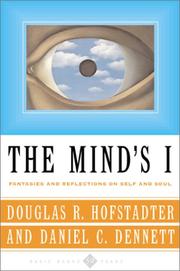
With contributions from Jorge Luis Borges, Richard Dawkins, John Searle, and Robert Nozick, The Mind's I explores the meaning of self and consciousness through the perspectives of literature, artificial intelligence, psychology, and other disciplines. In selections that range from fiction to scientific speculations about thinking …
1995
590 pages
★ 3.83 · 12
Art & PhotographyPhilosophy & ReligionScience & Nature
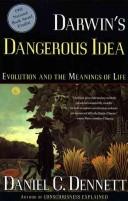
In this groundbreaking and very accessible book, Daniel C. Dennett, the acclaimed author of Consciousness Explained, demonstrates the power of the theory of natural selection and shows how Darwin's great idea transforms and illuminates our traditional view of our place in the universe. Following Darwinian …
2004
448 pages
Philosophy & ReligionScience & Nature
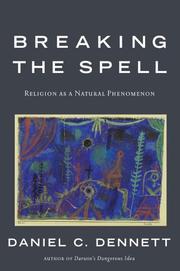
For all the thousands of books that have been written about religion, few until this one have attempted to examine it scientifically: to ask why—and how—it has shaped so many lives so strongly. Is religion a product of blind evolutionary instinct or rational choice? Is …
2017
496 pages
xviii, 476 pages, 2 unnumbered pages of plates : 25 cm
2013
504 pages
Philosophy & Religion
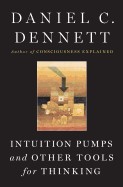
Daniel Dennett, one of the world's most original and provocative thinkers, takes readers on a profound, illuminating and highly entertaining philosophical journey as he reveals a collection of his favorite thinking tools, or "intuition pumps", that he and others have developed for addressing life's most …
2002
358 pages
"Four billion years ago, there was no freedom on our planet, because there was no life. What kinds of freedom have evolved since the origin of life? Can there be freedom and free will in a deterministic world? If you are free, are you responsible …
1996
188 pages
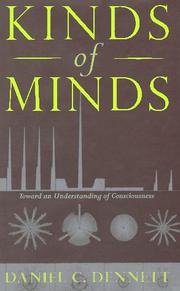
In Kinds of Minds, Dennett asks the ultimate metaphysical questions: What is a mind and who else (besides the questioner) has one? Combining ideas from philosophy, artificial intelligence, and neurobiology, Dennett leads the reader on a fascinating journey of inquiry, exploring such intriguing possibilities as: …
1998
418 pages
Philosophy & Religion
Minds are complex artifacts, partly biological and partly social, and only a unified, multidisciplinary approach will yield a realistic theory of how minds came into existence and how they work. One of the foremost thinkers in this multidisciplinary field is Daniel Dennett. This book brings …
1984
248 pages
In Elbow Room, Dennett shows how the classical formulation of the problem in philosophy depend on misuses of imagination, and he disentangles the philosophical problems of real interest from the "family of anxieties" they get enmeshed in-imaginary agents, bogeymen, and dire prospects that seem to …
1969
198 pages
Philosophy & Religion
2007
232 pages
Philosophy & ReligionPsychology & Self-HelpScience & Nature
2005
216 pages
Philosophy & Religion
"In Consciousness Explained, Dennet proposed to replace the ubiquitous but bankrupt Cartesian Theater model with the Multiple Drafts Model. Drawing on psychology, cognitive neuroscience, and artificial intelligence, he asserted that human consciousness is essentially the mental software that reorganizes the functional architecture of the brain. …
2004
384 pages
Philosophy & Religion
2018
228 pages
Philosophy & Religion