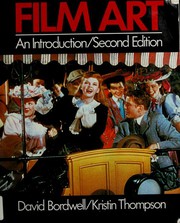
Film art
1979
512 pages
Art & Photography
Considered by academics to be the authoritative source for the study of film.
Considered by academics to be the authoritative source for the study of film.
This book introduce the history of film as it is presently conceived, written, and taught by its most accomplished scholars. However, this book is not a distillation of everything that is known about film history.
"Acclaimed for their breakthrough approach, Bordwell, Staiger and Thompson analyze the basic conditions of American film-making as a historical institution and consider to what extent Hollywood film production constitutes a systematic enterprise, in both its style and its business operations. Despite differences of director, genre …
"Director of classics, theorist of montage, master of the mass epic, purveyor of Soviet realism in the midst of perilous political reality: Sergei Eisenstein is possibly the key figure in film history. In The Cinema of Eisenstein David Bordwell takes the full measure of this …
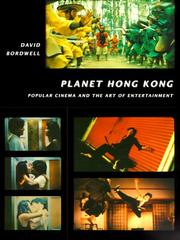
Includes information on Woody Allen, Robert Altman, Asian films, Brian de Plama, European cinema, Alfred Hitchcock, Hong Kong films, Sam Peckinpah, Arthur Penn, Otto Preminger, Brett Ratner, Martin Scorsese, Steven Spielberg, Oliver Stone, Orson Welles, American Graffiti, At Long Last Love, A Beautiful Mind, Bonnie …
A film tells its story not only through dialogue and actors' performances, but also through the director's control of movement and shot design. This is a detailed consideration of how cinematic staging carries the story, expresses emotion, and beguiles the audience through pictorial composition.
Since the 1970s, the academic study of film has been dominated by Structuralist Marxism, varieties of cultural theory, and the psychoanalytic ideas of Freud and Lacan. With Post-Theory, David Bordwell and Noel Carroll have opened the floor to other voices challenging the prevailing practices of …
Commentaries about the making of the film accompany the complete screenplay of the martial arts drama set in ancient China.
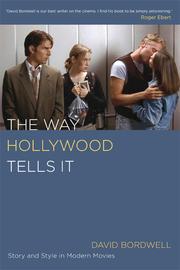
In the 1940s, American movies changed. Flashbacks began to be used in outrageous, unpredictable ways. Soundtracks flaunted voice-over commentary, and characters might pivot from a scene to address the viewer. Incidents were replayed from different characters' viewpoints, and sometimes those versions proved to be false. …
Pauline Kael, Andrew Sarris, and Roger Ebert were three of America's most revered and widely read film critics, more famous than many of the movies they wrote about. But their remarkable contributions to the burgeoning American film criticism of the 1960s and beyond were deeply …