What do animals do in winter?
1995
48 pages
Children's
Examines the different strategies which animals use to stay alive during cold weather, including migration, hibernation, and changing color.
Examines the different strategies which animals use to stay alive during cold weather, including migration, hibernation, and changing color.
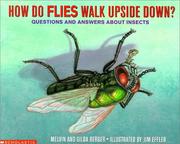
A series of questions and answers provides information about the physical characteristics, senses, eating habits, life cycles, and behavior of different insects.
Brief text and pictures portray the characteristics and habits of foxes.
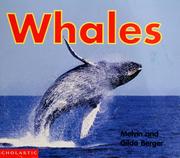
"Whales are huge ocean animals. They breathe air through blowholes. What do you know about whales?" --
Describes in simple text what squirrels eat and how they live through winter.
Simple text describes how leaves change color and fall from trees in the autumn.
"Owls are night birds. They can see in the dark. What do you know about owls?"--Back cover.
Brief text and pictures portray the characteristics and habits of beavers.
Brief text and pictures portray the characteristics and habits of deer.
Brief text and pictures portray the characteristics and habits of raccoons.
Simple text and photographs present the sense of seeing and how it works.
Une série de premiers documentaires servant d'initiation à la lecture. Le court texte, qui tient en une phrase par page, est rédigé dans une large typographie et est accompagné de photographies attrayantes et judicieusement choisies. Des "infobulles" s'insèrent à l'occasion dans ces dernières, apportant des …
Some animals hibernate in fall. Read and discover all about hibernation. Simplistic non-fiction text that covers frogs, snakes, bats, bears, chipmunks, squirrels, and turtles. The book features photographs and fun facts.
Identifies various kinds of seeds, what they need to grow, how they scatter, and the role seeds play in feeding the world. Includes eight simple experiments.
Describes what magnifying glasses can do and provides suggestions for experiments using them.
Describes the properties of water and includes simple experiments such as turning liquid water into vapor and finding water in food.
This book is like sitting down with a dinosaur expert and asking all the questions you have about dinosaurs. Sections cover the world of dinosaurs, the triumph of dinosaurs, and the end of dinosaurs. Children will discover which dinosaurs were first, which is the heaviest, …
The authors explain the characteristics of stars and their relationships to the universe.
Provides answers to a variety of questions about various poisonous creatures, such as "Do Gila monsters bite humans," "What are killer bees," "Which ant sting hurts the most," and "Are frogs poisonous?"
Questions and answers provide information about volcanoes and earthquakes, covering such aspects as why, how, when, and where these phenomena occur.
Questions and answers present information about spiders, arranged in the categories "Amazing Creatures," "Web Spinners," "Spiders that Hunt," and "Living with Spiders."
Provides answers to a variety of questions about tornadoes and hurricanes, including "Where do most tornadoes strike," and "How long do hurricanes last?"
Provides information about various aspects of the world's oceans--waves, tides, the food chain, marine creatures, coastlines, and more.
Written in a question and answer format, this book discusses various endangered species, where they have gone, and why they are endangered.
Addresses 20 animal characteristics in question-and-answer format, including why giraffes have such long necks, why opposums play dead, and whether or not horses can sleep standing up. This book provides scientific answers to twenty questions about animals, including why wolves howl, why elephants swing their …
A simple explanation of what sharks look like, how they hunt, what they eat, and how they are born.
A simple explanation of what bears look like, how they hunt, what they eat, how they sleep during the winter, and how their cubs are born and raised.
Insects have senses very different from ours?flies taste with their feet, crickets hear with their knees, and dragonflies have 30,000 lenses in each of their eyes! Amazing facts about creatures from army ants to whirligigs and many more.
A collection of bizarre facts about tidal waves, earthquakes, volcanoes, lightning strikes--even the sinking of the "Titanic"!
Asks readers a true-or-false question about the physical characteristics, diet, or behavior of reptiles that the reader can find the answer to by turning the page.
Asks readers true or false questions about rocks and minerals that the reader can find the answers to by turning the page.
"In winter the weather is cold and the days are short. Read and discover all about winter."--back cover.
Polar animals sometimes eat garbage and get sick. Read and discover all about polar animals in danger.
Une série de premiers documentaires servant d'initiation à la lecture. Le court texte, qui tient en une phrase par page, est rédigé dans une large typographie et est accompagné de photographies attrayantes et judicieusement choisies. Des "infobulles" s'insèrent à l'occasion dans ces dernières, apportant des …
Weather can be wild. Thunderstorms, hurricanes, tornadoes, and other storms can cause accidents, damage property, and injure people. Learn about what makes wild weather and what you can do to keep safe.
Learn how animals' behavior helps them survive.
Introduction to polar animals.
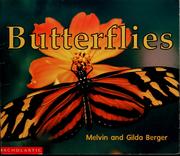
Follows the life cycle of a butterfly from egg through larva and pupa stages to adulthood.
Food helps humans grow up to be healthy. Different food helps in different ways.
Explains how bacteria and viruses affect the human body and how the body fights them.
Explains why oil spills occur and how they are cleaned up and suggests strategies for preventing them in the future.
An introduction to reflex acts that explains why we sneeze, shiver, hiccup, and yawn.
Describes types of mind control such as cult conversion, hypnosis, prefrontal lobotomies, brainwashing, and electric shock treatment, some of which are extremely controversial, especially when applied against one's will.
Describes the remarkable turtle, which can live almost anywhere, eat almost anything, range in size from tiny to gigantic, and live longer than any other animal.
Explains how electricity is produced and transmitted, how to create electricity using an electrical wire and a magnet, how generators supply electricity for cities, and how electricity works in homes.
Describes the physical characteristics, behavior, and life cycle of crickets while giving particular emphasis to how they chirp.
Discusses ESP, parapsychology, astrology, psychokinesis, spiritualism, faith healing, witchcraft, and UFO's.
Introduces some animals that are so ugly they are cute, from bulldogs and sphynx cats to red-eyed tree frogs and axolotls.
This fact-filled book describes some fascinating creatures that glow and includes a kit to make a glow-in-the-dark mobile.
Briefly describes how, either directly or indirectly, the sun is the primary source for most of the energy used by man.
Discusses how the practice of using coins and paper money evolved and explains the circle money travels as it is earned, saved, and spent.
An illustrated dictionary defining scientific terms from "aa" to "zygote."
Easy-to-grasp explanation of three forms of energy: sound, heat, and light.
Explains the cycle of evaporation, condensation, and precipitation that provides fresh water to the earth and describes how this supply is brought to people's homes.
Basic information on our solar system, its components, their movements, and their likely history.
Provides answers to a variety of questions about the human body including "Why do you blush?", "Why do you need two ears?", "How strong is hair?", and "What are goosebumps?"
An introduction to reflex acts that explains why we cough, sneeze, shiver, hiccup, yawn, and blink.
Describes various jobs in the construction industry including architect, surveyor, iron worker, roofer, stone mason, and landscaper.
Provides answers to such questions about the weather as "What makes the weather?", "Does air have weight?", "How big are hailstones?", and "What is El Niño?"
Uses a submarine trip to the bottom of the sea to introduce various deep-sea creatures, including the angler fish, octopus, and sperm whale.
Discusses how the various musical instruments produce sound and describes how records, tapes, and disks are made and how the playback equipment for them generates sound waves.
Introduces the history and construction of the trumpet, related instruments, composers, musicians, and music written for the trumpet and offers the beginning player advice on instruction and careers.
A collection of jokes about ghosts, black cats, skeletons and other Halloween things.
Text and illustrations describe various nocturnal animals and their habits.
An explanation of the composition, behavior, and uses of atoms, molecules, and quarks, the building blocks of the universe.
Colorful photgraphs and simple sentences briefly describes visits to the doctors.
Provides answers to such questions about various species of whales and dolphins as "Do all whales have teeth?", "How long do most whales live?", "Why do dolphins whistle?", and "Can dolphins save humans?"
Describes various kinds of food processing and career opportunities associated with these activities.
Colorful photgraphs and simple sentences briefly describe good nutrition.
Covers the history of flight, from Leonardo da Vinci to modern jumbo jets.
Explores the mysteries of how life began, discussing the formation of planet earth, the first signs of living matter, the time of dinosaurs, and the development of human beings.
This book visits each planet in the Solar System and gives a few facts about each one. Comets, asteroids, and the Sun are also included in this book.
Describes in simple scientific detail how the body heals itself when cuts, scratches, and scrapes occur.
Describes the creation of a thunder and lightning storm, the causes of rain, sleet, hail, and snow, and how to find safety from a storm.
An introduction to the violin including its history, construction, importance in the musical world, and famous violin makers and players.
Learn about basic map reading by examining a variety of maps that include symbols, directions, and more.
Discusses the wonders of sound, light, water, heat, and air.
Discusses the importance of dance in cultures throughout the world and describes the various forms of dance and their development from ancient times to the present. Also highlight important movements and major dancers of recent times.
Discusses time and how it can be measured by man-made devices such as sundials and clocks or by the built-in clocks of plants and animals.
Discusses the possibility of life on other planets, describes some of the best known sightings of unidentified flying objects in recent times, and speculates about possible visits to Earth made by extraterrestrials.
Discusses immigration, past and present, focusing on how four children from different countries came to live in the United States.
Discusses dinosaurs and different theories regarding their extinction, including climate changes, starvation, cosmic rays, and an asteroid collision with the earth.
Presents over one hundred interesting facts about animals from around the world, including armadillos, cuttlefish, giant clams, sharks, scorpions, and meerkats. --
Collection of jokes pertaining to each state in the Union.
Simple explanations of confusing concepts about space.
Is it an alligator...or a crocodile? A rabbit...or a hare? What makes these look-alikes different? Find out in this light and breezy introduction to animals that highlights differing traits, from size and color to ways of breathing and moving.
Describes the various stages in the birth, life, and death of stars and discusses theories about the ultimate future of our universe.
Kids are surrounded by images and stories of space exploration – in movies, news reports, books, cartoons and games. As the Bergers say in their introduction, "Everything we hear and see about space makes us curious to know more." This book introduces the basics of …
Presents the history of censoring information in the western world and discusses issues, as well as some specific cases, involving obscenity, libel, espionage, pornography, and student rights.
Discusses the characteristics of comets, meteors, and asteroids, their relationship to and effects on the earth, and what they reveal about the history of the universe.
Explains how computers work and discusses their increasing importance in more and more areas of day-to-day life.
Discovering Jupiter focuses on the outer planet Jupiter especially how it was formed, the atmosphere, appearance and its moons.
Describes the activities of the Center for Disease Control in Atlanta, Ga. in tracking down the cause of Legionnaires' disease and other mysterious health problems.
A lexicon of terms relating to energy, from active solar energy system, air conditioning, and Alaskan pipeline, to wind turbine, windmill, and work.
Presents a first-hand look at scientists' research on how the mind and brain work and on treatment for mental dysfunctions.
An introduction to the big cats including lions, tigers, cheetahs, jaguars, and leopards.
In this wonderful introduction to nocturnal animals, kids will learn hundreds of facts about creatures of the night. Readers will find out that each kind of firefly has its own special signal, that cockroaches have been on Earth since the time of the dinosaurs, and …
Discusses how and why the weather changes and ways to predict the weather by observing the sky, clouds, and wind.
The coral reef is a home for more creatures than any other underwater habitat. There are many different kinds of coral.
Examines the sources of natural, artificial, biological, and reflected light and the properties and uses of lenses and lasers.
Discusses discoveries and theories concerning planets, stars, and galaxies.
Explores theories concerning three amazing astronomical discoveries of modern times.
Discusses a variety of robots, real and imaginary, with or without human form, which perform some humanlike functions--seeing, hearing, thinking, speaking, etc.
Photographs and simple text teach students in grades one and two about alligators and crocodiles.
Discusses the nature, constitution, properties, and behavior of matter in its various solid, liquid, and gaseous forms.
Discusses the first quarter-century of our space program, what is happening now, and what is planned for the future.
Explains how to learn about stars, constellations, comets, and other astronomical phenomena by studying the sky without a telescope.
Discusses large or unusual inhabitants of the sea, including the killer whale, electric eel, giant squid, and coelacanth.
A simple explanation of how three household items work.
Discusses the history and cultural contributions of Native Americans, especially in the United States.
Describes the properties of water and some ways to fight its pollution.
Explains how the postal system works by following a letter on its way to its destination.