11 books in our catalogue.
1984
214 pages
HistoryPhilosophy & Religion
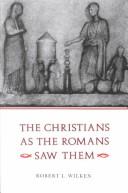
From Pliny the Younger (d. 113) to Julian the Apostate (d. 363): a well-written, well-organized, and generally helpful survey of what pagan critics said about Christianity. Wilken (History, Notre Dame) has no new material to offer--most anti-Christian propaganda has been lost or deliberately destroyed by …
2009
399 pages
HistoryPhilosophy & Religion
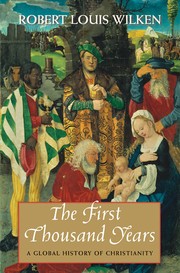
This work is a narrative account of the history of Christianity from its beginning to the end of the first millennium. The principal theme is the slow drama of the building of a Christian civilization. A major theme is the mission of Christians among different …
2003
383 pages
Philosophy & Religion
Annotation:
2003
183 pages
Philosophy & Religion
This volume provides translations from St. Maximus' two main collections of theological reflections - his Ambigua (or Difficulties) and his Questions to Thalassius - plus one of his Christological opuscula, previously unavailable in English. The translations are accompanied by notes. --from back cover.
1983
200 pages
HistoryPhilosophy & Religion
1971
218 pages
HistoryPhilosophy & Religion
1975
218 pages
Philosophy & Religion
1992
370 pages
Philosophy & Religion
From the time of Jesus, Palestine has been an integral part of the Christian experience. Not only have Christians always lived in Palestine, but more important, since the fourth century Christians gradually came to see Palestine as a Holy Land and Jerusalem as the Christian …
2007
504 pages
Philosophy & Religion
The volumes in The Church's Bible are designed to present the Holy Scriptures as understood and interpreted during the first millennium of Christian history. In his extremely thorough work on Isaiah, Robert Wilken brings to bear his considerable knowledge of early Christianity. Drawing on writings …
1971
265 pages
Philosophy & Religion
1995
180 pages
Philosophy & Religion
"This collection of essays touches on various issues dealt with by thinkers who lived long ago in cultural settings distant from our own. Yet it also addresses questions that are still pertinent today: the role of commitment in the study of religion, religious pluralism, Christian …