Experimental researches in electricity / by Michael Faraday


Standalone books

Course of six lectures on the chemical history of a candle
Presents a newly illustrated edition of Faraday's six classic lectures that provide an introduction to the principles of combustion. Includes twenty-two experiments that demonstrate the argument of the lectures.


The chemical history of a candle
"Michael Faraday's celebrated series of lectures, The Chemical History of a Candle, turned into one of the most successful science books ever published and was a classic work of Victorian popular science. They also reflect how Faraday, the bookbinder's apprentice turned scientist, was a remarkable …



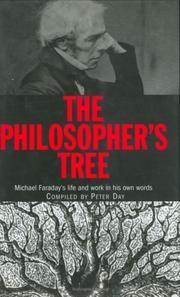
The philosopher's tree
"Michael Faraday has a good case to be crowned as the greatest experimental scientist who ever lived. His discoveries in electrochemistry, electromagnetism, dia-and para-magnetism and above all the unification of the forces of nature, continue to provide the backdrop against which the physical sciences operate …

A course of six lectures on the various forces of matter and their relations to each other




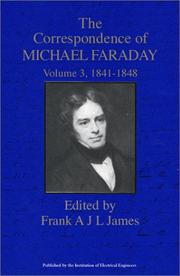
The correspondence of Michael Faraday
The Correspondence of Michael Faraday Michael Faraday (1791-1867) was one of the most important men of science in nineteenth century Britain. His discoveries of electro-magnetic rotations (1821) and electro-magnetic induction (1831) laid the foundations of the modern electrical industry. His discovery of the magneto-optical effect …

