Sherwin B. Nuland
1930–2014
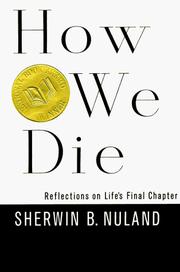
Sherwin Bernard Nuland was an American surgeon and writer who taught bioethics, history of medicine, and medicine at the Yale School of Medicine, and occasionally bioethics and history of medicine at Yale College. His 1994 book How We Die: Reflections on Life's Final Chapter was a
From Wikipedia · CC BY-SA 4.0
17 books in our catalogue.
1994
278 pages
There is a vast literature on death and dying, but there are few reliable accounts of the ways in which we die. The intimate account of how various diseases take away life, offered in How We Die, is not meant to prompt horror or terror …
2009
214 pages
The remarkable stories told in this book are filled with the lessons of humanity. They describe that sacrosanct connection between two people we call the doctor-patient relationship, and that other relationship between the mentor and student, so important to the perpetuation of medical knowledge, judgement, …
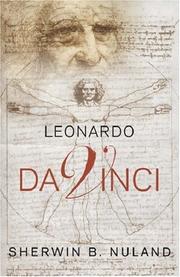
2000
170 pages
Biography & Memoir
"In Leonardo da Vinci, Sherwin Nuland completes his twenty-year quest to understand an unlettered man who was painter, architect, engineer, philosopher, mathematician, and scientist. What was it that propelled Leonardo's insatiable curiosity? How could he be, in the same moment, as naive as a child …
1998
416 pages
Science & Nature
1988
519 pages
Biography & MemoirHistory
MUSC: Waring copy 1: 1995, Gift of Dr. Richard L. Dobson.
2007
302 pages
Psychology & Self-Help
Melding a scientist's passion for truth with a humanist's understanding of the heart and soul, professor of surgery Nuland explores the impact of aging on our minds and bodies, strivings and relationships. The onset of aging can be so gradual that we are often surprised …
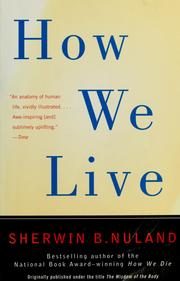
1997
395 pages
Science & Nature
Dr. Sherwin Nuland offers a mesmerizing portrait of the tumultuous universe within us: the turbulence of chemistry, the seeming chaos of tissue, the volatile responsiveness of cells. And he shows how, amazingly, the stability of health rides on these tempests. But the real secret of …
2008
224 pages
"Life is short, and the Art so long; the occasion fleeting; experience fallacious; and judgment difficult. The physician must not only be prepared to do what is right himself, but also to make the patient, the attendants, and the externals, cooperate."--attributed to Hippocrates, c. 400 …
2003
217 pages
Biography & Memoir
"He walks with me through every day of my life, in that unsteady, faltering gait that so embarrassed me when I was a boy. Always, he is holding fast to the upper part of my right arm... As we make our way together, my father …
2005
233 pages
Biography & MemoirHistoryPhilosophy & Religion
Describes the twelfth-century philosopher and physician's efforts to reconcile his rationationalist thinking and scientific knowledge with a faith in God, his remarkable influence as a Jew in a Muslim world, and the lasting legacy of his teachings.
2000
286 pages
Fantasy
A respected doctor offers a discussion of the traditions and folklore of medicine, focusing on the effort to understand the human body, and including anecdotes from his own medical career.
2008
480 pages
Biography & MemoirHistory
The best-selling author of the National Book Award-winning How We Die chronicles the history of medicine through profiles of important physicians and research scientists and reviews key medical theories and pioneering advances, with portraits of Galen, Andreas Vesalius, William Harvey, Joseph Lister, and other medical …
2007
302 pages
Psychology & Self-Help
Melding a scientist's passion for truth with a humanist's understanding of the heart and soul, professor of surgery Nuland explores the impact of aging on our minds and bodies, strivings and relationships. The onset of aging can be so gradual that we are often surprised …
2011
Philosophy & Religion