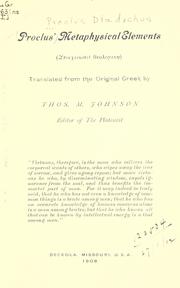
Metaphysical Elements
1909
201 pages
A noble attempt by the Platonic Successor to systematically axiomize the mysteries.
A noble attempt by the Platonic Successor to systematically axiomize the mysteries.
"Until the launch of this series nearly twenty years ago, the 15,000 volumes of the ancient Greek commentators on Aristotle, written mainly between 200 and 600 ad, constituted the largest corpus of extant Greek philosophical writings not translated into English or other European languages. Over …
Annotation
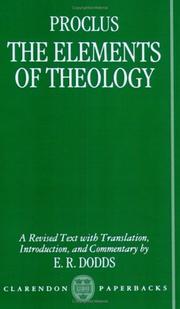
The Elements of Theology is a work on Neoplatonic philosophy written by Proclus. Conceived of as a systematic summary of Neoplatonic metaphysics, it has often served as a general introduction to this subject.
Book digitized by Google from the library of Oxford University and uploaded to the Internet Archive by user tpb.