Platonic dialogue


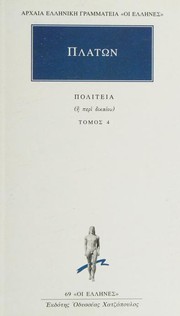
πολιτεία
The Republic is Plato's most famous work and one of the seminal texts of Western philosophy and politics. The characters in this Socratic dialogue - including Socrates himself - discuss whether the just or unjust man is happier. They are the philosopher-kings of imagined cities …

Συμπόσιον
One of the most famous works of literature in the Western world, Plato's Symposium is also one of the most entertaining. The scene is a dinner party in Athens in 416 B.C. at which the guests - including the comic poet Aristophanes and Plato's mentor, …
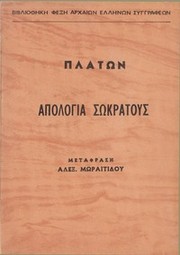
Ἀπολογία Σωκράτους
There is a well-known saying that the whole of Western Philosophy is footnotes of Plato. This is because his writings have set the schema that philosophy can be said to have followed ever since. Following the teachings of Socrates, Plato's works are among the world's …

Φαίδων
After an interval of some months or years, and at Phlius, a town of Peloponnesus, the tale of the last hours of Socrates is narrated to Echecrates and other Phliasians by Phaedo the 'beloved disciple.' The Dialogue necessarily takes the form of a narrative, because …

Παρμενίδης
Revised edition. Volume 4. Translated by R. E. Allen

Ἱππίας μείζων
Hippias Major, is one of the dialogues of Plato, although its authenticity has been doubted. It belongs to the early dialogues, written while the author was still young. Its precise date is uncertain, although a date of c. 390 BC has been suggested.

Φαῖδρος
"Set in the idyllic countryside outside Athens, the Phaedrus is a dialogue between the philosopher Socrates and his young friend Phaedrus, inspired by their reading of a clumsy speech by the writer Lysias about love. After first considering the virtues of romantic love, their conversation …

Γοργίας
There is a well-known saying that the whole of Western Philosophy is footnotes of Plato. This is because his writings have set the schema that philosophy can be said to have followed ever since. Following under the teachings of Socrates, Plato's works are among the …

Πρωταγόρας
Protagoras is a dialogue by Plato. The traditional subtitle is "or the Sophists". The main argument is between Socrates and the elderly Protagoras, a celebrated sophist and philosopher. The discussion takes place at the home of Callias, who is host to Protagoras while he is …

Κρίτων
The Critias is a fragment which breaks off in the middle of a sentence. It was designed to be the second part of a trilogy, which, like the other great Platonic trilogy of the Sophist, Statesman, Philosopher, was never completed. Timaeus had brought down the …

Θεαίτητος
Some dialogues of Plato are of so various a character that their relation to the other dialogues cannot be determined with any degree of certainty. The Theaetetus, like the Parmenides, has points of similarity both with his earlier and his later writings. The perfection of …


Μένων
Text and essays edited by Malcom Brown: St. Augustine / From On the teacher ; G.W. Leibniz / From Discourse on metaphysics ; Friedrich Nietzsche / From Introduction to the study of the Platonic dialogues ; F.M. Cornford / Anamnesis; Karl Popper / The nature …

Second Alcibiade
The Second Alcibiades or Alcibiades II is a dialogue traditionally ascribed to Plato. In it, Socrates attempts to persuade Alcibiades that it is unsafe for him to pray to the gods if he does not know whether what he prays for is actually good or …

Χαρμίδης
"Crois-tu qu'une ville serait bien gouvernée, si la loi ordonnait à chacun de tisser et de laver son vêtement, de tisser ses chaussures, sa burette à huile, son étrille et le tout le reste de même, sans mettre la main aux affaires d'autrui..." L'évocation de …
Werke / Platon

Garnier Flammarion (Collection)

Archaioi syngrapheis

Πολιτικός
The Statesman is Plato's neglected political work, but it is crucial for an understanding of the development of his political thinking. In some respects it continues themes from the Republic, particularly the importance of knowledge as entitlement to rule. But there are also changes: Plato …
The Loeb classical library: Plato
Θεαίτητος / Σοφιστής
"Plato's Theaetetus and Sophist are two of his most important dialogues, and are widely read and discussed by philosophers for what they reveal about his epistemology and particularly his accounts of belief and knowledge. Although they form part of a single Platonic project, these dialogues …

Γοργίας / Λύσις / Συμπόσιον
The great Athenian philosopher Plato was born in 427 BCE and lived to be eighty. Acknowledged masterpieces among his works are the Symposium, which explores love in its many aspects, from physical desire to pursuit of the beautiful and the good, and the Republic, which …


Charmides ; Alcibiades I and II ; Hipparchus ; The lovers ; Theages ; Minos ; Epinomis
PROMETHEUS TRUST STUDENTS' EDITION

Laichterův výbor nejlepších spisů poučných

Redécouvrir Platon

Plato in twelve volumes

Standalone books

Εὐθύφρων / Κρίτων / Φαίδων / Ἀπολογία Σωκράτους
Reprinted with updated Further Reading

The Dialogues of Plato / The Seventh Letter
Writing in the fourth century B.C., in an Athens that had suffered a humiliating defeat in the Peloponnesian War, Plato formulated questions that have haunted the moral, religious, and political imagination of the West for more than 2,000 years: what is virtue? How should we …

Εὐθύφρων / Κρίτων / Μένων / Φαίδων / Ἀπολογία Σωκράτους
In the revised form in Which George Grube's distinguished translations appear here, they present Plato's wonderfully vivid and moving-as well as challenging-portrayal of Socrates, and of the philosophic life, in clear, contemporary , down to earth English that nonetheless preserves and accurately conveys the nuances …


Complete works
Gathers translations of Plato's works and includes guidance on approaching their reading and study.


Four Texts on Socrates
This book offers translations of four major works of ancient Greek literature which treat the life and thought of Socrates, focusing particularly on his trial and defense (the Platonic dialogues Euthyphro, Apology of Socrates, and Crito) and on the charges against Socrates (Aristophanes' comedy the …


Great Dialogues of Plato
A translation of the complete texts of "The Republic," "The Apology," "Crito," "Phaido," "Ion," "Meno," and "Symposium" reveals the genius of Plato as he struggled with education, justice, the "philosopher king," and utopian visions of society.


The Republic of Plato--Books I.-V.
The late James Adam's edition of The republic of Plato was published in 1902 and has long been out of print; it still remains among the most detailed and valuable critical editions available. D.A. Rees, former Fellow and Tutor of Jesus College, has written an …

Ἴων
"Im Ion stellt der jugendliche Platon eine Seite des historischen Sokrates dar, die in den Dialogen, die nach dessen Verurteilung und Hinrichtung verfasst sind, nicht mehr zentrales Thema ist. Platon, wie auch andere aus der jugendlichen Intelligenz Athens waren fasziniert von jenem Mann, der in …


Plato on love
"This collection features Plato's writings on sex and love in the preeminent translations of Stanley Lombardo, Paul Woodruff and Alexander Nehamas, D.S. Hutchinson, and C.D.C. Reeve. Reeve's Introduction provides a wealth of historical information about Plato and Socrates, and the sexual norms of classical Athens. …


Κρίτων / Τίμαιος
"Timaeus, one of Plato's acknowledged masterpieces, is an attempt to construct the universe and explain its contents by means of as few axioms as possible. The result is a brilliant, bizarre, and surreal cosmos - the product of the rational thinking of a creator god …

Dialogues [24 works]
Alfred North Whitehead once said, “the safest general characterization of the European philosophical tradition is that it consists of a series of footnotes to Plato.” It’s hard to overstate Plato’s influence on the West’s philosophical heritage and its civilization. As the first philosopher whose works …

Euthyphro - Apology - Crito - Meno - Phaedo - Symposium - Phaedrus - Republic
A Plato Reader offers eight of Plato's best-known works-- Euthyphro, Apology, Crito, Meno, Phaedo, Symposium, Phaedrus, and Republic --unabridged, expertly introduced and annotated, and in widely admired translations by C.D.C. Reeve, G.M.A. Grube, Alexander Nehamas, and Paul Woodruff.

Κρίτων / Συμπόσιον / Φαίδων / πολιτεία / Ἀπολογία Σωκράτους
A translation of the complete texts of "The Republic," "The Apology," "Crito," "Phaido," "Ion," "Meno," and "Symposium" reveals the genius of Plato as he struggled with education, justice, the "philosopher king," and utopian visions of society.


Plato Apology of Socrates and Crito, With Extracts from the Phaedo and Symposium and from Xenophon's Memorabilia
Edited by Louis Dyer. Rev. by Thomas Day Seymour. With a vocabulary.



The Great Books Reading and Discussion Program--First Series--Volume 1


Early Socratic dialogues
Rich in drama and humour, these dialogues provide the definitive portrait of Socrates and his times.



The Apology, Phaedo and Crito of Plato; Golden Sayings of Epictetus; Meditations of Marcus Aurelius


Εὐθύφρων / Κρίτων / Ἀπολογία Σωκράτους
These new translations present Plato's remarkable dramatization of the momentous events surrounding the trial of Socrates in 399 BC, on charges of irreligion and corrupting the young. The Euthyphro, Defence of Socrates, and Crito form a dramatic and thematic sequence, raising fundamental questions about the …

Μένων / Πρωταγόρας
"Exploring the question of what exactly makes good people good, Protagoras and Meno are two of the most enjoyable and accessible of all of Plato's dialogues. widely regarded as his finest dramatic work, the Protagoras, set during the golden age of Pericles, pits a youthful …


Don Quixote / Plutarch's Lives / The Republic / The Canturbury Tales / The Cask of Amontillado / Letter of application to the Duke of Milan / Denunciation of the conspiracy against Dreyfus
Don Quixote / Miguel de Cervantes Plutarch's lives, The republic /Plato The Canterbury tales / Geoffrey Chaucer Cask of Amontillado / Edgar Allan Poe Letter of application to the Duke of Milan / Leonardo da Vinci Denunciation of the conspiracy against Dreyfus / Emile Zola.
Euthyphro, Apology, and Crito, and the Death scene from Phaedo
Plato's "Euthyphro," "Apology," and "Crito" explore Socrates's trial and death, with "Euthyphro" focusing on piety, "Apology" presenting his defense against charges of impiety band corruption, and "Crito" addressing Socrates's refusal to escape prison, emphasizing his commitment to justice and Athenian law. Here's a more detailed …


The dialogues of Plato [5 volumes]
Translated Into English With Analyses and Introductions, Complete in Four Volumes [Vols. I, II, III, & IV]


The republic and other works
A compilation of the essential works of Plato in one paperback volume: The Republic, The Symposium, Parmenides, Euthyphro, Apology, Crito, and Phaedo.




Gorgias, Menexenus, Protagoras


Meno and Other Dialogues
"In these four dialogues Plato considers virtue and its definition. Charmides, Laches, and Lysis investigate the specific virtues of self-control, courage, and friendship; the later Meno discusses the concept of virtue as a whole, and whether it is something that can be taught. In the …


Phaedon


Selections from Protagoras, Republic, Phaedrus, Gorgias


The Cratylus, Phaedo, Parmenides, Timaeus, and Critias of Plato


The Dialogues of Plato, Part 2
Book digitized by Google and uploaded to the Internet Archive by user tpb.


Λύσις / Συμπόσιον / Φαῖδρος
In the three dialogues of Lysis, Phaedrus and Symposium, Socrates searches for the truth about love and friendship; in closing so, he reveals how his Athenian contemporaries regarded homosexual love as an educative, aesthetic, and social force.

Πρωταγόρας / Συμπόσιον / Φαῖδρος / Ἀπολογία Σωκράτους / Ἴων
"Benjamin Jowett's translations of Plato have long been classics in their own right. In this volume, Professor Hayden Pelliccia has revised Jowett's renderings of five key dialogues, giving us a modern Plato faithful to both Jowett's best features and Plato's own masterly style.". "Gathered here …

Συμπόσιον / Φαῖδρος
The Symposium and the Phaedrus are combined here because of their shared theme: a reflection on the nature of erotic love, the love that begins with sexual desire but can transcend that origin and reach even the heights of religious ecstasy. This reflection is carried …