Robert Owen Keohane is an American political scientist working in the fields of international relations and international political economy. Following the publication of his influential book After Hegemony (1984), he has become widely associated with the theory of neoliberal institutionalism in international relations, as well as transnational relations and world politics in international relations in the 1970s.
From Wikipedia · CC BY-SA 4.0
9 books in our catalogue.
1977
315 pages
Politics & Society
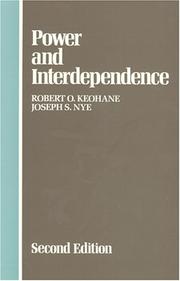
A theoretical approach that constructs a way of looking at world politics that helps us understand the relationship among economics, politics, and patterns of institutionalized cooperation, while retaining key realist insights about the roles played by power and interests.
1984
290 pages
Business & EconomicsPolitics & Society
"This book is a comprehensive study of cooperation among the advanced capitalist countries. Can cooperation persist without the dominance of a single power, such as the United States after World War II? To answer this pressing question, Robert Keohane analyzes the institutions, or "international regimes," …
1988
352 pages
Politics & Society
1994
272 pages
Politics & Society
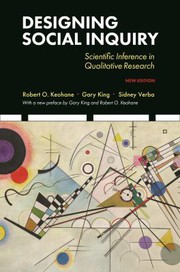
Designing Social Inquiry presents a unified approach to qualitative and quantitative research in political science, showing how the same logic of inference underlies both. This stimulating book discusses issues related to framing research questions, measuring the accuracy of data and the uncertainty of empirical inferences, …
1970
428 pages
Politics & Society
1993
308 pages
Philosophy & ReligionPolitics & Society
Approaches the question of whether ideas, world views, principled beliefs, and causal beliefs have an impact on political outcomes, and if so, under what conditions. Contributions address such topics as the weight of ideas in decolonization; human rights policies in the US and western Europe; …
1989
270 pages
Politics & Society