John Maynard Keynes
1883–1946
John Maynard Keynes, 1st Baron Keynes, was an English economist. His writings formed the basis for the school of thought known as Keynesian economics, as well as its various offshoots. Originally trained in mathematics, he built on and refined earlier work on the causes of business cycles. His ideas, further developed after his death as New Keynesianism, are seen as foundational to mainstream macroeconomics. He has been referred to as the "father of macroeconomics" and is considered one of the most influential economists of the 20th century.
From Wikipedia · CC BY-SA 4.0
37 books in our catalogue.
1919
198 pages
Business & EconomicsHistory
Before becoming one of the twentieth century’s most celebrated economists, John Maynard Keynes served as a financial representative for the British Treasury at the 1919 Paris Peace Conference to negotiate the Versailles treaty which would officially end World War I. Keynes resigned from the treasury …
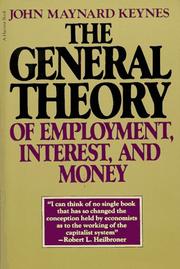
1935
403 pages
Business & Economics
Resource added for the Economics ?10-809-195? courses.
1921
466 pages
Business & Economics
1971
458 pages
Business & EconomicsPhilosophy & Religion
1973
669 pages
Business & Economics
1931
376 pages
Business & Economics
Standalone books
1930
424 pages
Business & Economics
1940
88 pages
Business & EconomicsHistory
1973
539 pages
Business & Economics
1923
209 pages
Business & Economics
1963
354 pages
Biography & Memoir
1949
106 pages
History
The book consists of personal memories of JM Keynes during his participation in the preparatory meetings of the Treaty of Versailles. His encounter with the German banker and advisor, Carl Melchior, makes him reflect on the folly of the participants, who sowed the seeds of …
1936
344 pages
Business & Economics
1924
232 pages
Business & Economics
1922
243 pages
Politics & Society
1987
25 pages
Business & Economics
2005
308 pages
Business & EconomicsHistory