Erwin Schrödinger
1887–1961
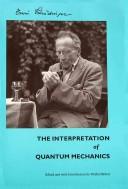
Erwin Rudolf Josef Alexander Schrödinger was an Austrian theoretical physicist who developed fundamental results in quantum theory. In particular, he is recognized for devising the Schrödinger equation, an equation that provides a way to calculate the wave function of a system and how it changes dynamically in time. He coined the term "quantum entanglement" in 1935. Schrödinger shared the 1933 Nobel Prize in Physics with Paul Dirac "for the discovery of new productive forms of atomic theory".
From Wikipedia · CC BY-SA 4.0
20 books in our catalogue.
1944
178 pages
Biography & MemoirPhilosophy & ReligionScience & Nature
What Is Life? is a 1944 non-fiction science book written for the lay reader by physicist Erwin Schrödinger. The book was based on a course of public lectures delivered by Schrödinger in February 1943 at Trinity College, Dublin. Schrödinger's lecture focused on one important question: …
1951
109 pages
Philosophy & ReligionScience & Nature
A Nobel prize winner, a great man and a great scientist, Erwin Schrödinger has made his mark in physics, but his eye scans a far wider horizon: here are two stimulating and discursive essays which summarize his philosophical views on the nature of the world. …
1961
119 pages
Philosophy & ReligionScience & Nature
The book is an English translation of an Italian translation of original talks in German, or of the French translation of the German original (one case, the Born lecture)... The public lectures were given at three different Rencontres internationales de Genève in 1952, 1957 and …
1944
95 pages
Science & Nature
1985
181 pages
Philosophy & Religion
1958
128 pages
Philosophy & Religion
"The relationship between mind and matter has eluded and puzzled philosophers and scientists since the earliest times. In this book, a distinguished scientist reminds his readers of some of the paradoxes of this relationship, and offers his own suggestions towards a solution of the problem"--
1954
124 pages
Philosophy & ReligionPolitics & SocietyScience & Nature
1935
223 pages
Philosophy & ReligionScience & Nature
1951
68 pages
Science & Nature
2018
248 pages
Science & Nature
1992
184 pages
Science & Nature
1935
192 pages
Philosophy & ReligionScience & Nature