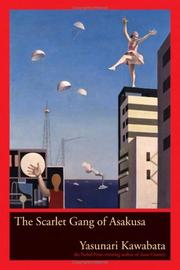
Yasunari Kawabata , referred to in rare circumstances as Kōsei Kawabata, was a Japanese novelist and short story writer whose spare, lyrical, subtly-shaded prose works won him the 1968 Nobel Prize in Literature, the first Japanese author to receive the award. His works have enjoyed broad international appeal and are still widely read.
From Wikipedia · CC BY-SA 4.0
38 books in our catalogue.
1937
179 pages
★ 3.47 · 15
Romance
Snow Country (雪国, Yukiguni) is a novel by the Japanese author Yasunari Kawabata. The novel is considered a classic work of Japanese literature and was among the three novels the Nobel Committee cited in 1968, when Kawabata was awarded the Nobel Prize in Literature. ---------- …
1954
286 pages
General Fiction
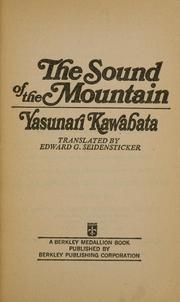
The anxieties and desires of an old man, Shingo, who lives with his family in a suburb of Tokyo, are shown. He hears "the sound of the mountain", the faint rumble in the hills that is a muffled hint of unknown occurrences and a foreboding …
1997
161 pages
Literary & Classics
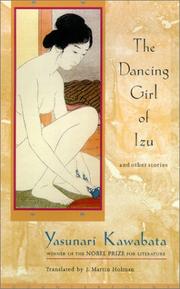
One of the most influential figures in modern Japanese fiction, Yasunari Kawabata is treasured for the intensity of his perception and the compressed elegance of his style. This new collection includes twenty-two stories now appearing in English for the first time in book form. Written …
1955
147 pages
General Fiction
1968
147 pages
Romance
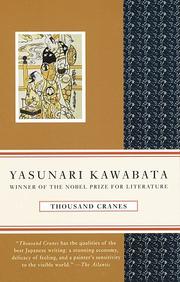
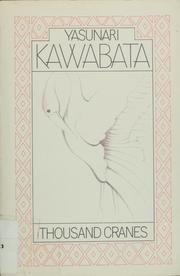
With a restraint that barely conceals the ferocity of his characters' passions, one of Japan's great postwar novelists tells the luminous story of Kikuji and the tea party he attends with Mrs. Ota, the rival of his dead father's mistress. A tale of desire, regret, …
1988
238 pages
Literary & Classics
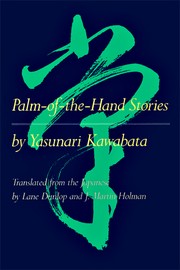
Recipient of the Nobel Prize in Literature in 1968, the novelist Yasunari Kawabata felt the essence of his art was to be found not in his longer works but in a series of short stories--which he called "Palm-of-the-Hand Stories"--Written over the span of his career. …
1969
149 pages
General Fiction
1962
169 pages
General Fiction
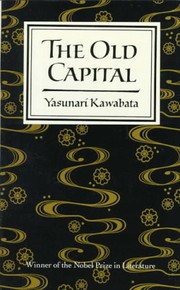
This novel tells the story of Chieko, the adopted daughter of a Kyoto kimono designer, Takichiro, and his wife, Shige. Since her youth, Chieko has been told that she was kidnapped as a baby by the couple in a moment of profound desire. When she …
1965
206 pages
General Fiction
1999
238 pages
HorrorLiterary & Classics
1997
160 pages
Literary & Classics
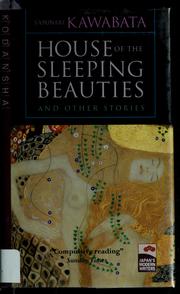
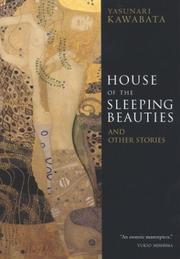
House of the Sleeping Beauties is a 1961 novella by the Japanese author Yasunari Kawabata. It is a story about a lonely man, Old Eguchi, who continuously visits the House of the Sleeping Beauties in hope of something more.
1998
180 pages
Fantasy
Series of fairy tales about a young girl (Kaguya-hime) found inside a hollow bamboo stem
1970
187 pages
Historical Fiction
The Master of Go is a novel by the Nobel Prize winning Japanese author Yasunari Kawabata. First published in serial form in 1951, Kawabata considered it his finest work. Sharply distinct from the rest of his literary output, The Master of Go is the only …
1970
160 pages
Historical Fiction
2017
136 pages
General Fiction
Tanpopo is a Japanese novel by Yasunari Kawabata, written in 1964, but published only posthumously in 1972, left unfinished when the author died. Kawabata had commenced serializing his final novel in the literary magazine Shincho, but after winning the Nobel Prize for Literature in October …
1977
208 pages
General Fiction
1996
208 pages
General Fiction
1974
144 pages
Literary & Classics
1980
168 pages
Historical Fiction
1989
162 pages
General Fiction
2005
279 pages
General Fiction
2004
205 pages
General Fiction
1989
160 pages
Literary & Classics
1997
1623 pages
21 romans et nouvelles, la totalité des oeuvres de Kawabata traduites en français, et présentées par ordre chronologique.
1974
144 pages
General Fiction
1996
225 pages
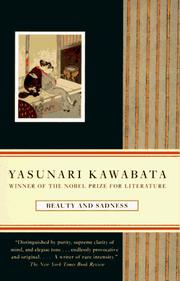
Beauty and Sadness is a 1961–63 novel by Nobel Prize-winning Japanese author Yasunari Kawabata. The novel is narrated from the present and past perspective of the characters and how they differed from each other's point of view. A novel that provokes the mind and examines …
2013
228 pages
Snow Country is a novel by the Japanese author Yasunari Kawabata. The novel is considered a classic work of Japanese literature and was among the three novels the Nobel Committee cited in 1968, when Kawabata was awarded the Nobel Prize in Literature.
1967
210 pages
General Fiction