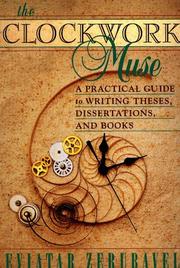
The clockwork muse
For anyone who has blanched at the uphill prospect of finishing a long piece of writing, this book holds out something more practical than hope: it offers a plan. The Clockwork Muse is designed to help prospective authors develop a workable timetable for completing long …

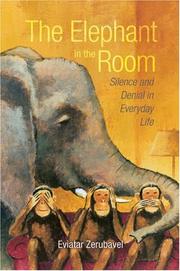
The elephant in the room
This illuminating look at the social roots of silence and denial underscores the social dynamics that keep certain things 'hidden in plain sight'. The author shows how such conspiracies of silence evolve, how people's involvement relate to others and how power differences between people impact …
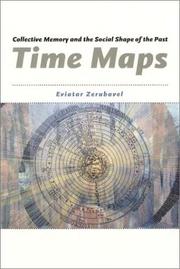
Time Maps
"Who were the first people to inhabit North America? Does the West Bank belong to the Arabs or the Jews? Why are racists so obsessed with origins? Is a seventh cousin still a cousin? Why do some societies name their children after dead ancestors?" "As …


Hidden in Plain Sight
While examining its neuro-cognitive hardware, psychology usually ignores the socio-cognitive software underlying human attention. Yet although it is nature that equips us with our sense organs, it is nevertheless society that shapes the way we actually use them. The book explores the social underpinnings of …


Taken for Granted
Why is the term "openly gay" so widely used but "openly straight" is not? What are the unspoken assumptions behind terms like "male nurse," "working mom," and "white trash"? Offering a revealing and provocative look at the word choices we make every day without even …

Ancestors and relatives
Noted social scientist Eviatar Zerubavel casts a critical eye on how we trace our past-individually and collectively arguing that rather than simply find out who our ancestors are from genetics or history, we actually create the stories that make them our ancestors.

Social Mindscapes
Why does adding cheese make a hamburger a "cheeseburger" whereas adding ketchup does not make it a "ketchupburger"? By the same token, how do we determine which things said at a meeting should be included in the minutes and which ought to be considered "off …