Alain Silver is an American film producer, director, and screenwriter; music producer; film critic, film historian, DVD commentator, author and editor of books and essays on film topics, especially film noir, the samurai film, and horror films. Filmmakers about whom he has written include David Lean, Robert Aldrich, Raymond Chandler, Roger Corman, and James Wong Howe.
From Wikipedia · CC BY-SA 4.0
14 books in our catalogue.
1982
479 pages
Art & Photography
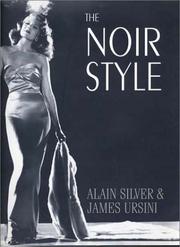
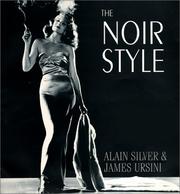
A new anthology from Silver and Ursini, longtime expert commentators of the noir movement. This book focuses on the visual style of the classic period through essays that consider individual films, directors, stylistic elements, or subgroups of movies in the film noir style. There are …
1993
307 pages
Art & Photography
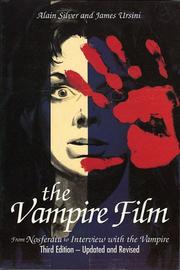
"Focusing on [recent films] from the United States and abroad that found inspiration in the vampire theme ..., the authors consider and analyze each picture in detail: its style and approach, plot, acting, cinematography, set design, special effects--and finally its quality of achievement"--Page 4 of …
1992
248 pages
Art & Photography
1999
347 pages
"In all, Film Noir 2 enriches our understanding of the nature, the power, and the resonance of the genre while it also increases our appreciation of the movies that remain all-time favorites decades after they were first released. They are, indeed, unforgettable, and this book's …
1977
242 pages
"The image of a lone hero, marked by a violent past and bound by honor, has exerted an endless fascination on film audiences the world over, but nowhere more than in Japan, where Samurai films have gained legions of passionate followers." "Alain Silver deconstructs the …
1988
410 pages
Art & PhotographyHistory
1994
226 pages
Horror
For centuries, perhaps from the beginning of time, people young and old have been drawn to the genre of supernatural horror, first on the printed page and then on the screen. From fairy tales to Freddy Krueger, the appeal of the genre rests on the …
2007
389 pages
In the 1930s the gangster film in the United States coincided with a very real and very sensational gangsterism at large in American society. Little Caesar (1931), The Public Enemy (1931), and Scarface (1932) borrowed liberally from the newspapers and books of the era. With …