The Soka Gakkai history of Buddhism

Buddhism For You

Standalone books










Search for a new humanity
Together, Daisaku Ikeda and Josef Derbulav explore a wide range of topics, starting with a discussion of the tension between tradition and modernization in Japan and elsewhere. They compare humanism in East and West, and Buddhism and Christianity. Focusing on the crucial topic of education, …




Songs From My Heart
"For many years Daisaku Ikeda has used poetry to express his innermost observations and sensations. He has given poetic voice to feelings that have emerged from real life, and from the activities of an internationally known champion of peace and education and the leader of …


The Princess and the Moon
Sophie, a bad-tempered and unhappy child, changes her view of the world when the Great Moon Rabbit carries her to the moon, where she learns to look for the good in people and thereby feel happier herself.


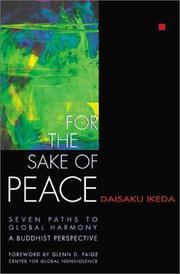
For the Sake of Peace
"With a vision informed by the life-affirming teachings of Nichiren, the 13th-century Japanese Buddhist teacher and reformer, as well as great world thinkers and philosophers like Confucius, Plato, Aristotle, Tolstoy, Gandhi and others, Dr. Ikeda approaches the issue of peace from many angles. Prominent among …


On Being Human
This exploration of what it means to be healthy from a physical, mental, and spiritual standpoint discusses Western humanism, Japanese Buddhism, and modern science from three divergent, yet expert, perspectives.

Power of Hope
"Human history has been marked by the great number of people born into conditions of war, violence, oppression and social exclusion. But at the same time, this history has been shaped by the long struggle for human rights and the people who have committed themselves …




The Wisdom of Tolerance
"What do Buddhism and Islam have in common? And what positive characteristics might Buddhist Japan and Muslim Indonesia be able to offer one another? In this thoughtful and wide-ranging discussion which draws on creative artists and thinkers as diverse as Beethoven, Goethe, Tolstoy, Thomas Jefferson …

Courage to Dream
"'I have a dream' declared Martin Luther King in 1967. Those words, which echoed round the world, soon became immortal. King gave his life in the cause of eradicating racism, eliminating poverty and resolutely opposing all forms of war and violence. This dialogue brings together …


Global Civilization
"Global Civilization is addressed to students to Buddhism, Islam and international communication but most importantly to the general reader. It is a call for tolerance, for dialogue and ultimately for peace."--Jacket.




On the Japanese classics
On the Japanese Classics, the book that follows, represents a series of discussions held between Professor Makoto Nemoto of Soka University and myself. They were extremely enjoyable discussions, primarily because, as we talked of our feelings of affection for the various classics of the Japanese …
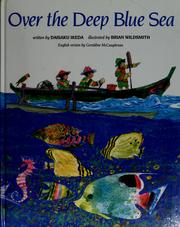
Over the deep blue sea
Prejudice linked to an event from the past threatens the friendship that Akiko and her brother have made with a boy on their new island home.


The Cherry Tree
After a war destroys their Japanese village and kills their father, Taichi and Yumiko find hope by nursing a cherry tree through a harsh winter and seeing it blossom into new life.


The Snow Country Prince
Encouraged by the words of the Snow Country Prince, Mariko and Kazuo nurse an injured swan back to health during the long winter.


