Where is it?
1985
128 pages
Children's
Answers such geographical questions as "Where is Timbuktu?," "Where do pandas live?," "Where was Atlantis?," and "Where does mud boil?."
Answers such geographical questions as "Where is Timbuktu?," "Where do pandas live?," "Where was Atlantis?," and "Where does mud boil?."
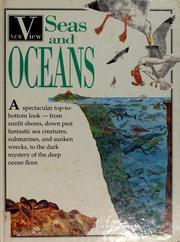
Examines the world's oceans, their physical features, movements, plant and animal life, and relationship with humanity.
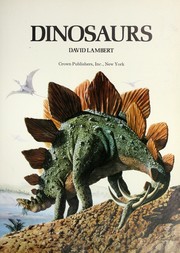
Discusses the age of dinosaurs, the characteristics of different types of "terrible lizards," their disappearance, and fossil remains.
Discusses the environment in which dinosaurs lived, the characteristics of different types of dinosaurs, the disappearance of these creatures, and how scientists learn from their fossil remains.
Traces the development of early life forms, especially dinosaurs, and explains how modern scientists have discovered what they were like.
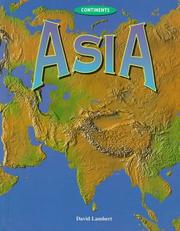
Introduces the geography, history, peoples, industries, environment, and possible future of the largest continent in the world.
Explores the beginnings of civilization and describes the cultures of Sumeria, Ancient Egypt, Greece, Rome, China, and the Americas.
Provides in-depth entries on early Earth's climates, conditions, animal and plant life forms that flourished and floundered throughout each era, along with biographies of notable figures.
Describes the formation, characteristics, and plant and animal life of different types of forests.
When his old girlfriend moves back to town, Tyler worries that dating her again will interfere with his friendships, especially with the beautiful Hannah, and draw him away from God.
Learn to create secret codes using symbols, dots, lines, rearranged letters and more.
Discusses how the earth was formed, followed by material on drifting continents, volcanoes, sedimentary rocks, structural geology, geomorphology, the sea, ice, and the shaping forces of air.
Presents various facts about earthquakes: how they happen, how they are measured, a list of the worst, and how to predict and prevent them.
Encyclopedia of Prehistory is a comprehensive, up-to-date key to the processes that forged our planet and the vast array of prehistoric animals, plants, and other organisms that appeared on, and vanished from its surface. Featuring more than 1,500 illustrations and diagrams, the encyclopedia is arranged …
Les saisons régissent les activités de la nature et celles de l'homme. Cet album nous offre un panorama de la saison à travers le monde et nous montre son influence sur le règne végétal, animal et sur le genre humain.
Describes different types of maps and globes, how they are made, what they are used for, and how to understand them.
Discusses the anatomy, behavior, life cycle, and typical species of snakes.
Relates how the Earth was formed from spinning clouds of dust and gas, and how forces such as glaciers, volcanoes, earthquakes, water, and weather shaped it into familiar contours of mountains, seas, and fertile plains.
A brief introduction to the many creatures that roamed the earth, air, and sea more than 65 million years ago.
Presents information about the world's oceans, how they were formed, their geology, tides, waves, sea life, coasts, resources provided by oceans, myths and legends about the ocean, and more.
The Pacific Ocean is the largest body of water in the world, covering over one-third of the world's surface. Among its most remarkable features are its large number of islands, many of them volcanic. You will discover some of the beautiful wildlife of the region …
Explains the effects of winds, how and why they blow, and how they can be measured.
Presents basic facts about rain, snow, clouds, storms, and other components of weather.