Marion Nestle is an American molecular biologist, nutritionist, and public health advocate. She is the Paulette Goddard Professor of Nutrition, Food Studies, and Public Health Emerita at New York University. Her research examines scientific and socioeconomic influences on food choice, obesity, and food safety, emphasizing the role of food marketing.
From Wikipedia · CC BY-SA 4.0
15 books in our catalogue.
2002
486 pages
Business & EconomicsHistoryPhilosophy & Religion
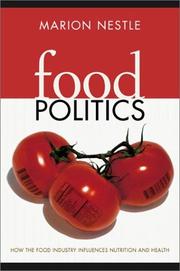
Synopsis: How does the food industry influence what we eat and, therefore, our health? What are the food industry's marketing methods and what is its relationship to the political system? What can be said about its use of political power to achieve profit goals? A …
2006
618 pages
Food & Cooking
From publisher description: With What to Eat, this renowned nutritionist takes us on a guided tour of the supermarket, explaining the issues with verve and wit as well as a scientist's expertise and a food lover's experience. Today's supermarket is ground zero for the food …
2005
288 pages
Food & Cooking
2018
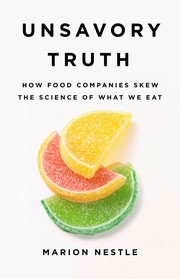
Unsavory Truth: How Food Companies Skew the Science of What We Eat is a 2018 book by American academic Marion Nestle.
2015
510 pages
Business & Economics
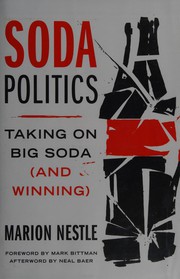
How did products containing absurdly inexpensive ingredients become multibillion dollar industries and international brand icons, while also having a devastating impact on public health? In Soda Politics, Dr. Marion Nestle answers this question by detailing all of the ways that the soft drink industry works …
2020
320 pages
"The food system is broken, but there is a revolution underway to fix it. Bite Back presents an urgent call and vision for disrupting corporate power in the food system, a vision shared with countless organizers and advocates worldwide. In this provocative and inspiring new …
2014
364 pages
Food & Cooking
"Organized like a cookbook, Books that Cook: The Making of a Literary Meal is a collection of American literature written on the theme of food: from an invocation to a final toast, from starters to desserts. All food literatures are indebted to the form and …
2010
379 pages
Food & CookingPolitics & Society
Previous edition published in : 2003.
2003
384 pages
Food & Cooking
"[This text] is a debate-style reader designed to introduce students to controversies in nutrition and health. The readings, which represent the arguments of leading nutritionists and health experts, reflect a variety of viewpoints and have been selected for their liveliness and substance and because of …
2012
288 pages
Business & EconomicsPolitics & Society
"Calories--too few or too many--are the source of health problems affecting billions of people in today's globalized world. Although calories are essential to human health and survival, they cannot be seen, smelled, or tasted. They are also hard to understand. In Why Calories Count, Marion …