Lester Lawrence "Larry" Lessig III is an American legal scholar and political activist. He is the Roy L. Furman Professor of Law at Harvard Law School and the former director of the Edmond J. Safra Center for Ethics at Harvard University. He is the founder of Creative Commons and Equal Citizens. Lessig was a candidate for the Democratic Party's nomination for president of the United States in the 2016 U.S. presidential election but withdrew before the primaries.
From Wikipedia · CC BY-SA 4.0
9 books in our catalogue.
2004
304 pages
Art & PhotographyPolitics & Society
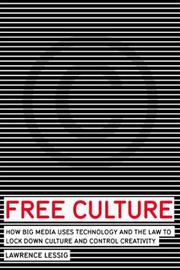
Lessig details the history of copyright law as it pertains to digital media, how it has affected creativity and expression online. Title for the hardcover and PDF versions: Free Culture: How Big Media Uses Technology and the Law to Lock Down Culture and Control Creativity
1999
416 pages
Historical FictionMystery & ThrillerScience Fiction
Although the book is named Code and Other Laws of Cyberspace, Lessig uses this theme sparingly. It is a fairly simple concept: since cyberspace is entirely human-made, there are no natural laws to determine its architecture. While we tend to assume that what is in …
2001
368 pages
Politics & Society
In The future of ideas, Lawrence Lessig explains how the Internet revolution has produced a counterrevolution of potentially devastating power and effect. Creativity once flourished because the Net protected a commons on which innovators could experiment. But now, manipulating the law for their own purposes, …
2008
352 pages
Politics & Society
From Publishers Weekly Should anyone besides libertarian hackers or record companies care about copyright in the online world? In this incisive treatise, Stanford law prof and Wired columnist Lessig (Free Culture) argues that we should. He frames the problem as a war between an old …
2011
384 pages
Philosophy & ReligionPolitics & Society
In an era when special interests funnel huge amounts of money into our government—driven by shifts in campaign-finance rules and brought to new levels by the Supreme Court in Citizens United v. Federal Election Commission—trust in our government has reached an all-time low. More than …
2019
177 pages
Politics & Society
"In the vein of On Tyranny and How Democracies Die, the bestselling author of Republic, Lost argues that our democracy no longer represents us and shows that reform is both necessary and possible"--
2018
240 pages
Politics & Society
2003
88 pages
Politics & Society