Killer whales
1978
96 pages
Children's
An introduction to the physical characteristics, behavior, and life cycle of the killer whale.
An introduction to the physical characteristics, behavior, and life cycle of the killer whale.
Provides an easy-to-read overview of the history of aircraft.
Introduces the facts about volcanoes, what they are, why and how they erupt, different types of volcanoes found around the world, and the effects of some famous eruptions of the twentieth century.
Presents information about the vehicles and equipment used to fight fires from the ground, sea, and sky.
Examines superstorms and their potential destructiveness, including thunderstorms, hailstone showers, tornadoes, hurricanes, and typhoons.
An introduction to the physical characteristics, habits, and characteristics of different kinds of bears.
Presents facts and photographs of all kinds of cars, from one of the first automobiles ever built to the popular VW Beetle to a luxury Rolls Royce to the Thrust SSC, the fast car in the world.
An introduction to the physical characteristics and behavior of various kinds of sharks.
Provides an easy-to-read overview of Egyptian pyramids and the burial practices associated with them, and introduces on the pyramids of other countries.
Identifies the nature, locations, movements, and different categories of galaxies, examining the Milky Way and other known examples.
Describes the characteristics of the planet Jupiter and its moons, as revealed by photographs sent back by unmanned spaceships.
Describes the sixth planet from the sun, its rings, and its moons, and includes photographs taken in outer space.
Describes the nature of the sun, its origin, source of energy, layers, atmosphere, sunspots, and activity.
Text and photographs describe features of the red planet.
Suggestions for collecting and keeping as pets such small animals as snails, toads, worms, ants, butterflies, and starfish.
Explains how to observe stars with the naked eye and how to understand what is seen. Discusses the difference between astronomy and astrology.
Describes the behavior and characteristics of different kinds of poisonous animals, including snakes, spiders and scorpions, insects, reptiles and amphibians and sea dwellers.
Provides information on both human and animal skeletons and their bones.
Einstein Anderson uses his scientific knowledge to solve a variety of problems including getting rid of a bully and preserving a snow sculpture.
Sixth-grade sleuth Adam "Einstein" Anderson uses his scientific knowledge to solve a variety of puzzles, including a machine that makes things shrink and an encounter with people from a flying saucer.
Einstein Anderson uses his scientific knowledge to solve a variety of puzzles, including a snake that chases people and a machine that can stop hurricanes.
The sixth-grade science sleuth takes on ten more puzzling cases.
Considers different aspects of hot and cold and includes simple experiments to illustrate these characteristics.
Presents information about nutrients in food, good and bad diets, and the effects of different diets and foods on weight, energy, and general health. Also discusses how cooking affects the nutrients in foods.
Sixth-grade sleuth Adam "Einstein" Anderson uses his scientific knowledge to solve a variety of puzzles, including a machine that makes things shrink and an encounter with people from a flying saucer.
Sixth-grade sleuth Einstein Anderson uses his scientific knowledge to solve a variety of problems, including getting rid of a bully and preserving a snow sculpture.
The scientific child sleuth takes on ten puzzling cases.
Exploration of the planet Jupiter by space probes.
"Take a deep breath and then let it out. Did you feel your chest rise and fall? That is actually your lungs filling with oxygen and then pushing carbon dioxide back out when you exhale. Without your lungs and your entire respiratory system, the rest …
Describes the physical characteristics and behavior of various kinds of gorillas.
Explains, in simple terms, the characteristics of volcanoes and describes some famous eruptions and their aftermath.
Describes the nature and work of muscles, the different kinds, and the effects of exercise and other activities on them.
Describes, in text and photographs, the physical characteristics, habits, and natural environment of various species of snakes.
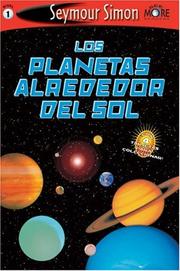
Describes the origins, characteristics, and future of the sun, planets, moons, asteroids, meteoroids, and comets.
"Hurricanes. Typhoons. Cyclones. No matter what you call them, these formidable, swirling storms are the most devastating events in nature. Hurricanes takes young readers on an in-depth exploration of one of the most awe-inspiring phenomena on Earth! This dramatic account of hurricanes and the disasters …
Describes the various parts of the brain and the nervous system and how they function to enable us to think, feel, move, and remember.
Text and photographs explore the physical characteristics, life forms, and fragility of the world's oceans.
Explores the causes, changing patterns, and forecasting of weather.
Describes the location, nature, development, measurement, and destructive effects of tornadoes, as well as how to stay out of danger from them.
Photographs and text explore the natural phenomenon of lightning.
A guide to collecting and identifying different kinds of rocks and minerals.
Text and photographs present the physical characteristics, habits, and natural environment of various species of wolves.
Describes the skeletal system and outlines the many important roles that bones play in the healthy functioning of the human body.
Examines the phenomenon of earthquakes, describing how and where they occur, how they can be predicted, and how much damage they can inflict.
Introduces various mountain ranges, how they are formed and shaped, and how they affect vegetation and animals, including humans.
An introduction to the physical characteristics, behavior, and life cycle of different kinds of spiders.
Describes the expansion of the universe as a result of The Big Bang.
Describes, in text and illustrations, the physical characteristics, habits, and natural environment of various species of whales.
Discusses the stars, their composition, and characteristics, with actual photographs.
Describes the heart, blood, and other parts of the body's circulatory system and explains how each component functions.
A basic introduction to the solar system and Earth's place in it, seasons, and Earth's topography. Contains photographs taken from space.
Profiles a variety of animals whose physical characteristics and/or dispositions make them unpopular with humans. Includes the shark, bat, skunk, coyote, rattlesnake, and cockroach, among others.
Discusses the history, physical characteristics, behavior, and various breeds of cats, and provides basic information on caring for one as a pet.
A basic introduction to Earth's closest neighbor, its composition, and man's missions to it. Illustrated with photographs of the moon taken in space.
Presents wildfires as neither good nor bad but as part of the endless cycle of change in forests and grasslands.
Text and photographs explore the differences and similarities of different species of Antarctic penguins.
Describes 10 strange natural phenomena and possible explanations for them. Includes the day it rained frogs, an atomic explosion that occurred 40 years before the atom bomb, and an eerie crystal skull.
Describes common beliefs about animals and explains which are fact and which are fable.
Discusses the physical features and moons of the planet Neptune and how we have gained our knowledge of this giant world.
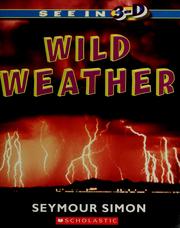
Describes the atmospheric conditions which create thunderstorms, hailstorms, lightning, tornadoes, and hurricanes and how violent weather affects the environment and people.
Step-by-step instructions for making paper airplanes with suggestions for experimenting with them.
Describes the movements and physical features of the planet Venus and recent findings about its climate and surface.
Provides answers to 101 questions about the habits and behavior of a variety of wild animals considered to be dangerous and describes the most dangerous animal of all.
Describes the signs of autumn that are seen in different parts of the United States, such as leaves changing color, migration of birds and insects, harvesting of crops, and changes in weather.
Simple chemistry experiments using ordinary kitchen equipment illustrate facts about molecules, matter, elements, compounds, mixtures, and vitamins.
Describes the physical characteristics and behavior of various members of the family of animals known as crocodilians.
Describes the anatomy of the eye and ear, how those organs function and some ways in which they may malfunction, and how the brain is also involved in our seeing and hearing.
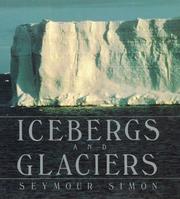
Discusses the formation, movement, and different types of glaciers and icebergs and describes their effect on the world around them.
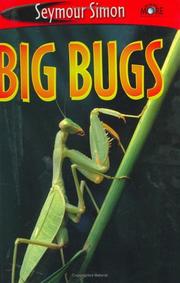
Insects have been around for a very long time; they even existed at the same time as the dinosaurs! You've probably seen many insects in all different shapes and sizes before. But did you know that all bugs are insects, but not all insects are …
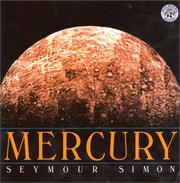
Describes what is known about Mercury from the photographs taken by Project Mariner.
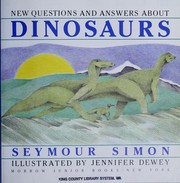
Explores new discoveries about dinosaurs and answers such questions as "Were all dinosaurs giants?" "How are dinosaurs named?" "Which was the largest meat-eater?" and "How smart were the dinosaurs?"
Surveys lost worlds on earth and creatures found in these distant places as depicted in books, movies, and television.
Defines words and terms commonly used in discussing the environment, from "acid rain" to "wetland."
Join Seymour Simon as he investigates the many characteristics and behaviors of elephants and learn all about the largest land animals in the world!
There are thousands of exoplanets scattered throughout the Milky Way galaxy, and scientists are on a constant quest to find one just like Earth. In Exoplanets, Simon examines the planets outside of our solar system and uncovers what makes them habitable, our efforts to discover …
Introduces creatures that produce their own light, including squid, cats, owls, snakes, sharks, bats, tarsiers, spiders, harvestman, crayfish, moles, dragonfish, and gulper eel, etc.
A collection of photographs, produced through the use of special instruments, of things that are hidden from the human eye, or are too small, too large, or moving too fast to be seen by it.
Surveys creatures with strange powers, including those mysteriously transformed humans, that have appeared in books, movies, and television.
Twenty experiments using inexpensive materials illustrate various principles of ecology.
Instructions for experiments that demonstrate the causes and effects of various types of pollution. Suggests some solutions to pollution problems.
Award-winning science writer Seymour Simon explores the fascinating and mysterious creatures that live in the ocean.
Describes various kinds of trucks and their functions, including a log truck, cement mixer truck, and sanitation truck.
Describes a number of animals that look or behave oddly or have strange powers or abilities, including the hoatzin, tuatara, grunion, and gecko.
Explains why many commonly accepted scientific "facts"--lightning never strikes twice, the sky is blue, snakes are slimy, etc.--are untrue.
An illustrated discussion of the planets and bodies such as moons, comets, and meteoroids found in our solar system. Also outlines the relationship the solar system has with the galaxies.
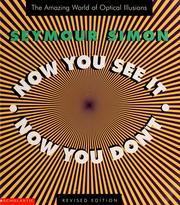
A discussion of optical illusions with explanations of why we see them and suggestions for creating illusions of our own.
Explains the occurrence of biological clocks, which, for example, tell birds when and where to migrate, plants when to unfurl their leaves, and which affect human beings in various physical and emotional ways.
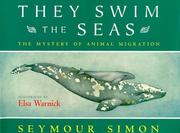
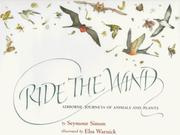
Describes the migration of marine animals and plants as they journey through rivers, seas, and oceans.
Introduces, through text and photographs, the characteristics of the seventh planet in the solar system.
Describes the human heart, how it works, and how blood circulates in the body. Suggests projects to help the reader learn more about his heart.
Discusses what may be learned about the different buildings on a city street by noting simple facts about their construction.
Using a tree as an example, discusses the use of the scientific method to learn more about familiar surroundings.
In this completely updated edition of Big Cats, award-winning writer Seymour Simon celebrates the grace and power of lions, tigers, leopards, jaguars, cheetahs, pumas, and snow leopards. Readers will learn all about how they hunt, care for their young, and rest in their varied natural …
Outlines the many things that can be learned about birds by observing the habits and characteristics of common city birds.
Discusses the nature, causes, and destructive capabilities of earthquakes and describes some notable examples.
Describes the nature and characteristics of deserts, where they are located, and how they are formed.
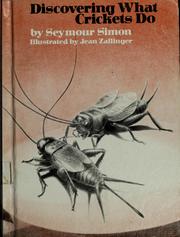
Describes the anatomy and habits of crickets and the care they need as pets.
Describes the characteristics and habits of earthworms and includes directions for experiments to learn about their behavior.
The sixth-grade science sleuth solves ten more puzzling cases, one involving an allergic monster, and another an invisible man.
A handbook of simple projects which sends young science detectives to explore fields and vacant lots to observe and record their findings about plant and animal life.
Explains how a microscope works, gives directions for using one, describes familiar things to view that will seem unfamiliar under the microscope, and suggests some simple experiments.
Award-winning science writer Seymour Simon takes readers on a journey through a frog's life cycle, from egg to tadpole to grown frog, with fascinating facts, stunning full-color photographs, and an underlying message of ecological preservation. Readers will learn about the different types of frogs and …
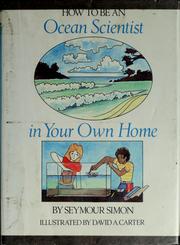
A collection of experiments, using easily available relatively inexpensive materials, designed to reveal the various characteristics of the oceans and the plants and animals that live in them.
Presents simple activities and experiments that demonstrate the properties of air by observing the presence of air and the pressure it exerts.
Focuses on the characteristics of items when wet, drying, and dry.
Introduces the parts of a computer and explains how they work.
Discusses six giant snakes that are found in the boa and python families.
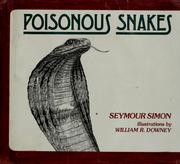
Describes the behavior and characteristics of different kinds of poisonous snakes, including cobras, rattlesnakes, and water moccasins.
Earth s crust contains many different kinds of rocks and minerals, such as granite, sandstone, basalt, quartz, and crystal. No matter where you walk, you can find rocks and minerals. They give us clues to what happened millions and millions of years ago in Earth …
At-home experiments that demonstrate solutions to the problems of surviving and exploring in space.
Discusses the many scientific facts and theories that can be investigated on a vacant city lot by observing, collecting, and performing simple experiments.
Explains what soap bubbles are, how they are formed, and what can be done with them.
Defines words and terms commonly used in discussing outer space--from Apollo Program to Zodiac.
Surveys findings on Brachiosaurus, Diplodocus, and four other examples of the largest dinosaurs, including the locations of the discoveries and explanations of their names.
Discusses seven dinosaurs, all about the size of a dog or chicken, which are believed to be the bird's prehistoric cousin.
Discusses setting up and maintaining a saltwater aquarium including selection and care of the inhabitants.
Learn all about the water cycle, the effect on our planet of rising ocean temperatures, how essential clean water is around the world, and more!
An introduction to the properties of water, its sources, uses, and importance to living creatures. Includes basic plumbing information.
Discusses the guppy's history, setting up an aquarium, caring for and breeding guppies, dealing with their diseases, and choosing tank mates for them.
A photo-illustrated introduction to eleven questions about kittens, designed for first time pet owners.
Describes the various parenting techniques of different types of wild animals and provides a close look at the behavior and characteristics of their offspring.
Presents information on buying and maintaining a home computer and using its capabilities for fun and for serious activities.