Hubert L. Dreyfus
1929–2017
Hubert Lederer Dreyfus was an American philosopher and a professor of philosophy at the University of California, Berkeley. His main interests included phenomenology, existentialism and the philosophy of both psychology and literature, as well as the philosophical implications of artificial intelligence. He was widely known for his exegesis of Martin Heidegger, which critics labeled "Dreydegger".
From Wikipedia · CC BY-SA 4.0
14 books in our catalogue.
1986
231 pages
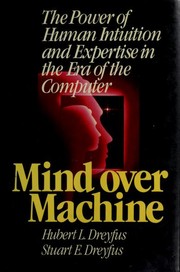
Human intuition and perception are basic and essential phenomena of consciousness. As such, they will never be replicated by computers. This is the challenging notion of Hubert Dreyfus, Ph. D., archcritic of the artificial intelligence establishment. It's important to emphasize that he doesn't believe that …
2011
254 pages
Philosophy & Religion
1972
354 pages
Art & Photography
Rev. ed. of What computers can't do, 1979.
1982
251 pages
Philosophy & Religion
1990
377 pages
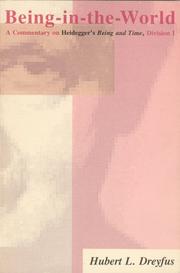
Being-in-the-World is a guide to one of the most influential philosophical works of this century: Division I of Part One of Being and Time, where Martin Heidegger works out an original and powerful account of being-in-the-world which he then uses to ground a profound critique …
1999
232 pages
Business & EconomicsPolitics & Society
2014
280 pages
For fifty years Hubert Dreyfus has done pioneering work which brings phenomenology and existentialism to bear on the philosophical and scientific study of the mind. This is a selection of his most influential essays, developing his critique of the representational model of the mind in …
2004
540 pages
"A Companion to Heidegger is a complete guide to the work and thought of Martin Heidegger, one of the most influential philosophers of the twentieth century."--Jacket.
1982
231 pages
Philosophy & Religion
1995
299 pages
Philosophy & Religion
2008
144 pages
Politics & Society