Norman F. Cantor
1929–2004
Norman Frank Cantor was a Canadian-American medievalist. Known for his accessible writing and engaging narrative style, Cantor's books were among the most widely read treatments of medieval history in English. He estimated that his textbook The Civilization of the Middle Ages, first published in 1963, had a million copies in circulation.
From Wikipedia · CC BY-SA 4.0
36 books in our catalogue.
2001
245 pages
History
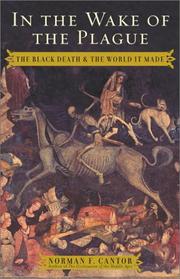
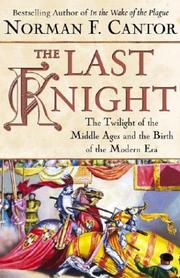
"The bubonic plague of 1348-1350 wiped out 40 percent of Europe’s population. Cantor’s engaging yet scholarly analysis of the plague’s devastation and its social and political consequences is fascinating. Want a tidbit? The royals who built their castles on the coveted land at the edge …
1993
614 pages
History
In 1963, Norman F. Cantor published his breakthrough narrative history of the Middle Ages. Further editions of this immediately celebrated book appeared in 1968 and 1974. Now, a thorough revision, update and significant expansion of the book has been made with a third of the …
1991
477 pages
History
The lives, works, and ideas of the great medievalist of the twentieth century.
1999
448 pages
Language & Reference
1994
211 pages
Biography & MemoirHistory
In his new book Norman F. Cantor, the brilliant author of Inventing the Middle Ages and The Civilization of the Middle Ages, profiles eight men and women who are both representative figures of the Middle Ages and led extraordinary lives. Among them are Augustine, Bishop …
2005
192 pages
Biography & MemoirHistory
From the Preface... RECENT EVENTS in Iraq, Afghanistan, and the North-West Frontier Province of Pakistan have drawn our attention again to Alexander the Great. Three hundred years before Christ, this hero of antiquity led an army of Macedonians and Greeks on a route through the …
1968
406 pages
History
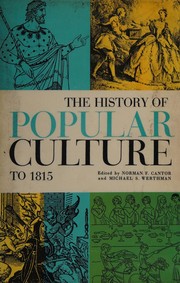
A collection of more than 150 studies in social and cultural history written by respected scholars and incisive commentators whose primary concern is human behavior and the nature of human society.
1996
488 pages
General Fiction
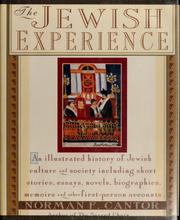
Containing selections from more than 100 written texts as well as more than 50 illustrations - this collection includes short stories, essays, novels, biographies, memoirs and other first-person accounts. each of the Book's ten parts is devoted to a specific theme in jewish culture and …
2004
260 pages
Biography & MemoirHistory
1994
510 pages
History
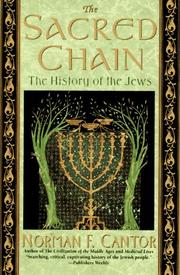
Reviewed by Dr. William L. Pierce “ANTI-SEMITES sensed the truth of Jewish history, the specialness of the Jews, their strangeness on the face of the earth. The anti-Semites could not stand to witness all the good things the Jews had brought mankind because that would …
1997
432 pages
HistoryPolitics & Society
At a time when the role of the legal profession, the jury system, and other key aspects of American law are under much dispute, Imagining the Law provides a historical perspective on these critical public issues. Historian Norman Cantor explains how and why common law …
1963
584 pages
History
Studies on the ideas and institutions of Western civilization from 200 A.D. to 1500 A.D.
1967
382 pages
History
V. 1. To 1714 -- v. 2. Since 1714.
1958
349 pages
HistoryPhilosophy & Religion
2002
245 pages
Politics & Society
2002
241 pages
Biography & MemoirHistory
1970
489 pages
History
Discusses modern European history including Napoleon's conquests & origins of the first & second world war.
1967
525 pages
HistoryPolitics & Society
1967
526 pages
HistoryPolitics & Society
1999
448 pages
Language & Reference
From the fall of Rome to the beginning of the Renaissance, this comprehensive work presents the full pageant of medieval times across the entire Old World - with articles on the New World, Africa, and the Far East as well. Twenty major essays anchor the …