
Standalone books
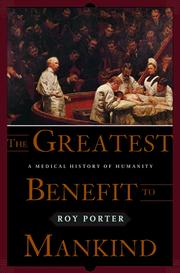
The greatest benefit to mankind
"Roy Porter explores medicine's evolution against the backdrop of the wider religious, scientific, philosophical, and political beliefs of the culture in which it develops, and he shows how our need to understand where diseases come from and what we can do to control them has …
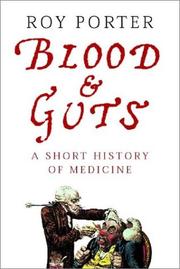
Blood and guts
Mankind's battle to stay alive is the greatest of all subjects. This brief, witty and unusual book by Britain's greatest medical historian compresses into a tiny span a lifetime spent thinking about millennia of human ingenuity in the quest to cheat death. Each chapter sums …

A social history of madness
In "A social history of madness", the historian Roy Porter examines the autobiographical writings of the clinically insane--and for the first time, examines them from the point of view of the mad themselves. How do the mad perceive the world they live in, the doctors …

English society in the eighteenth century
A portrait of 18th century England, from its princes to its paupers, from its metropolis to its smallest hamlet. The topics covered include - diet, housing, prisons, rural festivals, bordellos, plays, paintings, and work and wages.

London
This dazzling and yet intimate book is the first modern one-volume history of London from Roman times to the present. An extraordinary city, London grew from a backwater in the Classical age into an important medieval city, a significant Renaissance urban center, and a modern …

The Cambridge illustrated history of medicine
The Cambridge Illustrated History of Medicine examines, through popular and professional perception, the history and interrelation of disease, health and medicine over more than two thousands years. Readers can trace the chronological story of key developments and events in medical history from antiquity onwards, while …
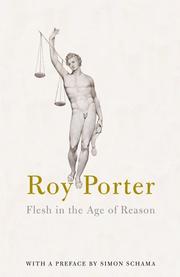
Flesh in the Age of Reason
"Starting with the grim Britain of the Civil War era, with its punishing sense of the body as a corrupt vessel for the soul, Roy Porter charts how, through figures as diverse as Locke, Swift, Johnson, and Gibbon, ideas about medicine, politics, and religion fundamentally …



The Enlightenment
While acknowledging France at the eve of the Revolution as the root of the modern world, Porter also makes a case for considering Britain's importance in catapulting the world into modernity.

The Faber book of madness
It is true that little is known about the mind and for that matter the mind in the state of derangement. This book does not unlock the secrets of either but it does give the reader a look into the different states and perhaps possible …

The Western medical tradition
Written by members of the Academic Unit of the Wellcome Institute for the History of Medicine, London, the world's leading centre for the history of medicine, this book surveys the Western medical tradition in all its aspects from the Greeks until 1800 AD, and in …


Sexual knowledge, sexual science
Sexual Knowledge, Sexual Science explores attempts to develop bodies of knowledge about sex from antiquity to the present day. Taking into account cognate sciences like zoology, anatomy, embryology and psychiatry, the volume analyses the shaping over the centuries of disciplines which came by 1900 to …


Companion encyclopedia of the history of medicine
This text provides an account of the development of medical science in its various branches, and includes discussions of the medical profession and its institutions, and the impact of medicine upon populations, economic development, culture, religions, and thought.

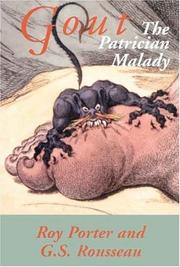
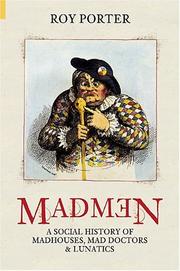
Madmen
"What was it like to be insane in the Georgian England of Mary Wollstonecraft and Coleridge (himself afficted with madness)? How were our eighteenth-century ancestors confined and how were they treated by the fledgling psychiatric 'profession'? Indeed, how was the most famous mad person of …
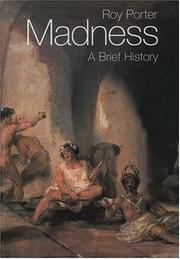
Madness
A history of "madness" offers readers a history of mental illness and its treatment. The book reveals radically different perceptions of madness and approaches to its treatment, from antiquity to the present day. The author explores what we really mean by 'madness', covering an enormous …


The biographical dictionary of scientists
A one-volume comprehensive introduction to over 1,200men and women in all areas of science, providing biographical information and the significance of each scientist's contribution.

The Cambridge History of Medicine
Surveys the rise of medicine in the West from classical times to the present. Covering both the social and scientific history of medicine, this volume traces the chronology of key developments and events, while at the same time engaging with the issues, discoveries, and controversies …


Bodies politic
"In a historical tour be force, Roy Porter takes a critical look at representations of the body in death, disease and health and at images of the healing arts in Britain from the mid-seventeenth to the beginning of the twentieth century. Roy Porter's two key …

Dictionary of the history of science
Dictionary of the concepts or ideas that characterize the core features of recent Western science. Focuses on the last 5 centuries. There is emphasis on historiography and the philosophical and metaphysical principles of science, as well as "those parts of the social and human sciences …


The Cambridge history of science
Publisher's description: This volume offers to general and specialist readers alike the fullest and most complete survey of the development of science in the eighteenth century, exploring the implications of the 'scientific revolution' of the previous century and the major new growth-points, particularly in the …


The confinement of the insane
This collection examines the origins of asylum as a mechanism for the treatment of insanity. Taking a global view, it considers the socioeconomic & theoretical factors which have shaped the modern notion of madness & the need for confinement of those deemed to be insane.

The facts of life
This remarkable study presents the first detailed and scholarly analysis of the creation of sexual knowledge in Britain. Surveying the period between the mid-seventeenth and the mid-twentieth centuries, it examines the major texts which established and authorised sexual knowledge and sexual practices. Porter and Hall …


A dictionary of eighteenth-century world history
The short entries give facts on chief personalities, events, wars, political and social developments while the longer essays interpret the century. Includes a chronology, maps and charts showing world rulers at that time.

A history of clinical psychiatry
"A History of Clinical Psychiatry explores the history of significant psychiatric disorders from both a clinical and a social-historical perspective. Divided into three sections, the volume covers neuropsychiatric disorders such as dementia, stroke and Parkinson's disease; functional psychoses such as schizophrenia and depression; and neuroses …

Discovering the history of psychiatry
"The field of psychiatry has exercised enormous influence in our century, not only among scientists and mental health professionals, but also in the arts, humanities, and social sciences which shape the cultural life of millions. This vitality has been accompanied by a profusion of historical …


Medicine and the five senses
"From the days of Hippocratic 'bedside medicine' to the advent of the CAT scanner, doctors have always relied on their senses in diagnosing and treating disease. Medical education, from the apprenticeship, to the rise of the laboratory, has sought to train the senses of students …

Oxford dictionary of scientific quotations
"This collection charts the progress of the great ideas of science. Ten or twenty aptly-chosen quotations taken from the writings of a great scientist can genuinely provide a digest of their most important scientific perceptions and findings. Enquire within to find the key passages from …


Rewriting the Self
Rewriting the Self is an exploration of ideas of the self in the western cultural tradition from the Renaissance to the Present. The contributors analyse differing religious, philosophical, psychological, political, psychoanalytical and literary models of personal identity. They examine these models from a number of …


The ferment of knowlege
In the late summer of 1941, as the war in Europe drags on, long-buried secrets begin to surface in the Hampshire village of Winstead, when the body of a young woman--a former conscientious objector - is found shot to death in the church cemetery. The …


The Hutchinson Dictionary of Scientific Biography
lvii, 891 pages : 26 cm

The industrial revolution in national context
The Industrial Revolution has been, and continues to be, the focus of massive historiographical as well as historical enquiry. This collection includes reappraisals by Phyllis Deane and by Francois Crouzet of their classic accounts of industrialization in Britain and in France, and more generally broaches …


The Popularization of medicine, 1650-1850
In the early modern centuries disease was rampant, medicine had few powerful weapons in its armoury, and the provision of professional medical care was patchy. Under such circumstances it is no surprise that a body of popularized medical writings appeared, aiming to explain how ordinary …

The Scientific revolution in national context
The 'Scientific Revolution' of the sixteenth and seventeenth centuries continues to command attention in historical debate. What was its nature? How did it develop? Controversy still rages about the extent to which it was essentially a 'revolution of the mind', or how far it must …


