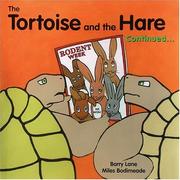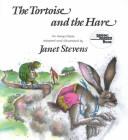
The Tortoise and the Hare
1984
29 pages
Children's
The familiar Aesop fable is performed by a troupe of animal actors.
The familiar Aesop fable is performed by a troupe of animal actors.
The familiar Aesop fable is performed by a troupe of animal actors.
The classic Aesop fable is performed by a troupe of animal actors.
The classic Aesop fable is performed by a troupe of animal actors.
Aesop fables are a collection of fables credited to Aesop, a slave and story-teller believed to have lived in ancient Greece between 620 and 560 BCE.
The world's oldest known collection of fables and folk tales. Some of the stories credited to Aesop, a Greek slave who lived in about the sixth century BCE, are known in every corner of the globe, such as 'The Tortoise and the Hare' and 'The …
WOLF, meeting with a Lamb astray from the fold, resolved not to lay violent hands on him, but to find some plea to justify to the Lamb the Wolf's right to eat him. He thus addressed him: "Sirrah, last year you grossly insulted me." "Indeed," …
Grades 7-9
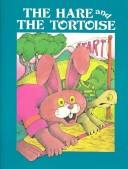
Recounts the race between the boastful hare and the persevering tortoise.
When the town mouse and the country mouse visit each other, they decide they prefer their own way of living.
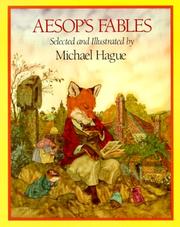
The noted illustrator presents thirteen of Aesop's most familiar fables.
An illustrated collection of twenty fables originally told by the Greek slave, Aesop.
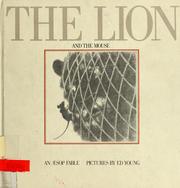
Recounts the tale of the tiny mouse who helped the mighty lion when he became ensnared by hunters.
One hundred twenty-six best-loved fables of Aesop.
Basically, the fables are didactic tales. The reader is supposed either to emulate or to beware of the behavior of the actors when faced with a similar situation.
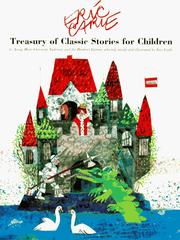
22 stories selected from the previously published Twelve Tales From Aesop (Philomel, 1980), Seven Stories from Hans Christian Andersen (Watts, 1978), and Eric Carle's Storybook: Seven Stories from the Brothers Grimm (Watts, 1976).
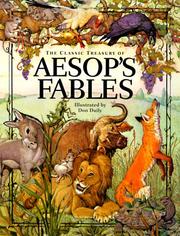
Sardonic, wry and wise, Aesop's Fables are some of the most enduring and well-loved literary creations in history. In a series of pithy, amusing vignettes, Aesop created a vivid cast of characters to demonstrate different aspects of human nature. Here we see a wily fox …
Adaptations of eighty-two of Aesop's best known fables, along with a brief history of them.
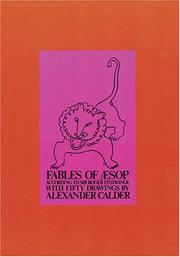
"This book combines the 1692 translation of the Fables by English journalist Sir Roger L'Estrange with 50 drawings created especially as illustration for the tales by American sculptor, painter, and illustrator Alexander Calder. ... Two hundred and one of the traditional fables are narrated here"--Cover …
Retells seven of Aesop's fables including those about the goose and the golden egg, the hare and the tortoise, and the boy who cried wolf.
The text is young and simple, and clearly portrays helpful morals through fun characters that young readers can relate to. All of the classic, best-loved fables have been included, as well as some lesser-known stories that have been retold to intrigue and entertain children for …
The timeless lure of Aesop's fables has been magically captured in this beautifully illustrated book, ideal for young readers.
Aesop''s timeless fables and characters have been teaching life's little lessons to kids of all ages - for ages and ages.
This is the first translation ever to make available the complete corpus of 358 fables. Aesop was probably a prisoner of war, sold into slavery in the early sixth century BC, who represented his masters in court and negotiations and relied on animal stories to …
An illustrated collection of more than 300 fables first told by the Greek slave Aesop.
An illustrated collection of fourteen animal fables first told by the Greek slave Aesop.
Introduction by Oliver Goldsmith is based on the partially erroneous information prevalent in Goldsmith's time.
Retells 12 familiar Aesop's fables including "The Rabbit and the Turtle," "The Lion and the Mouse," and "The Wolf and the Lamb."
An illustrated adaptation of fables first told by the Greek slave Aesop.