Frederick Douglass
1818–1895
Frederick Douglass was an American social reformer, abolitionist, orator, writer, and statesman. He was "the most important leader of the movement for African-American civil rights in the 19th century".
From Wikipedia · CC BY-SA 4.0
43 books in our catalogue.
1845
127 pages
★ 4.13 · 16
Historical Fiction
This book is an autobiographical account by runaway slave Frederick Douglass that chronicles his experiences with his owners and overseers and discusses how slavery affected both slaves and slaveholders.
1881
576 pages
Biography & MemoirPolitics & Society
Life and Times of Frederick Douglass is Frederick Douglass's third autobiography, published in 1881 and revised in 1892. Because of the emancipation of American slaves during and following the American Civil War, Douglass gave more details about his life as a slave and his escape …
1815
375 pages
Biography & MemoirHistoryPolitics & Society
Autobiography of the nineteenth-century abolitionist who advocated the full freedom of the blacks.
1979
683 pages
Politics & Society
Correspondence, diary (1886-1887), speeches, articles, manuscript of Douglass's autobiography, financial and legal papers, newspaper clippings, and other papers relating primarily to his interest in social, educational, and economic reform; his career as lecturer and writer; his travels to Africa and Europe (1886-1887); his publication of …
1994
1126 pages
Biography & MemoirPolitics & Society
Born a slave, Frederick Douglass educated himself, escaped, and made himself one of the greatest leaders in American history. His three autobiographical narratives, collected here in one volume, are now recognized as classics of both American history and American literature. Writing with the eloquence and …
1999
795 pages
Politics & Society
"One of the greatest African American leaders and one of the most brilliant minds of his time, Frederick Douglass spoke and wrote with unsurpassed eloquence on almost all the major issues confronting the American people during his life - from the abolition of slavery to …
2015
48 pages
Politics & Society
2000
359 pages
HistoryPolitics & Society
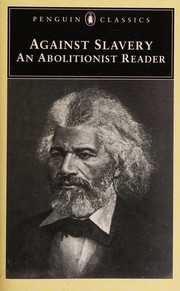
Assembles more than forty speeches, lectures, and essays critical to the abolitionist crusade. Features William Lloyd Garrison, Frederick Douglass, Lydia Maria Child, Wendell Phillips, Harriet Beecher Stowe, and Ralph Waldo Emerson. "An invaluable resource to students, scholars, and general readers alike."—Amazon.com.
1993
80 pages
Biography & MemoirChildren'sPolitics & Society
A shortened autobiography presenting the early life of the slave who became an abolitionist, journalist, and statesman.
1852
68 pages
Historical Fiction
Contains primary source documents.
2016
640 pages
Biography & MemoirHistoryPolitics & Society
1990
368 pages
General Fiction
2017
223 pages
HistoryPolitics & SocietyTravel
This volume compiles original source material that illustrates the complex relationship between Frederick Douglass and the city of Brooklyn. Most prominent are the speeches the abolitionist gave at the Brooklyn Academy of Music, Plymouth Church, and other leading Brooklyn institutions. Whether discussing the politics of …
1975
448 pages
Politics & Society
1996
368 pages
Biography & MemoirHistory
The Oxford Frederick Douglass Reader collects in one volume the most outstanding and representative work of Frederick Douglass's fifty-year writing career, including all the major genres in which he worked: autobiography, journalism, oratory, and fiction. The Reader contains the following classic texts in their entirety: …
1950
456 pages
Politics & Society
1976
190 pages
Business & Economics
2011
256 pages
HistoryLanguage & ReferencePolitics & Society
Frederick Douglass, a runaway Maryland slave, was witness to and participant in some of the most important events in the history of the American Republic between the years of 1818 and 1895. Beginning his long public career in 1841 as an agent of the Massachusetts …
1846
History
Frederick Douglass compares his reception in Europe with that of the United States. He tells about his visit to Eton Hall.
1876
30 pages
Politics & Society
1846
History
Frederick Douglass writes to William Lloyd Garrison "to tell thee my good wishes go with thee, and to express the sorrow I felt in parting from one, whom I not only esteem but love." Their were many benefits from their trip to Europe and for …
1945
95 pages
Politics & Society
1879
44 pages
Politics & Society
2008
571 pages
Biography & Memoir
2016
392 pages
Biography & MemoirHistoryPolitics & Society
1984
391 pages
Biography & MemoirHistoryPolitics & Society
1984
30 pages
Language & Reference
1886
69 pages
Politics & Society
2019
610 pages
History
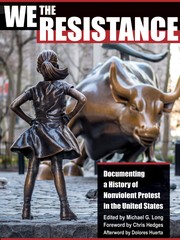
A first-person history of nonviolent resistance in the U.S., from pre-Revolutionary America to the Trump years. While historical accounts of the United States typically focus on the nation's military past, a rich and vibrant counter narrative remains basically unknown to most Americans. This alternate history …