12 books in our catalogue.
1981
224 pages
Philosophy & ReligionPolitics & SocietyPsychology & Self-Help
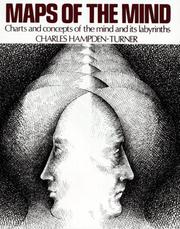
This is a sort of textbook or interpretative reference book on the mind, featuring 60 "maps" or graphic illustrations on nine levels. Some maps feature more than one thinker, and some thinkers, including Hampden-Turner himself, are featured in more than one map. Levels include history/religion, …
1993
411 pages
Business & Economics
The authors maintain that "the values, habits, and cultural styles ordinarily associated with social development or the arts turn out to be the key ingredients of economic success." This book examines the value systems for creating wealth in the United States, Japan, Germany, France, Great …
1997
274 pages
Business & Economics
2020
400 pages
Business & Economics
1970
508 pages
Psychology & Self-Help
Radical Man is one of the major foundational, theoretical books of Humanistic Psychology. It is basically a rewriting of his Dissertation, "Towards a Humanistic Psychology," the first ever theoretical dissertation in the Harvard MBA program. Not all of the original chapters are included (ie. about …
2000
388 pages
Business & EconomicsPolitics & Society
"Based on fourteen years of research involving nearly 50,000 managerial respondents and on the authors' extensive experience in international business, the book compares American cultural values to those of more than forty other nations. It explores six culture-defining dimensions and their reverse images (universalism-particularism, individualism-communitarianism, …
1990
255 pages
Business & Economics
Subtitle of my copy: Graphic Solutions to Business Conflicts. This is a book about how to manage dilemmas for wealth creation. It can serve as a companion to his book, Creating Corporate Culture, also 1990. Here too most of the book consists of examples in …
1992
256 pages
This book is an introduction to the concept of "corporate culture," and an application the concept as it is defined by Hampden-Turner. In essence, he argues, culture is a way of managing dilemmas, an idea first developed in his "Maps of the Mind," (level nine). …
1974
322 pages
Politics & Society
This book describes a 10 point psychology of empowerment, or alternatively, psychological crucifixion, as applied to the poor, especially African Americans, and to social institutions, especially community development corporations. The ten part theory was originally developed in his Harvard dissertation, "Towards a Humanistic Psychology," and …
2009
Business & Economics