Kieran Egan was an Irish educational philosopher and a student of the classics, anthropology, cognitive psychology, and cultural history. He has written on issues in education and child development, with an emphasis on the uses of imagination and the stages that occur during a person's intellectual development. He has questioned the work of Jean Piaget and progressive educators, notably Herbert Spencer and John Dewey.
From Wikipedia · CC BY-SA 4.0
14 books in our catalogue.
1997
305 pages
HistoryPhilosophy & ReligionPolitics & Society
The Educated Mind offers a bold and revitalizing new vision for today's uncertain educational system. Kieran Egan reconceives education, taking into account how we learn. He proposes the use of particular "intellectual tools"—such as language or literacy—that shape how we make sense of the world. …
2005
504 pages
Politics & Society
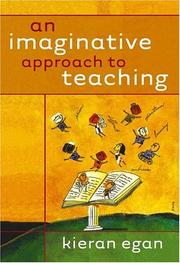
In this book, award-winning educator Kieran Egan shows how we can transform the experience of K-12 students and help them become more knowledgeable and more creative in their thinking. At the core of this transformative process is imagination which can become the heart of effective …
1992
178 pages
Politics & Society
1983
210 pages
Philosophy & ReligionPolitics & Society
1990
300 pages
Politics & Society
1986
122 pages
Politics & Society
An eminently practical guide, Teaching as Story Telling shows teachers how to integrate imagination and reason into the curriculum when planning classes in social studies, language arts, mathematics, and science. In his innovative book, Kieran Egan refashions the ancient function of the storyteller with such …
2002
224 pages
HistoryPhilosophy & ReligionPolitics & Society
"Kieran Egan is professor of education at Simon Fraser University, Burnaby, British Columbia."--Jacket.
1999
200 pages
Politics & Society
2008
256 pages
Philosophy & ReligionPolitics & Society
"Kieran Egan explores the three big ideas and aims of education - academic, social, and developmental growth - and exposes their flaws and fundamental incompatibility. He then proposes and describes a process called Imaginative Education that would dramatically change teaching and curriculum while delivering the …
2010
220 pages
"For generations, schools have aimed to introduce students to a broad range of topics through curriculum that ensure that they will at least have some acquaintance with most areas of human knowledge by the time they graduate. Yet such broad knowledge can't help but be …