Max Ernst was a German-born painter, sculptor, printmaker, graphic artist, and poet. A prolific artist, Ernst was a pioneer of the Dada movement and surrealism in Europe. He had no formal artistic training, but his experimental attitude toward the making of art resulted in his invention of frottage—a technique that uses pencil rubbings of textured objects and relief surfaces to create images—and grattage, an analogous technique in which paint is scraped across canvas to reveal the imprints of the objects placed beneath.
From Wikipedia · CC BY-SA 4.0
10 books in our catalogue.
1956
163 pages
Art & Photography
"Max Ernst: Life and Work draws on an unprecedented collection of source material, much of it published here for the first time, to present a compelling portrait of the artist's life and an intellectual portrait of an entire period. These letters and notes by friends …
1934
208 pages
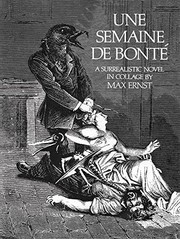
Divided into seven parts, one for each day of the week, this book includes 182 bizarre and darkly humorous collage scenes of classic dreams and erotic fantasies. The title in English translates to: A week of kindness.
1981
323 pages
The Hundred Headless Woman is Ernst's first collage novel. It features a loosely narrative sequence of uncanny Surrealist collages, made by cutting up and reassembling nineteenth-century illustrations, accompanied by Ernst's equally strange captions. Ernst's French title, La Femme 100 têtes, is a double entendre; when …
1977
320 pages
Art & PhotographyBiography & Memoir
In the fall of 1931 Julien Levy opened the Julien Levy Gallery and, in 1932, assembled the first Surrealist show ever in New York. In the years that followed he exhibited the works of luminaries of twentieth-century art and photography. In the spring of 1949 …
1948
204 pages
Art & PhotographyHistory
1982
175 pages
General Fiction
1977
444 pages
Biography & Memoir
1970
449 pages
Biography & Memoir