Carl Edward Sagan was an American astronomer, planetary scientist and science communicator. Initially an assistant professor at Harvard, Sagan later moved to Cornell, where he was the David Duncan Professor of Astronomy and Space Sciences and directed the Laboratory for Planetary Studies. He played an active role in the Mariner, Viking and Voyager programs. He published more than 600 scientific papers and articles and several popular science books, starting with The Cosmic Connection. He won the Pulitzer Prize for General Nonfiction for The Dragons of Eden.
From Wikipedia · CC BY-SA 4.0
30 books in our catalogue.
1985
432 pages
★ 4.19 · 105
Science Fiction
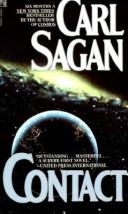
In December, 1999, a multinational team journeys out to the stars, to the most awesome encounter in human history. Who -- or what -- is out there? In Cosmos, Carl Sagan explained the universe. In Contact, he predicts its future -- and our own.
1980
354 pages
★ 4.60 · 25
HistoryScience & Nature
This book is about science in its broadest human context, how science and civilization grew up together. It is the story of our long journey of discovery and the forces and individuals who helped to shape modern science, including Democritus, Hypatia, Kepler, Newton, Huygens, Champollion, …
1995
472 pages
★ 4.20 · 46
Philosophy & ReligionPolitics & SocietyScience & Nature
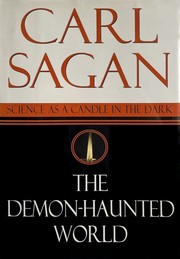
A prescient warning of a future we now inhabit, where fake news stories and Internet conspiracy theories play to a disaffected American populace “A glorious book . . . A spirited defense of science . . . From the first page to the last, this …
1994
429 pages
★ 4.57 · 30
Science & Nature
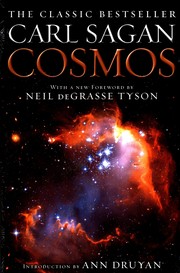
“Fascinating . . . memorable . . . revealing . . . perhaps the best of Carl Sagan’s books.”—The Washington Post Book World (front page review) In Cosmos, the late astronomer Carl Sagan cast his gaze over the magnificent mystery of the Universe and made …
1977
271 pages
★ 4.19 · 16
Science Fiction
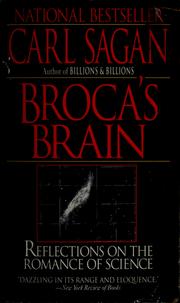
Presents an overview of human evolution and discusses human and animal intelligence, the mechanisms of the brain, memory, sleep, myths and legends about evolution, and the possibility of intelligent extraterrestrial life.
1997
292 pages
★ 3.85 · 13
Science & Nature
In this book, his last, Carl Sagan shows once again his extraordinary ability to interpret the mysteries of life and the majesty of the universe for the general reader. In Billions and Billions Sagan applies what we know about science, mathematics, and space to everyday …
1979
398 pages
Language & ReferenceScience & Nature
Explorers various aspects of several fields of science and examines the role of the intellect in scientific achievement.
1992
505 pages
Politics & Society
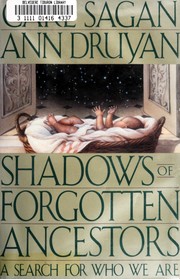
World renowned scientist Carl Sagan and acclaimed author Ann Druyan have written a ROOTS for the human species, a lucid and riveting account of how humans got to be the way we are. It shows with humor and drama that many of our key traits--self-awareness, …
1973
274 pages
Science Fiction
I came across this while watching Cosmos by Neil deGrasse Tyson. This was the book given to him by the legend himself, Sagan. "This book is about science in its broadest human context, how science and civilization grew up together. It is the story of …
1985
398 pages
Science & Nature
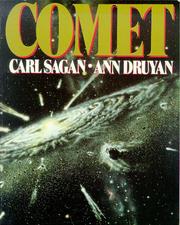
Explores the fascinating realm of comets answering questions raised by their appearance and delving into the superstitions surrounding them.
2006
300 pages
Philosophy & ReligionScience & Nature
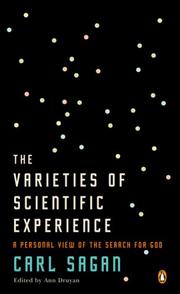
On the 10th anniversary of his death, brilliant astrophysisist and Pulitzer Prize winner Carl Sagan's prescient exploration of the relationship between religion and science and his personal search for God.Carl Sagan is considered one of the greatest scientific minds of our time. His remarkable ability …
1978
273 pages
Preface: On August 20th and September 5th, 1977, two extraordinary spacecraft called Voyager were launched to the stars. After what promises to be a detailed and thoroughly dramatic exploration of the outer solar system from Jupiter to Uranus between 1979 and 1986, these space vehicles …
2004
167 pages
Science Fiction
1966
509 pages
Science FictionScience & Nature
"A translation, extension, and revision of [the author's Vselennai͡a, zhiznʹ, razum]". Bibliography: p. 489-495.
1990
462 pages
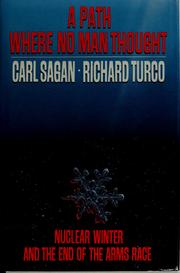
Discusses the theory of nuclear winter, its predicted consequences, and what can be done to prevent a war.
1972
310 pages
Science Fiction
1984
229 pages
Examines the catastrophic global, atmospheric, and biological impact of even limited nuclear confrontation.
1975
159 pages
Science Fiction
1995
122 pages
Science & Nature
1974
439 pages
Science Fiction
1971
425 pages
Science & Nature
1992
530 pages
Science & Nature