Dani Rodrik is a Turkish economist and Ford Foundation Professor of International Political Economy at the John F. Kennedy School of Government at Harvard University. He was formerly the Albert O. Hirschman Professor of the Social Sciences at the Institute for Advanced Study in Princeton, New Jersey. He has published widely in the areas of international economics, economic development, and political economy. The question of what constitutes good economic policy and why some governments are more successful than others at adopting it is at the center of his research.
From Wikipedia · CC BY-SA 4.0
17 books in our catalogue.
2011
368 pages
Business & Economics
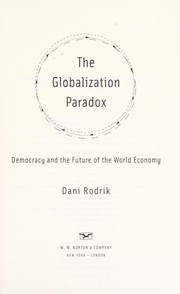
Discusses how democracy and national self-determination cannot be pursued simultaneously with economic globalization and instead promotes customizable globalization with international rules to achieve balanced prosperity.
2015
253 pages
Business & EconomicsHistory
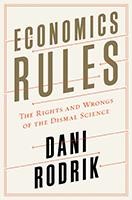
Takes a close look at economics to examine when it falls short and when it works, to give a surprisingly upbeat account of the discipline. Drawing on the history of the field and his deep experience as a practitioner, Rodrik argues that economics can be …
2011
368 pages
Business & Economics
2015
272 pages
Business & EconomicsHistory
The economics profession has become a favourite punching bag in the aftermath of the global financial crisis. Economists are widely reviled and their influence derided by the general public. Yet their services have never been in greater demand. To unravel the paradox, we need to …
1997
108 pages
Business & EconomicsPolitics & Society
2016
224 pages
Business & Economics
2009
276 pages
Business & Economics
Teşekkür IX Giriş KIŞIMA EKONOMİK BÜYÜME 1. Elli Yıllık Büyüme (ve Büyüyememe): Bir Yorum 15 2. Büyüme Tanıları 61 3. Sentez: Büyüme Stratejilerine Pratik Bir Yaklaşım 93 KISIM B KURUMLAR 4. Yirmi Birinci Yüzyıl için Sanayi Politikaları 107 5. Üstün Kaliteli Büyümeyi Sağlayan Kurumlar 157 …
2003
520 pages
Business & Economics
2004
821 pages
Business & Economics
2007
271 pages
Business & Economics
2009
280 pages
Business & Economics
1999
180 pages
Policymakers in the developing world are grappling with new dilemmas created by openness to trade and capital flows. What role, if any, remains for the state in promoting industrialization? Does openness worsen inequality, and if so, what can be done about it? What is the …
1990
278 pages
Business & Economics
2011
Business & Economics
2018
400 pages
Business & Economics